Meina
Meina Mix
Downloads
Model Report
Overview
MeinaMix is a generative AI model developed to produce high-quality anime-style images. It is based on the Stable Diffusion 1.5 framework and employs a methodology known as checkpoint merging, wherein multiple models are blended through block-weighted schemes to achieve its distinctive visual characteristics. Since its initial release in July 2023, MeinaMix has been widely used for generating detailed character art and illustrations in the anime aesthetic, with a focus on flexibility and customization in its outputs.
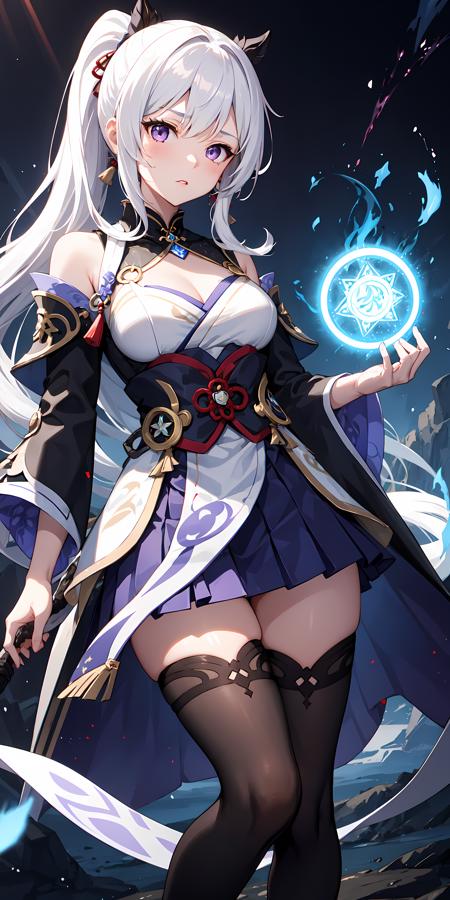
Figure 1. An example of an anime-style character generated by MeinaMix, showcasing high-fantasy themes and vivid color rendering.
Model Architecture and Technical Features
MeinaMix is classified as a checkpoint merge model, anchored on the Stable Diffusion 1.5 architecture. Rather than being trained from scratch on a new dataset, MeinaMix’s development involved iterative merging of multiple pre-existing models, refined using block-weighted strategies. This process produced a series of intermediary and final versions, with only the most favorable results retained for release. The precise details of the merging process, including exact model "recipes," remain undisclosed due to the experimental and iterative methodology employed by the developer.
Key features of MeinaMix's technical implementation include support for Hires.fix, which is used to improve details, particularly in faces and distant features. The model also offers an inpainting-specific variant (V11-inpainting), facilitating targeted modifications to designated areas of existing images. Recent updates have aimed to improve the generation of eyes and facial features even without the application of Hires.fix, reflecting an ongoing commitment to output refinement.
Training Methodology and Version History
The creation of MeinaMix relied on a sequence of block-weighted checkpoint merges. This approach blends the learned weights and features from different base checkpoints, synthesizing model behaviors to achieve desired stylistic fidelity and image clarity. While the constituent datasets and sources are not explicitly detailed, the result is a model adept at generating highly consistent, stylized outputs in the anime domain.
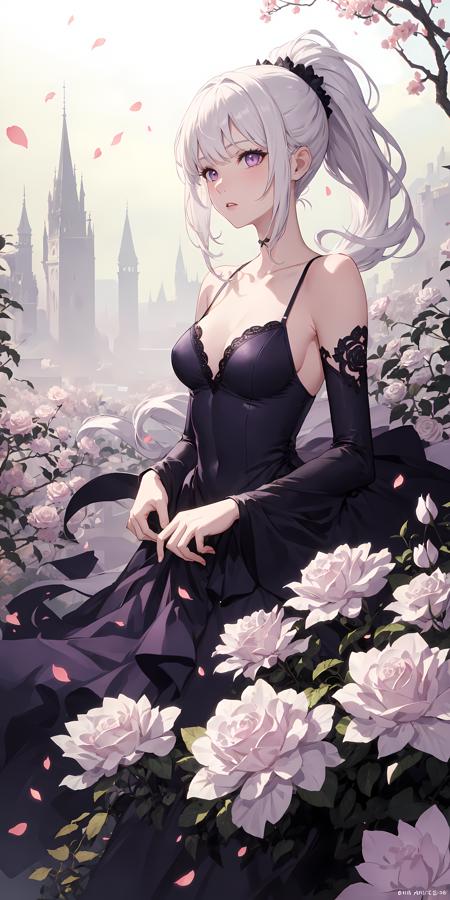
Figure 2. A sample MeinaMix output featuring a gothic-inspired anime character amid a detailed floral and architectural background.
Since its publication on July 16, 2023, MeinaMix has undergone continuous refinement. As of its latest update (version 12, finalized in February 2025), improvements have focused on reducing image darkness, enhancing detail generation without reliance on upscaling methods, and minimizing prompt-induced randomness. These iterative adjustments reflect community feedback and observed model behavior during widespread use.
Image Generation, Style, and Capabilities
MeinaMix specializes in the creation of visually rich, anime-style digital illustrations. The model is engineered to deliver high-quality results with minimal prompting, though recent updates such as version 11 introduce a need for more explicit, less ambiguous prompt formulations. The art style produced by MeinaMix tends towards vibrant character-focused compositions, often with a blend of photorealistic elements and painterly techniques. While newer versions are slightly less "painting-like," configuring the model’s sampling algorithm (such as by selecting the DPM++ 2M Karras sampler) can reintroduce a painted aesthetic.
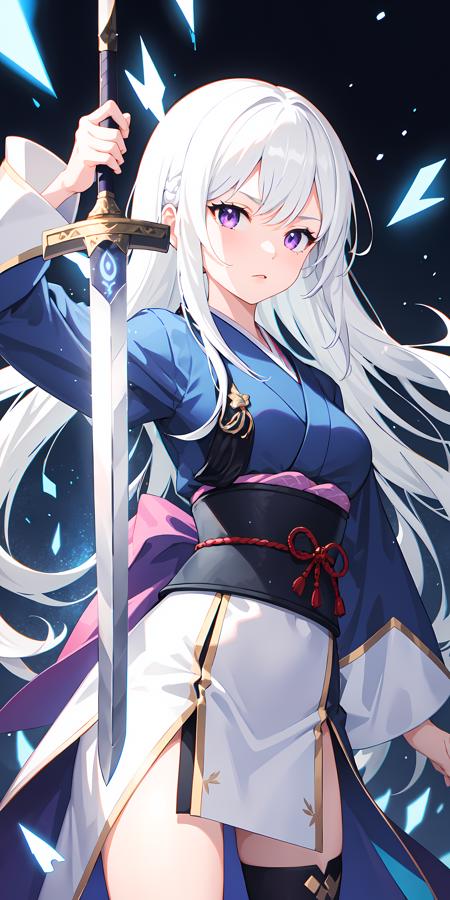
Figure 3. MeinaMix-generated artwork of a stylized character with fantasy attire and magical motifs.
In addition to standard image synthesis, MeinaMix’s inpainting variant enables localized editing, a capability valuable for iterative design, post-processing, and correcting details. The model’s design allows for compatibility with community tools such as LoRAs and does not require a custom VAE for effective use.
Performance Metrics and Community Reception
MeinaMix has seen widespread adoption, with downloads exceeding 210,000 and over 7 million likes recorded. According to user-generated statistics, more than 82,000 images have been created with the model, and community reviews are predominantly favorable, noting the model's versatility and quality of results.
Feedback specifically highlights the model's adaptability with Low-Rank Adaptation (LoRA) modules and its efficacy without auxiliary encoders. Nevertheless, updates have introduced certain prompt sensitivities: for instance, version 11 shifts emphasis toward more objective, specific prompting, potentially requiring users to adjust previous workflows for optimal outcomes.
Applications, Limitations, and Licensing
The primary application of MeinaMix is in generating character art and illustrations within the anime and fantasy genres. Its technical features, such as support for targeted inpainting and high-resolution fixes, make it suitable for illustration, game asset prototyping, and visual content creation for storytelling.
Despite its broad applicability, the model has some limitations. Later versions require more descriptive prompts, and some users have expressed a preference for an SDXL-based version to enable further enhancements and stylistic diversity. Information on the training data and merge methodology remains proprietary, aligning with standard practice for many community-derived models.
MeinaMix and its variants are distributed under the CreativeML Open RAIL-M license, which governs the permissible uses and sharing of generated images. The model is supported by an active community and accompanied by a family of related models, such as MeinaPastel, MeinaAlter, and PastelMix, each focusing on different artistic approaches.
Helpful Links
More in the Stable Diffusion 1 Family
Stable Diffusion 1.1
Stable Diffusion 1.5
OpenJourney v4
Photon
Juggernaut
Analog Diffusion
Dreamshaper
Realistic Vision
epiCRealism
Absolute Reality
Cyber Realistic
MajicMIX Realistic
epiCPhotoGasm
ControlNet SD 1.5 Canny
ControlNet SD 1.5 IP2P
ControlNet SD 1.5 Depth
ControlNet SD 1.5 MLSD
ControlNet SD 1.5 Normal
ControlNet SD 1.5 Open Pose
ControlNet SD 1.5 Scribble
ControlNet SD 1.5 Segmentation
ControlNet SD 1.5 Soft Edge
ControlNet SD 1.5 Inpaint
ControlNet SD 1.5 Line Art
ControlNet SD 1.5 Lineart Anime
ControlNet SD 1.5 Shuffle
ControlNet SD 1.5 Tile
ControlNet 1.5 IP Adapter
ControlNet 1.5 QR Code
Compatible Apps
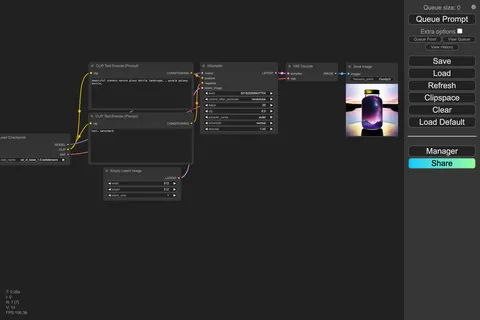
ComfyUI
A node-based workflow builder for advanced image and video generation, ideal for custom pipelines, fine control, and power users.
Web UI · API
Image Generation · Video Generation
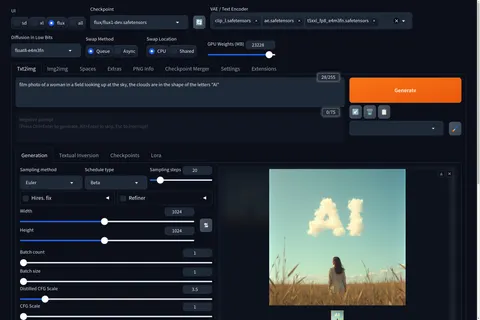
Stable Diffusion WebUI Forge
A faster, more experimental Stable Diffusion WebUI variant focused on improved resource use, quicker inference, and modern model support.
Web UI · API
Image Generation
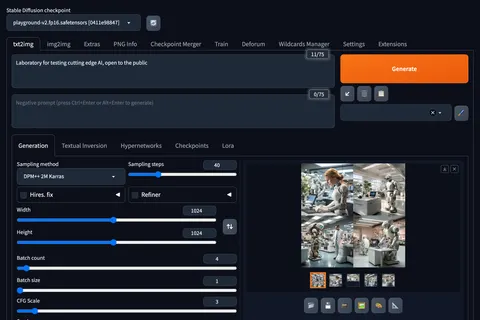
Stable Diffusion Web UI
A full-featured Stable Diffusion interface with deep controls for prompting, inpainting, extensions, and advanced image workflows.
Web UI · API
Image Generation · Video Generation
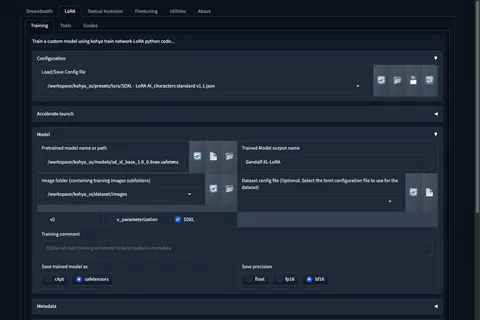
Kohya's GUI
Train LoRAs and fine-tunes for Stable Diffusion and FLUX with a popular GUI for Kohya-based training workflows.
Web UI · API
Fine-Tuning · Image Generation