lllyasviel
ControlNet SD 1.5 Normal
Downloads
Model Report
Overview
ControlNet SD 1.5 Normal, formally known as control_v11p_sd15_normalbae, is a generative AI extension developed for the Stable Diffusion framework. Released as part of ControlNet 1.1, the model enables precise conditioning of image generation by interpreting normal maps—specialized inputs encoding surface orientation information. By incorporating normal map control and improved physical correctness, ControlNet SD 1.5 Normal offers capabilities for artistic creation and integration with 3D rendering pipelines.
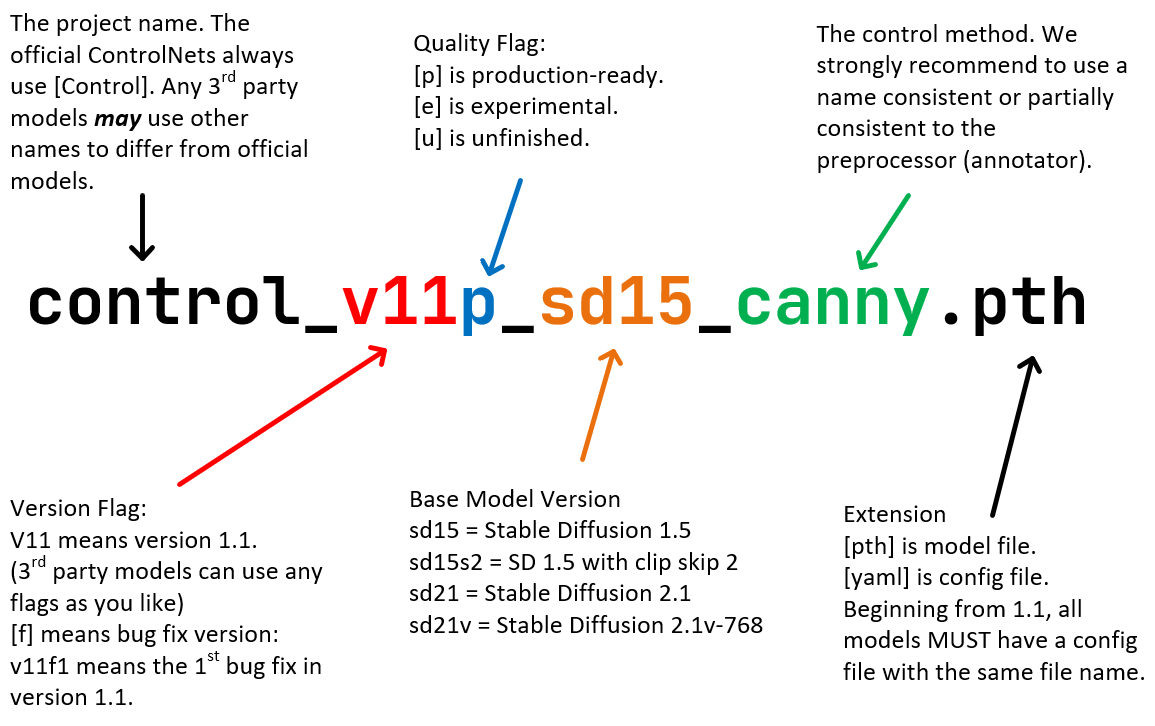
Figure 1. A diagram explaining the standard naming conventions for ControlNet 1.1 models, including 'control_v11p_sd15_normalbae'.
Technical Foundation
ControlNet SD 1.5 Normal is built atop the original ControlNet architecture, which extends the underlying Stable Diffusion 1.5 model. The neural network structure itself is unchanged from ControlNet 1.0, ensuring compatibility and modularity across versions. The core innovation of the Normal variant lies in its conditioning on normal maps, where each input encodes pixel-level orientation using a color protocol. These normal maps follow the ScanNet standard, in which blue represents the front, red the left, and green the top of surface orientation.
A distinct feature in the model’s design is its ControlNet encoder, which incorporates global average pooling—an operation controlled via configuration YAML files—to summarize spatial features before guiding the diffusion process. The conditioned information is injected into the Stable Diffusion U-Net via the conditional path of the classifier-free guidance (CFG) scale. This encoding and integration strategy allows the model to interpret detailed geometric cues and translate them into coherent image structures.
Training Data and Preprocessing
The model’s training process leverages a more physically accurate approach to normal map estimation compared to previous iterations. Instead of relying on the earlier "normal-from-midas" method, which often yielded unreliable results, ControlNet SD 1.5 Normal utilizes Bae's normal map estimation technique. This method is trained to adhere to the NYU-V2 visualization protocol, which aligns with how normal maps are generated and visualized in contemporary 3D rendering engines.
This fidelity allows the model to directly interpret and synthesize from normal maps produced during 3D scene creation. The improvements correct for limitations in prior releases, enhancing robustness and expanding the range of input types the model can handle effectively.
Model Capabilities and Typical Applications
ControlNet SD 1.5 Normal is specialized for tasks where control over surface orientation and scene geometry is essential. By accepting normal maps as conditional inputs, the model enables the generation of images that accurately respect object contours and three-dimensional structure. This makes it suitable for digital artists and creators seeking to integrate AI-driven synthesis with traditional graphics workflows.
Applications include stylized image synthesis driven by precise geometric cues, photorealistic rendering conditioned on 3D model outputs, and the creation of visually consistent assets for games, films, or virtual environments. The model’s robust handling of normal map inputs facilitates integration with established 3D rendering pipelines.
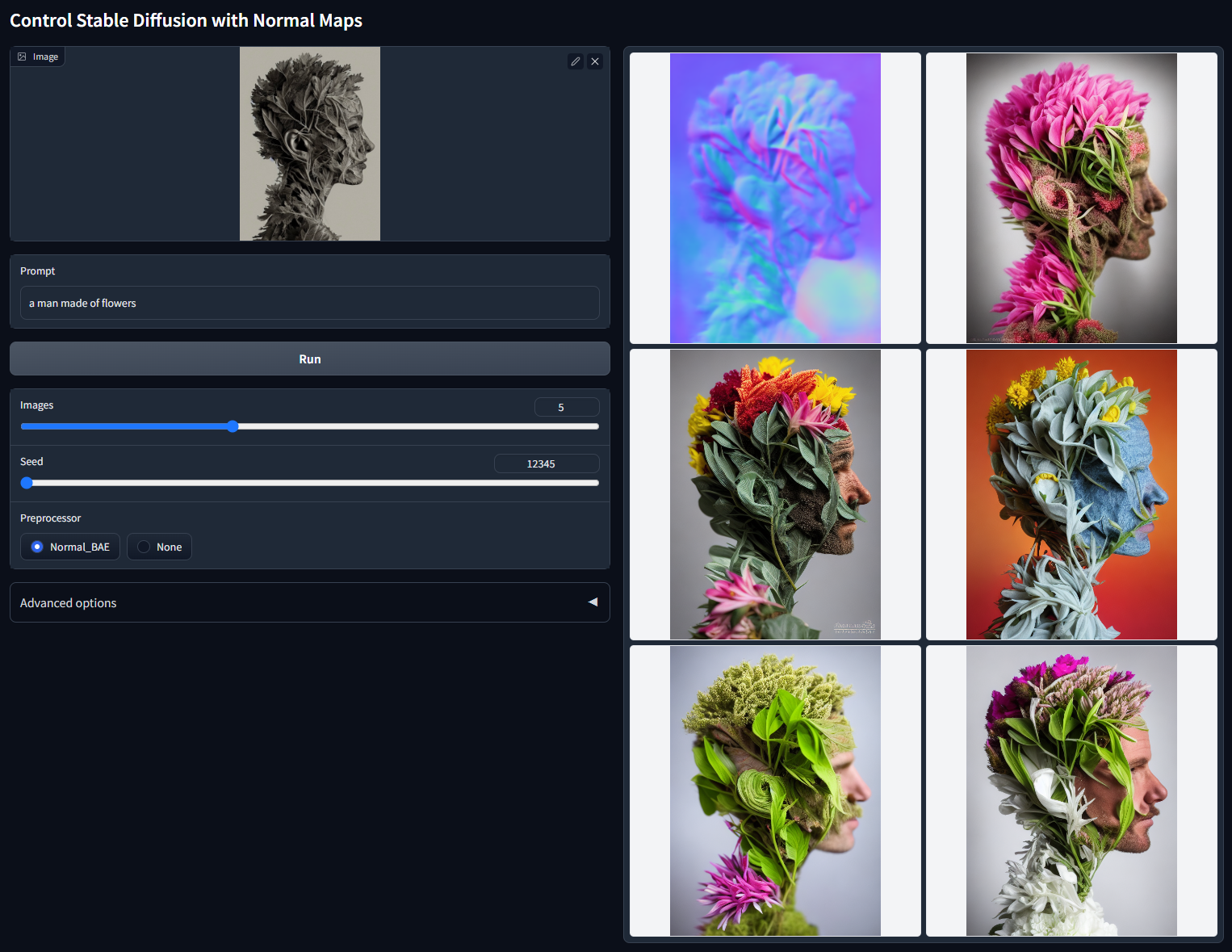
Figure 2. ControlNet 1.1 Normal used to generate artistic interpretations based on a user-supplied normal map and the prompt 'a man made of flowers'. The image grid demonstrates the model's ability to merge geometric cues with creative prompts (seed 12345).
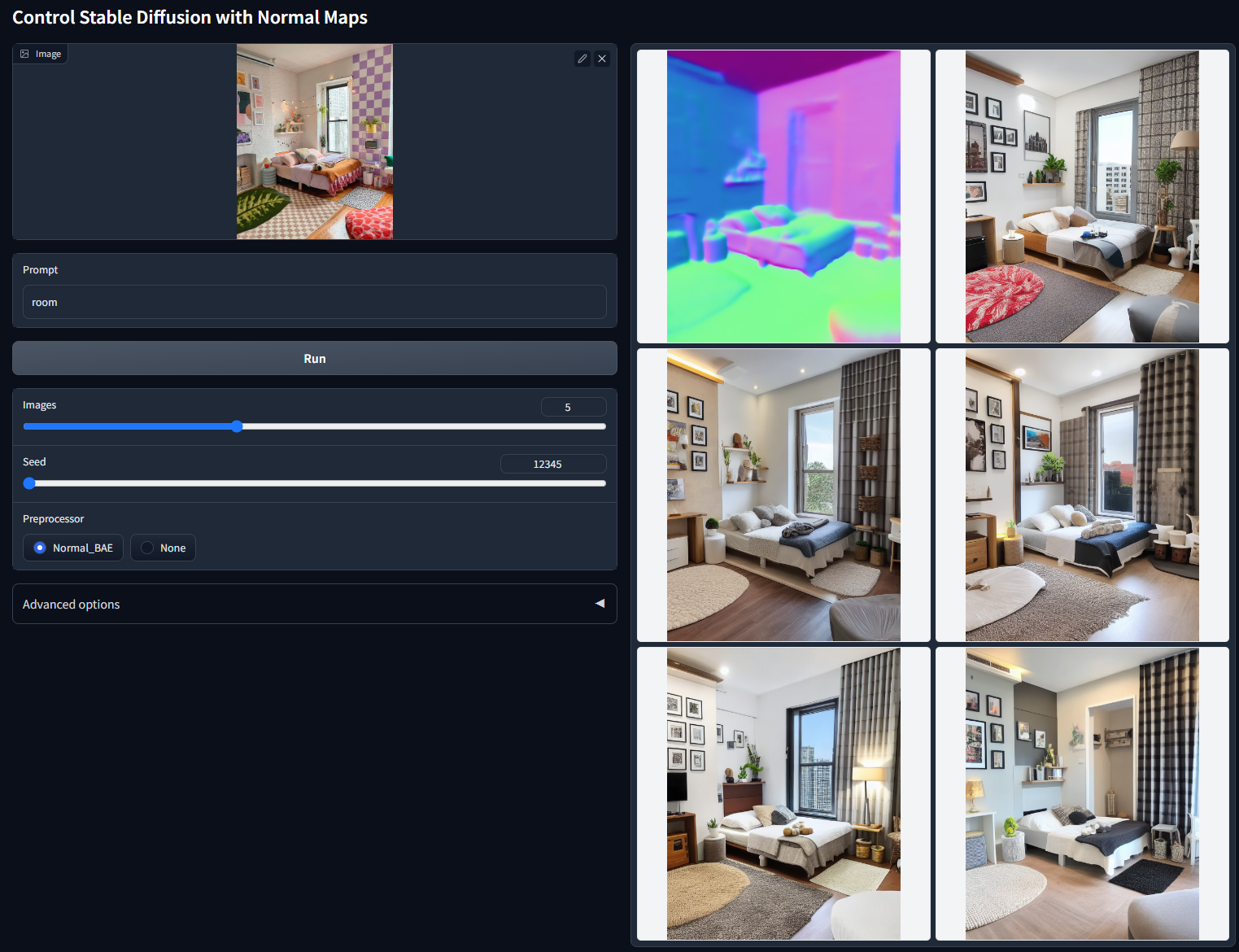
Figure 3. Batch output from ControlNet 1.1 Normal for the prompt 'room', showcasing photorealistic renderings interpreted from a normal map input (seed 12345).
Performance and Limitations
Batch testing with diverse prompts, such as "a man made of flowers" and "room", highlights the model's capacity to translate normal maps into visually coherent and semantically relevant imagery. Results from non-cherry-picked trials with a fixed random seed demonstrate comparable robustness to the ControlNet 1.1 Depth model, indicating consistent performance across varied tasks.
Despite these advances, practical limitations exist. For instance, the model is designed for research and experimentation rather than direct use as an extension for popular Stable Diffusion user interfaces. Users are advised against copying the ControlNet-v1-1-nightly repository into production environments not intended for it, as it may lack specific optimizations or compatibility features.
Additionally, while the approach to normal map estimation in ControlNet 1.1 Normal is more robust than its predecessor, its precise performance may still depend on the quality and protocol adherence of input normal maps.
Comparison to Related Models
ControlNet SD 1.5 Normal succeeds the original ControlNet 1.0 Normal, which was based on the "normal-from-midas" method. The improvements in 1.1 not only correct for geometric inconsistencies but also enable direct use of normal maps from industry-standard rendering engines. In terms of output interpretability, the Normal model is now comparable to other ControlNet 1.1 variants, such as the Depth model, which benefited from refined datasets and data augmentations like left-right flipping.
ControlNet 1.1 improves all model variants through dataset updates, removal of low-quality samples, and enhanced training protocols, ensuring more consistent, unbiased outputs across the full suite of conditional controls.
Further Resources
For more detailed technical documentation, code, and dataset links, the following resources are recommended:
More in the Stable Diffusion 1 Family
Stable Diffusion 1.1
Stable Diffusion 1.5
OpenJourney v4
Photon
Juggernaut
Analog Diffusion
Dreamshaper
Realistic Vision
Meina Mix
epiCRealism
Absolute Reality
Cyber Realistic
MajicMIX Realistic
epiCPhotoGasm
ControlNet SD 1.5 Canny
ControlNet SD 1.5 IP2P
ControlNet SD 1.5 Depth
ControlNet SD 1.5 MLSD
ControlNet SD 1.5 Open Pose
ControlNet SD 1.5 Scribble
ControlNet SD 1.5 Segmentation
ControlNet SD 1.5 Soft Edge
ControlNet SD 1.5 Inpaint
ControlNet SD 1.5 Line Art
ControlNet SD 1.5 Lineart Anime
ControlNet SD 1.5 Shuffle
ControlNet SD 1.5 Tile
ControlNet 1.5 IP Adapter
ControlNet 1.5 QR Code
Compatible Apps
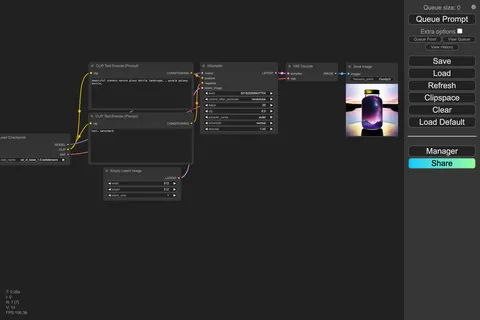
ComfyUI
A node-based workflow builder for advanced image and video generation, ideal for custom pipelines, fine control, and power users.
Web UI · API
Image Generation · Video Generation
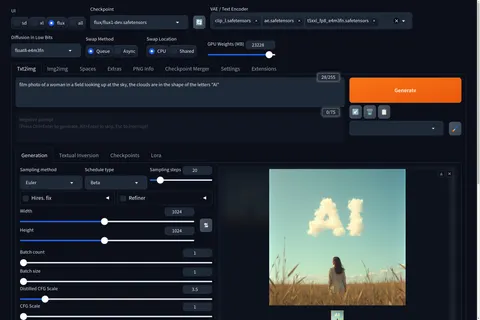
Stable Diffusion WebUI Forge
A faster, more experimental Stable Diffusion WebUI variant focused on improved resource use, quicker inference, and modern model support.
Web UI · API
Image Generation
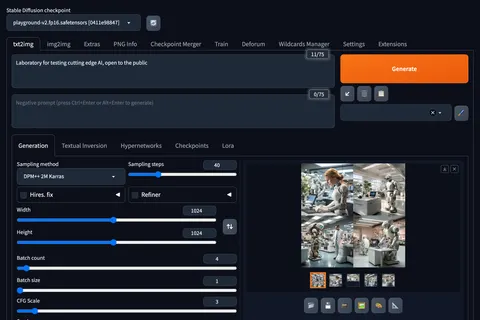
Stable Diffusion Web UI
A full-featured Stable Diffusion interface with deep controls for prompting, inpainting, extensions, and advanced image workflows.
Web UI · API
Image Generation · Video Generation
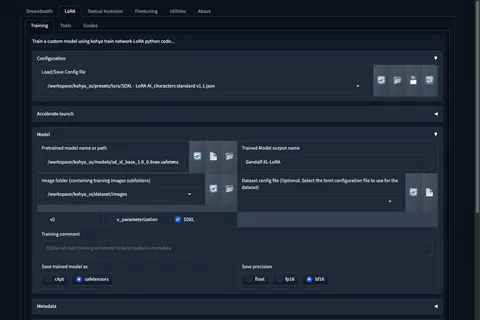
Kohya's GUI
Train LoRAs and fine-tunes for Stable Diffusion and FLUX with a popular GUI for Kohya-based training workflows.
Web UI · API
Fine-Tuning · Image Generation