Lykon
Absolute Reality
Downloads
Model Report
Overview
Absolute Reality is a photorealistic image generation model built on the Stable Diffusion 1.5 framework, specifically designed to produce high-fidelity, realistic digital images. Developed by Lykon and first released on August 3, 2023, Absolute Reality distinguishes itself from artistic or multi-purpose variants by focusing on precise replication of photographic style and detail, especially in portraiture and simulated photography tasks. The model is available in both standard and inpainting versions, as well as an LCM (Latent Consistency Model) variant, offering flexibility for differing generative tasks. Ongoing updates, most recently reflected in version 1.8.1 as of March 22, 2025, introduce refinements in realism and detail handling, particularly for facial features and textures. The underlying technology, data, and community-use strategies situate Absolute Reality as a relevant checkpoint in the playground of photorealistic text-to-image synthesis models.
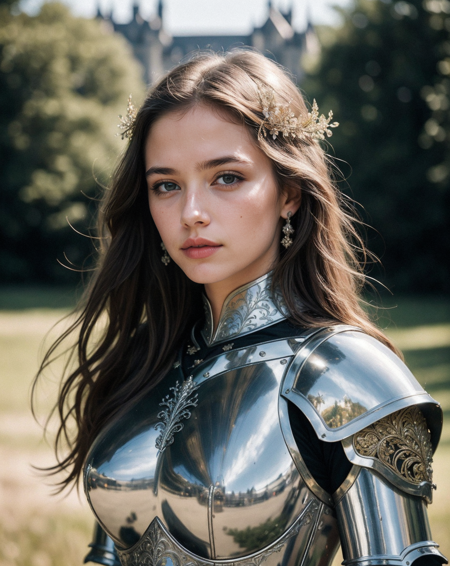
Figure 1. An AI-generated photorealistic portrait created with Absolute Reality, emphasizing intricate metallic textures and naturalistic lighting. Example prompt: 'young woman in medieval armor, reflective surfaces, detailed background'.
Technical Foundations
Absolute Reality is built upon the Stable Diffusion 1.5 architecture, inheriting the robust latent diffusion method and optimization pipeline recognized for balancing image quality with computational efficiency. The model checkpoint is distributed in SafeTensor format, ensuring secure model loading and reproducibility within compatible diffusion platforms. As a "checkpoint trained" model, Absolute Reality employs fine-tuning on a diverse dataset with an emphasis on realism and photographic authenticity.
During its development, initial training was conducted alongside the creation of DreamShaper 6, but Absolute Reality diverged by targeting strictly photorealistic outcomes. The mixing process incorporated select photorealistic models and custom LoRA modules, such as an ISO noise LoRA, to simulate photographic grain and analog effects directly within the generative pipeline. Incremental updates have enhanced aspects such as eye rendering, skin realism, and overall image detail, reflecting community feedback and iterative optimization. Inpainting editions support detailed, context-aware modifications to specific regions of an image, while the LCM variant offers additional sampling efficiency.

Figure 2. Photorealistic character output with a cyberpunk theme, generated by Absolute Reality. The model demonstrates nuanced handling of lighting and stylized attire. Prompt example: 'cyberpunk portrait, neon city, dramatic light'.
Model Features and Prompting Strategies
Absolute Reality is optimized for simple prompt structures that center on real-world photographic concepts. The model demonstrates strong adherence to photorealism, with its output often described as indistinguishable from conventional digital photography. Photorealistic results are obtainable with minimal prompt engineering, while overly complex prompts may lead to diminished realism due to the base CLIP architecture's limitations—colloquially known as "CLIP bleeding."
Version 1.8.1 delivers sharper facial details, robust eye rendering, and nuanced skin tones across diverse ethnicities and complexions. Customization for attributes such as eye color, hairstyle, and references to cultural or celebrity features is supported, enabling tailored portrait synthesis. Integration with auxiliary tools like ADetailer enhances face clarity and detail when used with moderate denoising settings.
Inpainting support enables targeted area modifications, useful for iterative image editing or correction. The model also accommodates advanced configurations, including Highres.fix for upscaling and multi-step DPM++ SDE Karras-based sampling to augment sharpness and detail control.
Recommended operational parameters, designed through extensive user feedback, include a CFG scale between 4.5 and 10, DPM++ SDE Karras sampler, 25–30 sampling steps, CLIP Skip set to 2, and Highres.fix denoising strength of 0.45 paired with high-quality upscalers. Negative embeddings such as 'BadDream' or 'UnrealisticDream' further suppress non-photorealistic artifacts, aligning outputs closely with naturalistic imaging standards.

Figure 3. A highly realistic AI-generated portrait demonstrating Absolute Reality's proficiency in skin texture and metallic material rendering. Prompt: 'male portrait, futuristic armor, cinematic lighting'.
Typical Applications and Use Cases
Absolute Reality is primarily utilized for generating hyperrealistic portraits, simulated photography, and landscape imagery where visual authenticity is essential. Its specialized training for nuanced facial synthesis makes it highly effective for character portraiture, both for individual and creative collective projects. Typical applications extend to generating digital models for media, pre-visualization in entertainment and design workflows, as well as the simulation of various photographic conditions—including analog effects via controlled noise or grain.
Image-to-image transfer workflows benefit from pairing Absolute Reality with more versatile, artistic checkpoints such as DreamShaper; initial artistic renders from DreamShaper 6 can be refined through img2img transfer with Absolute Reality to enhance realism. Dedicated inpainting versions allow for seamless, context-sensitive edits, making the model suitable for tasks in digital restoration or content-aware photo editing.
Limitations and Model Comparison
The focus on strict realism imposes trade-offs in flexibility compared to multi-purpose models like DreamShaper, which supports a broader spectrum of visual styles and higher compatibility with LoRA fine-tuning for non-photorealistic outputs. Absolute Reality is less suitable for overtly stylized or artistic genres and exhibits moderate adherence to elaborate prompt specifications. The built-in face restoration feature has received critical feedback for suboptimal results and is typically disabled in workflows.
While robust at producing realistic content, the model is constrained by the general safety and scope of its training data and relies on users to apply appropriate negative prompt embeddings and sampling configurations to avoid undesirable outputs or artifacts.
Licensing and Availability
Absolute Reality is distributed under the CreativeML Open RAIL-M license, with usage constrained to the terms stipulated by its creators and open-source community conventions. The model is publicly accessible for research, education, and non-commercial application.
External Resources
For further reference and practical usage guides, the following resources are recommended:
- Absolute Reality model homepage and documentation
- Civitai Guide to Resource Types
- How to Use Models (Civitai Wiki)
- Absolute Reality v1.6 Additional Examples
- Absolute Reality v1 Additional Examples
- Gallery by qf22
- Quick Face Alteration Examples
- Pruned vs Full Model Comparison
- DreamShaper Model Overview
- ADetailer Tool
- CreativeML Open RAIL-M License
More in the Stable Diffusion 1 Family
Stable Diffusion 1.1
Stable Diffusion 1.5
OpenJourney v4
Photon
Juggernaut
Analog Diffusion
Dreamshaper
Realistic Vision
Meina Mix
epiCRealism
Cyber Realistic
MajicMIX Realistic
epiCPhotoGasm
ControlNet SD 1.5 Canny
ControlNet SD 1.5 IP2P
ControlNet SD 1.5 Depth
ControlNet SD 1.5 MLSD
ControlNet SD 1.5 Normal
ControlNet SD 1.5 Open Pose
ControlNet SD 1.5 Scribble
ControlNet SD 1.5 Segmentation
ControlNet SD 1.5 Soft Edge
ControlNet SD 1.5 Inpaint
ControlNet SD 1.5 Line Art
ControlNet SD 1.5 Lineart Anime
ControlNet SD 1.5 Shuffle
ControlNet SD 1.5 Tile
ControlNet 1.5 IP Adapter
ControlNet 1.5 QR Code
Compatible Apps
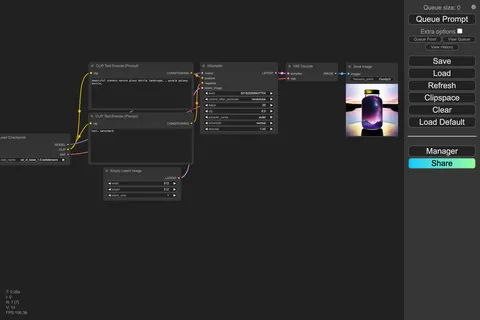
ComfyUI
A node-based workflow builder for advanced image and video generation, ideal for custom pipelines, fine control, and power users.
Web UI · API
Image Generation · Video Generation
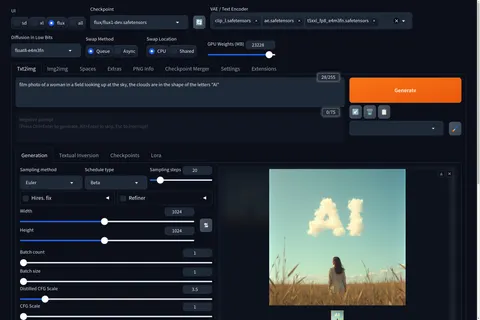
Stable Diffusion WebUI Forge
A faster, more experimental Stable Diffusion WebUI variant focused on improved resource use, quicker inference, and modern model support.
Web UI · API
Image Generation
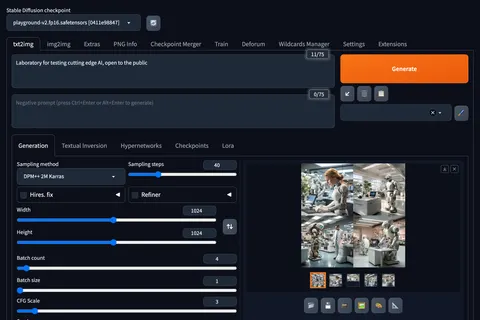
Stable Diffusion Web UI
A full-featured Stable Diffusion interface with deep controls for prompting, inpainting, extensions, and advanced image workflows.
Web UI · API
Image Generation · Video Generation
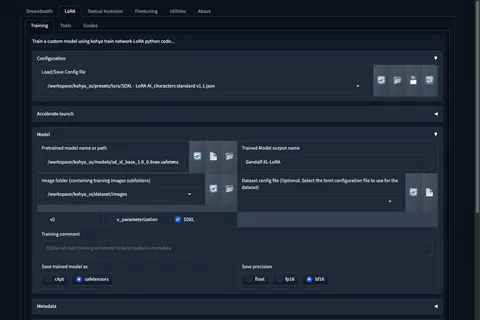
Kohya's GUI
Train LoRAs and fine-tunes for Stable Diffusion and FLUX with a popular GUI for Kohya-based training workflows.
Web UI · API
Fine-Tuning · Image Generation