Cyberdelia
Cyber Realistic
Downloads
Model Report
Overview
CyberRealistic is a photorealistic generative artificial intelligence model developed by Cyberdelia, primarily designed to create highly detailed and realistic images of human figures and various scenes. Built upon the Stable Diffusion 1.5 architecture, CyberRealistic aims to address common challenges in generative image synthesis, such as ensuring accurate anatomical representation and minimizing visual anomalies. The model is frequently updated and is utilized within the creative AI community for its versatility and focus on photorealism.
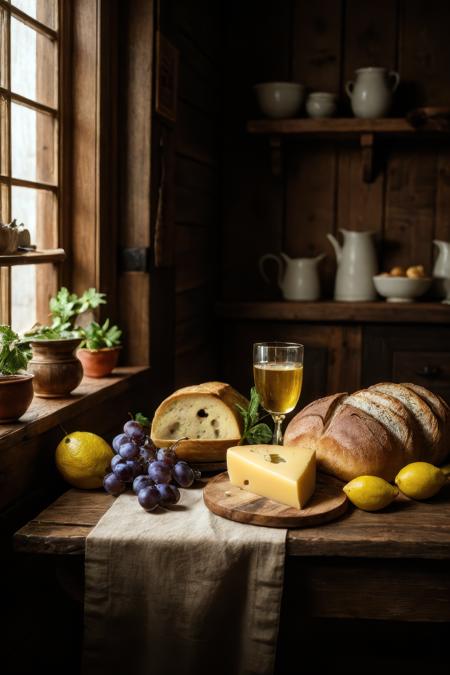
Figure 1. A CyberRealistic v8.0 output: an AI-generated, atmospheric still life scene, demonstrating detail and nuanced lighting.
Technical Foundations
CyberRealistic is built as a fine-tuned model checkpoint, utilizing the foundational diffusion framework of Stable Diffusion 1.5. This base provides a robust structure for generating high-resolution, coherent, and complex images. The model employs a pre-baked Variational AutoEncoder (VAE) that streamlines the generation pipeline by encoding and decoding image data efficiently, resulting in reduced artifacts and increased fidelity. Distributed in the SafeTensor format, CyberRealistic supports secure model sharing and safe integration into compatible generative pipelines, adhering to practices for open model deployment.
Model customization is further enhanced through compatibility with textual inversion and LoRA (Low-Rank Adaptation) techniques. These extensions facilitate fine-grained prompt engineering and user-specific model adaptation without the need for extensive retraining or alteration of the core model weights. This flexibility enables both novice and experienced users to generate diverse outputs or infuse unique stylistic elements.
Training Methodology and Dataset Blending
CyberRealistic's training process is characterized by a blended model approach, in which multiple existing models and datasets were integrated to achieve a desired level of realism and consistency. The creator conducted experimentation with different blends, aiming to overcome prevalent generative defects, particularly those affecting anatomical accuracy in human renders. While the precise lineage of all blended components remains undocumented due to the iterative and experimental nature of the process, the result is a model that reliably generates figures with natural limb and digit proportions, addressing common failures such as extraneous fingers or asymmetrical features.
The enhanced output quality, specifically the anatomical consistency, is attributed to careful tuning across successive versions. Each iteration prioritized resolving known problem areas while preserving or improving the overall photorealistic capacity of the model. The combination of data diversity and repeated fine-tuning allows CyberRealistic to generalize effectively across a wide range of subjects, lighting conditions, and compositional prompts.
Notable Features and Applications
CyberRealistic is characterized by its photorealistic rendering capabilities, producing images that exhibit high texture fidelity, lifelike lighting, and anatomical precision. Its typical use cases include the generation of portraiture, full-body human images, and realistic environmental scenes, enabling applications in digital art, concept visualization, and other creative domains.
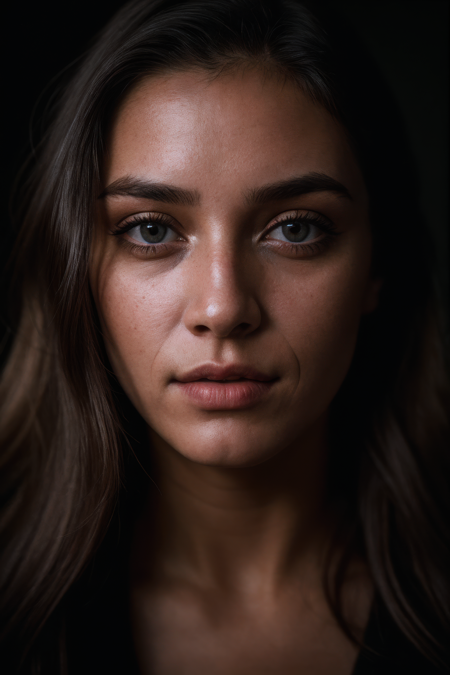
Figure 2. CyberRealistic v8.0 output: A highly detailed and realistic portrait showcasing facial texture and sophisticated lighting.
Its accessibility is furthered by the model's ability to generate high-quality results from minimal prompts, lowering barriers for users unfamiliar with technical prompting conventions. Support for prompt refinement tools, such as custom ChatGPT prompt helpers, enables iterative feedback and optimization of prompt phrasing for specified outcomes.
In addition to its focus on single-subject realism, CyberRealistic's ecosystem includes specialized variants and embeddings. The CyberRealistic Negative - SD 1.5 resource, for instance, provides additional capabilities for refining negative prompts, helping suppress undesired elements or artifacts in the output. Complementary models such as CyberRealistic Classic and CyberRealistic Semi-Real expand the stylistic reach into classic photorealism and semi-realistic rendering respectively.
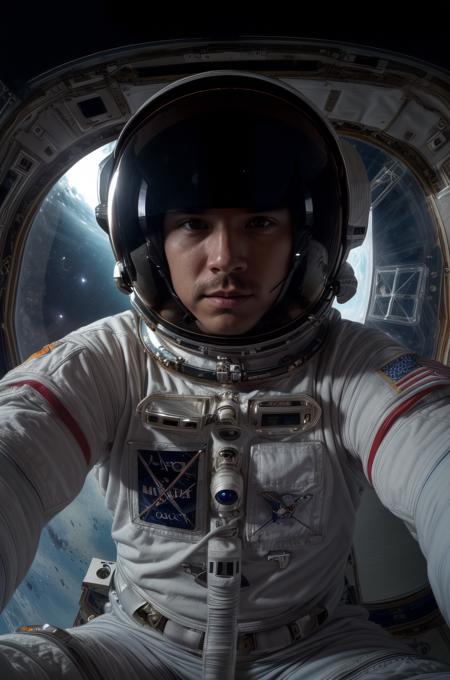
Figure 3. CyberRealistic Negative - SD 1.5 output: A photo-realistic depiction of an astronaut in orbit, demonstrating realistic lighting and environment.
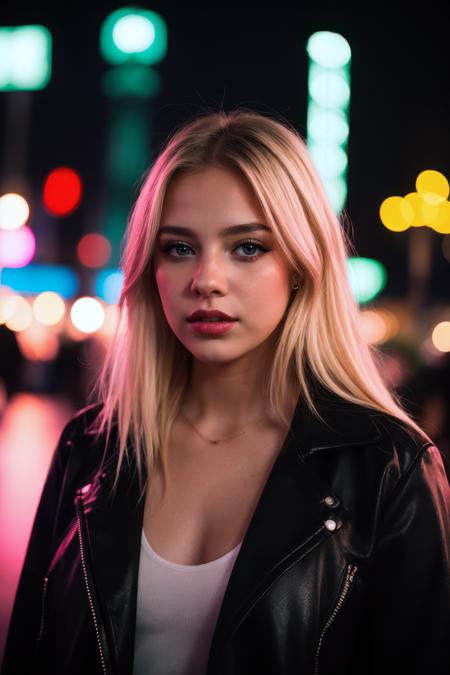
Figure 4. CyberRealistic Classic output: A realistic night-time city portrait, with natural lighting and detailed facial features.

Figure 5. CyberRealistic Semi-Real output: A semi-realistic style rendering with soft color transitions and stylized features.
Version History and Maintenance
Since its initial release on February 25, 2025, CyberRealistic has seen continuous iteration and refinement. Version advancements have included improvements in anatomical accuracy, output consistency, and the introduction of dedicated inpainting variants to address specific image editing workflows. Major releases, culminating in v8.0 and v8.0-Inpainting, have prioritized increased reliability in complex image synthesis. Earlier versions, such as v4.1 "Back to Basics" and numerous inpainting-focused checkpoints, mark notable points in the evolution of the model’s capabilities.
Users have reported high performance in generating singular, photorealistic subjects, though occasional challenges such as unintended multi-face generation remain, particularly when prompts are ambiguous. Inpainting tasks are better handled by dedicated inpainting versions, reflecting the nuanced requirements of reconstructive image editing compared to standard image generation.
Ongoing user feedback, gathered through platforms such as Civitai, has contributed to addressing recurrent issues and informing development priorities. However, some technical limitations have been observed depending on usage context: for example, certain mobile platforms have reported compatibility concerns when importing newer model versions.
Limitations and Licensing
Despite its strengths, CyberRealistic exhibits several common limitations inherent to photorealistic generative models. Because the base model does not explicitly encode semantics or context, it can sometimes yield outputs with unintended visual artifacts or incorporate multiple figures even when singular subjects are requested. To refine such results, targeted negative prompts such as "lowres, bad anatomy, bad hands, missing fingers, cropped, worst quality" can be employed. Inpainting performance is contingent on the use of the appropriate model variant.
CyberRealistic is distributed under the CreativeML Open RAIL-M license with an additional addendum, promoting open use while specifying responsible and ethical deployment. This license ensures the model is freely available for research, creative, and non-commercial activities, aligning with standards for transparent and reproducible AI research.
Helpful Resources
- Civitai's Guide to Resource Types
- How to use fine-tuned model checkpoints (Dreambooth Models)
- Introduction to Stable Diffusion 1.5
- Cyberdelia's Hugging Face Profile
- Cyberdelia's Reddit Profile
- Cyberdelia's Instagram
- Cyberdelia on Ko-fi
- CyberRealistic Hugging Face Backup Location
- CyberRealistic Prompt Helper
- CreativeML Open RAIL-M License
More in the Stable Diffusion 1 Family
Stable Diffusion 1.1
Stable Diffusion 1.5
OpenJourney v4
Photon
Juggernaut
Analog Diffusion
Dreamshaper
Realistic Vision
Meina Mix
epiCRealism
Absolute Reality
MajicMIX Realistic
epiCPhotoGasm
ControlNet SD 1.5 Canny
ControlNet SD 1.5 IP2P
ControlNet SD 1.5 Depth
ControlNet SD 1.5 MLSD
ControlNet SD 1.5 Normal
ControlNet SD 1.5 Open Pose
ControlNet SD 1.5 Scribble
ControlNet SD 1.5 Segmentation
ControlNet SD 1.5 Soft Edge
ControlNet SD 1.5 Inpaint
ControlNet SD 1.5 Line Art
ControlNet SD 1.5 Lineart Anime
ControlNet SD 1.5 Shuffle
ControlNet SD 1.5 Tile
ControlNet 1.5 IP Adapter
ControlNet 1.5 QR Code
Compatible Apps
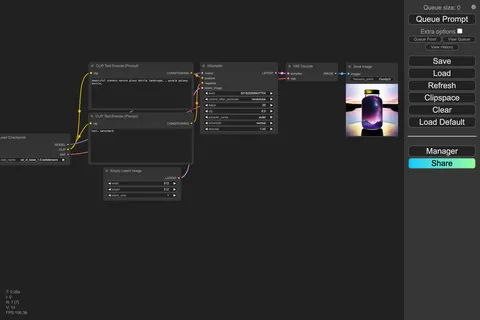
ComfyUI
A node-based workflow builder for advanced image and video generation, ideal for custom pipelines, fine control, and power users.
Web UI · API
Image Generation · Video Generation
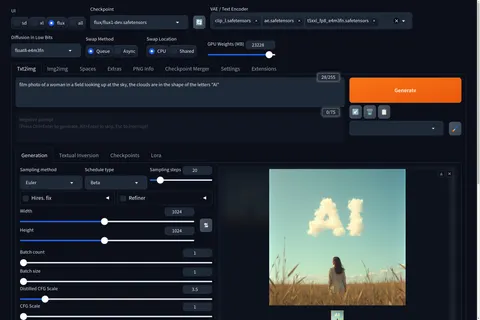
Stable Diffusion WebUI Forge
A faster, more experimental Stable Diffusion WebUI variant focused on improved resource use, quicker inference, and modern model support.
Web UI · API
Image Generation
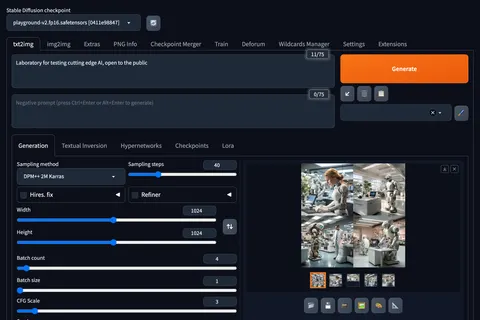
Stable Diffusion Web UI
A full-featured Stable Diffusion interface with deep controls for prompting, inpainting, extensions, and advanced image workflows.
Web UI · API
Image Generation · Video Generation
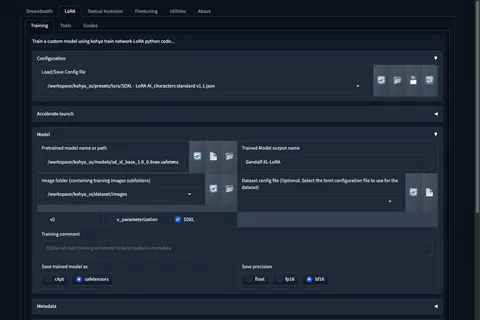
Kohya's GUI
Train LoRAs and fine-tunes for Stable Diffusion and FLUX with a popular GUI for Kohya-based training workflows.
Web UI · API
Fine-Tuning · Image Generation