tencent
ControlNet 1.5 QR Code
Downloads
Model Report
Overview
The ControlNet 1.5 QR Code model, also known as QR Code Monster, is a generative artificial intelligence framework engineered to embed functional QR codes within complex, artistic visual contexts. Built upon the Stable Diffusion 1.5 architecture and employing ControlNet mechanisms, this model enables the integration of QR code patterns into a broad range of visual styles while maintaining their scannability. The model's development by Monster Labs has focused on integrating QR codes into diverse visual contexts while maintaining their scannability for various applications.
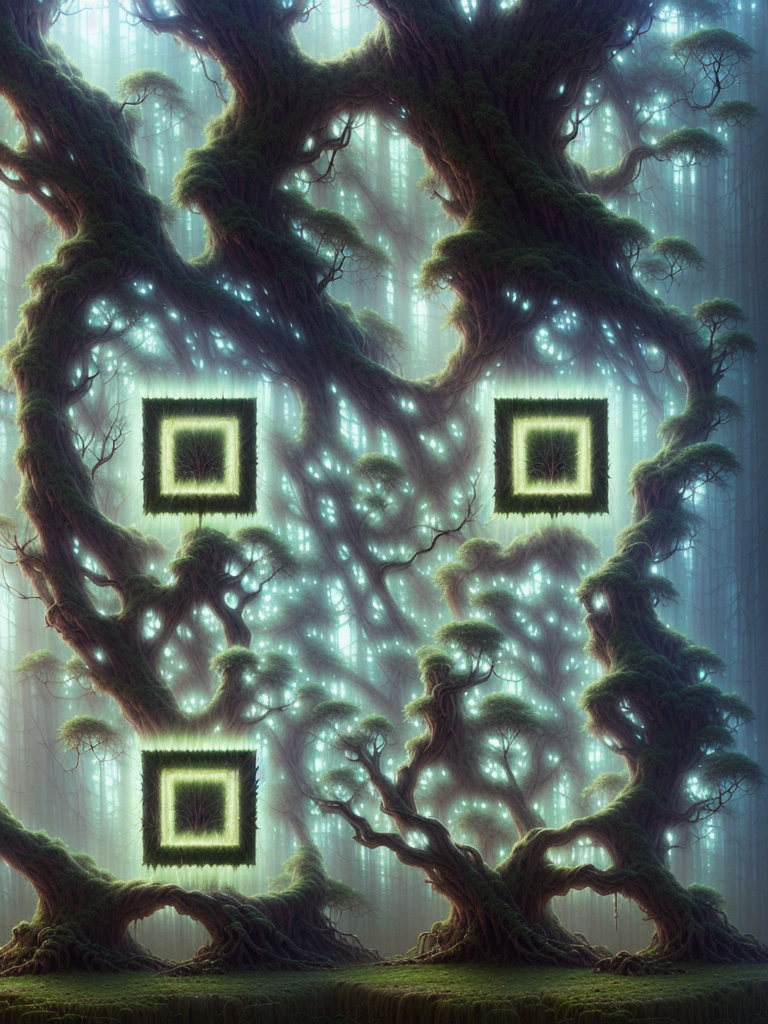
Figure 1. Sample output from the ControlNet QR Code Monster model, integrating QR code patterns into a mystical forest scene. Tree-like features and glowing code 'eyes' blend seamlessly with the artwork.
Model Architecture and Technical Innovations
ControlNet 1.5 QR Code harnesses the ControlNet architecture, which allows precise manipulation of diffusion models through externally supplied conditioning images—in this case, QR codes. The model utilizes the underlying Stable Diffusion 1.5 model as its base architecture. ControlNet acts as a guidance mechanism, enabling the model to inject QR code structure into generated images while following users' textual prompts.
To ensure robust readability of the QR codes within diverse artistic contexts, the model uses a module size of 16 pixels for input QR codes as condition images. This structure is designed to balance creative integration with the technical demands of machine vision. The control guidance scale parameter regulates the trade-off between visual creativity and code legibility, with higher values favoring accurate, easily scanned outputs, and lower values producing more intricate, visually rich results.
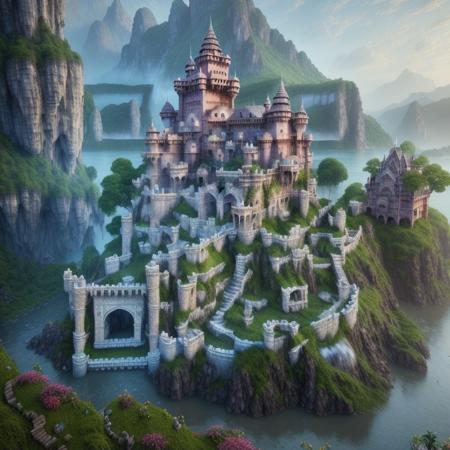
Figure 2. Artistic castle landscape generated by ControlNet QR Code Monster, demonstrating subtle and creative QR code integration into architecture and landscape features.
Creative QR Code Generation and Functional Integration
A distinguishing feature of the model is its capacity to blend QR code structures within a highly diverse array of visual motifs, such as organic matter, gothic ornamentation, fantasy environments, or even portraits, all while retaining enough code fidelity for effective scanning. Outputs depend heavily on prompt engineering, with textual cues guiding the visual synthesis and the contextual embedding of the QR code.
The scannability of generated codes is a primary consideration. The model incorporates recommendations such as employing a neutral grey background (RGB #808080) to optimize code blending for both functional and aesthetic results. Error correction capabilities in QR standards are leveraged to tolerate greater artistic variation while preserving decoding reliability. Users can adjust error correction levels and make iterative modifications to enhance scan success, particularly for complex or miniature code designs.
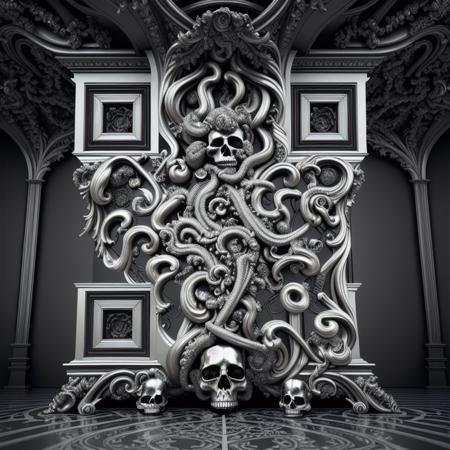
Figure 3. A photorealistic gothic panel from the model output, with QR code elements artfully interwoven with skull— and silver tentacle—motifs, preserving both visuals and machine-readability.
Training Data and Advancement in Version 2
The latest release, Version 2.0, was retrained with expanded and improved datasets. This retraining aimed to modify the artistic integration and functional reliability of produced QR codes. This iteration was designed to provide flexibility for prompt-driven customization and consistency under varying visual conditions. Usage statistics and model benchmarks provide data on the model's adoption, with user feedback commenting on the model's creative output and practical function.
Error correction strategies and conditioning enable generation of QR code compositions, particularly when working with challenging or novel prompts. The model also supports image-to-image workflows—users can iteratively refine outputs by adjusting denoising parameters and guidance scales, gradually approaching a balance where the QR code meets both creative and scanning requirements.
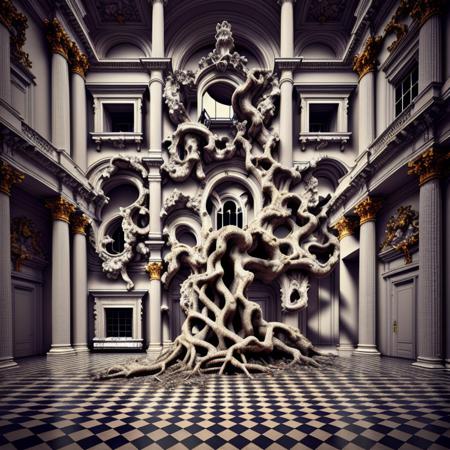
Figure 4. Model output integrating root-like organic QR code elements seamlessly into the wall of a grand, classical interior environment.
Practical Considerations, Use Cases, and Limitations
ControlNet QR Code Monster finds applications in branding, artistic signage, marketing, personal QR designs, and WiFi credentials, among others, where conventional QR codes would be visually intrusive or undesirable. Its capacity for producing both scannable and visually complex outputs allows for its use in creative and technical domains.
Readability of generated codes is not absolute; users may need to experiment with prompts, guidance scale settings, and code parameters to ensure both visual appeal and scanning viability. Documented workflows recommend generating multiple outputs and evaluating their efficacy in real-world scanning conditions. Some users have noted minor rendering artifacts, such as unexpected color shifts or variations in QR embedding clarity. Compatibility is currently aligned with Stable Diffusion 1.5, with community interest expressed for adaptations to newer architectures.
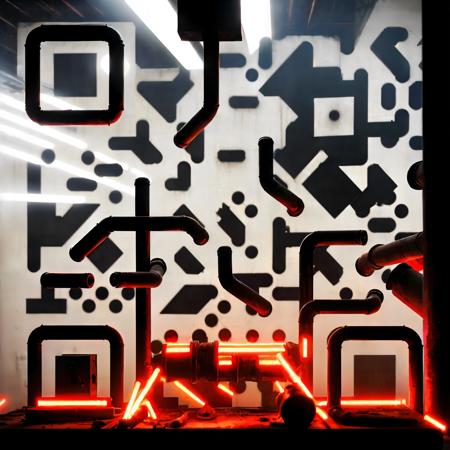
Figure 5. An industrial-inspired artwork where QR codes are integrated with 3D-rendered pipes and glowing accents.
Model Availability, Milestones, and Technical Documentation
The initial release of the QR Code Monster model occurred on July 20, 2023, with updates documented in its official repositories, including those in October 2024. The model is publicly available in the SafeTensor format, and is accompanied by a configuration file for reproducibility.
For effective use, users are encouraged to consult the model's technical usage guide, which details prompt guidelines, background color recommendations, and controlnet guidance adjustments. The model is actively maintained, and further iterations may incorporate newer architectures or updated training data.
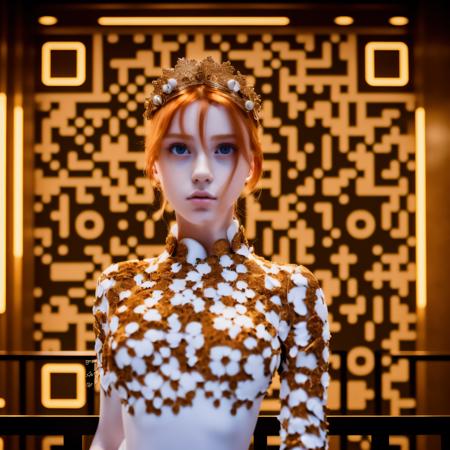
Figure 6. Model output featuring a portrait set against a glowing, QR code-themed background, demonstrating the integration of aesthetic and functional QR code elements.
More in the Stable Diffusion 1 Family
Stable Diffusion 1.1
Stable Diffusion 1.5
OpenJourney v4
Photon
Juggernaut
Analog Diffusion
Dreamshaper
Realistic Vision
Meina Mix
epiCRealism
Absolute Reality
Cyber Realistic
MajicMIX Realistic
epiCPhotoGasm
ControlNet SD 1.5 Canny
ControlNet SD 1.5 IP2P
ControlNet SD 1.5 Depth
ControlNet SD 1.5 MLSD
ControlNet SD 1.5 Normal
ControlNet SD 1.5 Open Pose
ControlNet SD 1.5 Scribble
ControlNet SD 1.5 Segmentation
ControlNet SD 1.5 Soft Edge
ControlNet SD 1.5 Inpaint
ControlNet SD 1.5 Line Art
ControlNet SD 1.5 Lineart Anime
ControlNet SD 1.5 Shuffle
ControlNet SD 1.5 Tile
ControlNet 1.5 IP Adapter
Compatible Apps
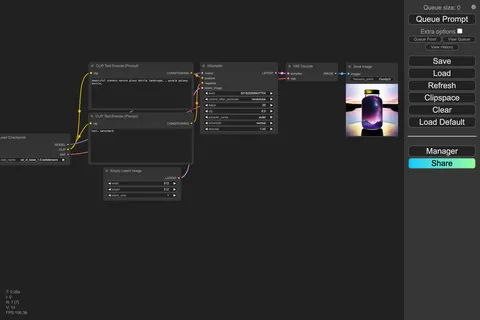
ComfyUI
A node-based workflow builder for advanced image and video generation, ideal for custom pipelines, fine control, and power users.
Web UI · API
Image Generation · Video Generation
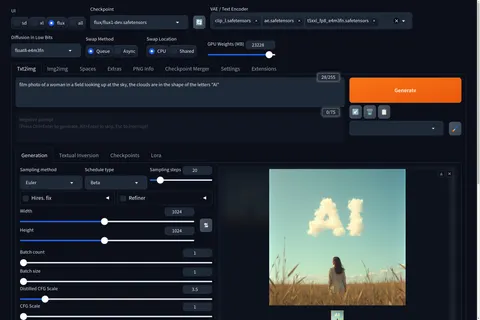
Stable Diffusion WebUI Forge
A faster, more experimental Stable Diffusion WebUI variant focused on improved resource use, quicker inference, and modern model support.
Web UI · API
Image Generation
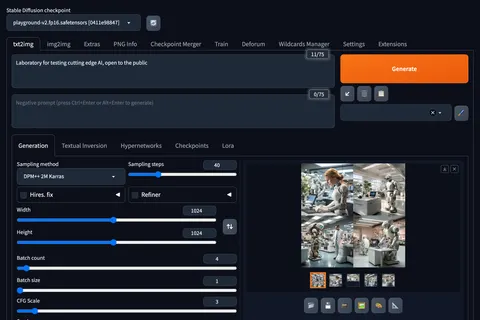
Stable Diffusion Web UI
A full-featured Stable Diffusion interface with deep controls for prompting, inpainting, extensions, and advanced image workflows.
Web UI · API
Image Generation · Video Generation
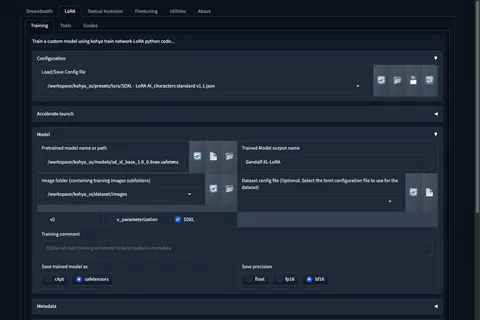
Kohya's GUI
Train LoRAs and fine-tunes for Stable Diffusion and FLUX with a popular GUI for Kohya-based training workflows.
Web UI · API
Fine-Tuning · Image Generation