epinikion
epiCPhotoGasm
Downloads
Model Report
Overview
epiCPhotoGasm is a generative artificial intelligence model for photorealistic image synthesis, developed by epinikion. First released on April 5, 2024, and subsequently updated on February 14, 2025, epiCPhotoGasm is designed to produce realistic images across a variety of scenes, subjects, and demographics. Drawing from diffusion model architectures, the model supports the creation of diverse and detailed photographic images with minimal prompt engineering. Its development situates it within the broader landscape of diffusion-based image generators, as a fine-tuned implementation of Stable Diffusion 1.5.
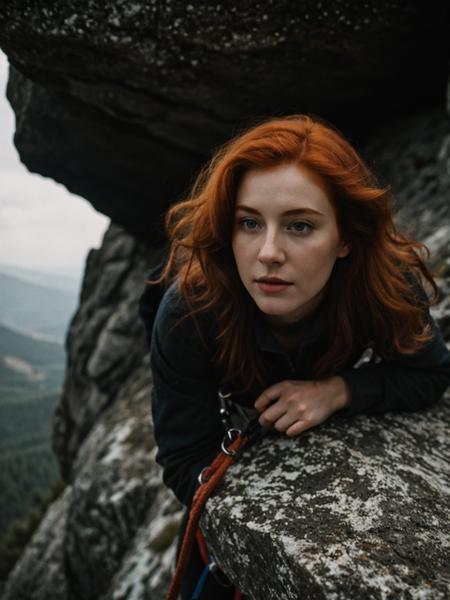
Figure 1. Sample output from epiCPhotoGasm: a photorealistic outdoor climbing scene, highlighting the model's ability to render natural light, human figures, and environmental detail.
Model Architecture and Technical Foundations
epiCPhotoGasm is implemented as a checkpoint-trained model, leveraging Stable Diffusion 1.5 (SD 1.5) as its foundational architecture. The model is distributed in the SafeTensor format, with its pruned fp16 version occupying approximately 1.99 GB. This configuration supports image generation while producing photorealistic detail. As part of its design, epiCPhotoGasm supports prompt simplicity; users can produce outputs without needing extensive negative prompting or the explicit inclusion of descriptors such as "photo" in their instructions. The model demonstrates stability during inference, supported by the existing ecosystem of SD 1.5-based tooling.
Core Features and Capabilities
The model produces images with a high degree of realism, particularly apparent in photographic lighting, scene composition, and texture representation. It is tuned for realistic rendering of faces, environments, and objects. The model supports the inference of photographic conventions from minimal prompts. This enables nuanced outputs across scenes ranging from nature to portraiture, often without the need for additional prompt modifiers such as "4k," "super realistic," or "masterpiece." The model interprets concise textual descriptions to produce photographic syntheses.

Figure 2. An example of epiCPhotoGasm's output: an AI-generated image of a cat dressed in a superhero outfit, demonstrating texture and lighting.
Ethnic and age diversity are considered in epiCPhotoGasm's training. The model generates representations across a range of ethnic backgrounds and age groups, responding to prompts specifying demographic characteristics. It supports the generation of complex scenes with dramatic, cinematic, or moody lighting.
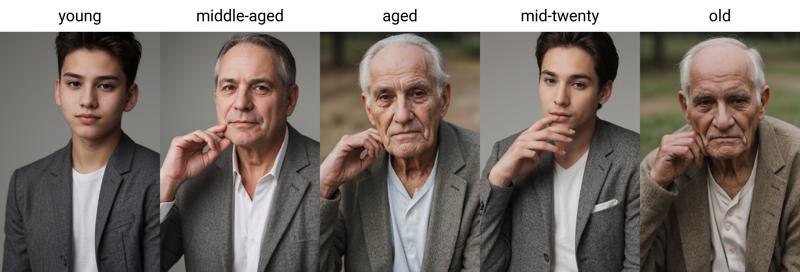
Figure 3
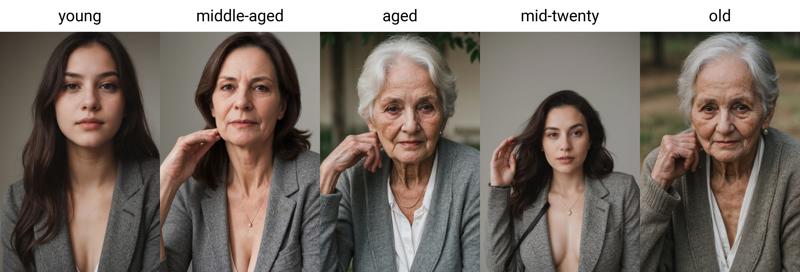
Figure 4
In addition, epiCPhotoGasm interprets environmental and atmospheric descriptions to create scenes with realistic weather and light effects. The model can generate natural landscapes in various lighting conditions, exemplifying its generalization capabilities across multiple domains.

Figure 5
Usage Recommendations
The model is optimized for simplicity in prompt design. Users are advised to omit common photorealistic enhancers such as "masterpiece," "photorealistic," "4k," "8k," and similar terms, as these are unnecessary for achieving results. Instead, concise prompts with clear subject and context information are generally sufficient. For atmospheric effects—such as "cinematic," "dark," or "moody light"—including such descriptors can specify output without introducing artifacts. It is recommended to use minimal negative prompting, focusing on a small number of tokens or single negative embeddings as needed.
For optimal image quality, inference settings should typically begin with approximately 20 sampling steps; no additional noise offset is required. The model is compatible with the extensions and toolchains commonly used in the Stable Diffusion ecosystem, including tools for detail enhancement and upscaling.
Performance and Limitations
Community analysis of epiCPhotoGasm highlights its favorable reception, including over 2,400 positive reviews and a large number of downloads and user interactions within online model sharing platforms. The model’s performance is marked by consistent photorealism in a wide variety of scenes. However, due to its SD 1.5 foundation, it may exhibit prompt adherence that is comparatively lower than more recent architectures, such as XL-series models. While epiCPhotoGasm responds effectively to many descriptors, complex or highly specific prompts may sometimes require iterative refinement.
The model also demonstrates proficiency in rendering both hypernetworks and complex lighting. It should be noted that exact details regarding training datasets and procedures have not been disclosed. As with any model trained on broad datasets, users may sometimes observe limitations in prompt generalization or output consistency.
Related Models and Licensing
epiCPhotoGasm is one of several photorealistic generative models by epinikion, including related works such as epiCRealism XL (based on the XL checkpoint), epiCCartoon (SD1-based cartoon checkpoint), and epiCPhoto (an embedding-oriented model for SD1). For comparative context, Analogmadness is another photorealistic model mentioned by the user community as having stricter constraints on output diversity.
The distribution and permissible uses of epiCPhotoGasm are defined by the CreativeML Open RAIL-M license, with an additional addendum as specified by the creator.
External Resources
- Civitai Guide: How to Use Fine-Tuned Model Checkpoints
- Stable Diffusion 1.5 Explained (YouTube)
- Resource: colorful Photo (Negative Style)
- Resource: soft Photo (Negative Style)
- !After Detailer Extension (GitHub)
- ControlNet Extension (GitHub)
- Agent Scheduler Extension (GitHub)
- Ultimate SD Upscale Extension (GitHub)
- CreativeML Open RAIL-M License
- Support the Creator epinikion (Ko-fi)
More in the Stable Diffusion 1 Family
Stable Diffusion 1.1
Stable Diffusion 1.5
OpenJourney v4
Photon
Juggernaut
Analog Diffusion
Dreamshaper
Realistic Vision
Meina Mix
epiCRealism
Absolute Reality
Cyber Realistic
MajicMIX Realistic
ControlNet SD 1.5 Canny
ControlNet SD 1.5 IP2P
ControlNet SD 1.5 Depth
ControlNet SD 1.5 MLSD
ControlNet SD 1.5 Normal
ControlNet SD 1.5 Open Pose
ControlNet SD 1.5 Scribble
ControlNet SD 1.5 Segmentation
ControlNet SD 1.5 Soft Edge
ControlNet SD 1.5 Inpaint
ControlNet SD 1.5 Line Art
ControlNet SD 1.5 Lineart Anime
ControlNet SD 1.5 Shuffle
ControlNet SD 1.5 Tile
ControlNet 1.5 IP Adapter
ControlNet 1.5 QR Code
Compatible Apps
ComfyUI
A node-based workflow builder for advanced image and video generation, ideal for custom pipelines, fine control, and power users.
Web UI · API
Image Generation · Video Generation
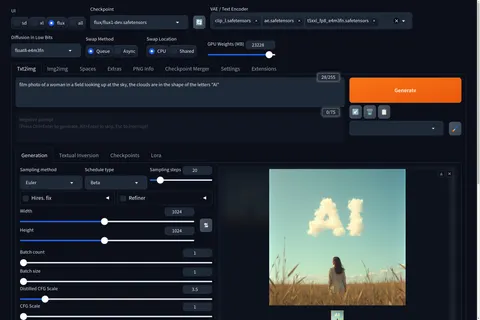
Stable Diffusion WebUI Forge
A faster, more experimental Stable Diffusion WebUI variant focused on improved resource use, quicker inference, and modern model support.
Web UI · API
Image Generation
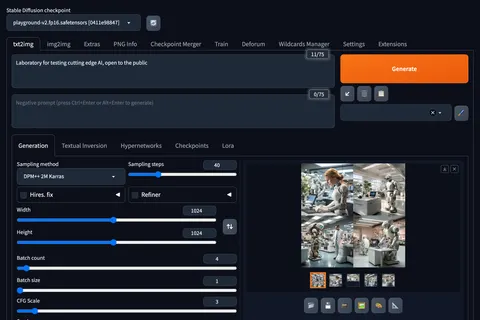
Stable Diffusion Web UI
A full-featured Stable Diffusion interface with deep controls for prompting, inpainting, extensions, and advanced image workflows.
Web UI · API
Image Generation · Video Generation

Kohya's GUI
Train LoRAs and fine-tunes for Stable Diffusion and FLUX with a popular GUI for Kohya-based training workflows.
Web UI · API
Fine-Tuning · Image Generation