lllyasviel
ControlNet SD 1.5 Inpaint
Downloads
Model Report
Overview
ControlNet SD 1.5 Inpaint is a specialized deep learning model designed for controlled inpainting within the broader ControlNet 1.1 model suite, leveraging Stable Diffusion 1.5 as its generative backbone. It introduces masking-based guidance for image completion, enabling the generation of realistic content within specified regions of an image. The model is trained to be applicable not only for static image inpainting but also for video-related tasks, where handling occlusions and maintaining temporal coherence are crucial.
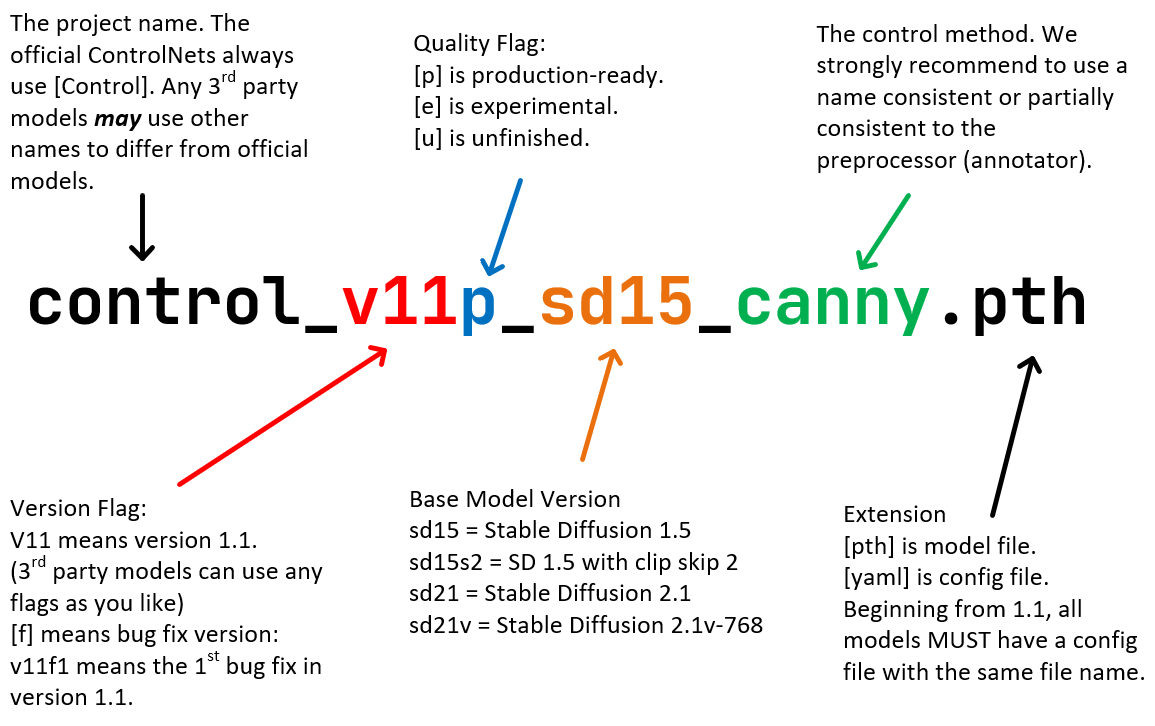
Figure 1. Diagram illustrating the Standard ControlNet Naming Rules (SCNNRs) for ControlNet 1.1 models.
Technical Capabilities
ControlNet SD 1.5 Inpaint is optimized for intelligent completion of masked regions within images, using user-provided prompts and surrounding context as guidance. The model's architecture is identical to that of earlier ControlNet versions, ensuring compatibility and stability across the 1.x series. Its training regimen involves a mixture of randomly generated masks and optical flow occlusion masks, promoting robustness in both general inpainting and video processing scenarios.
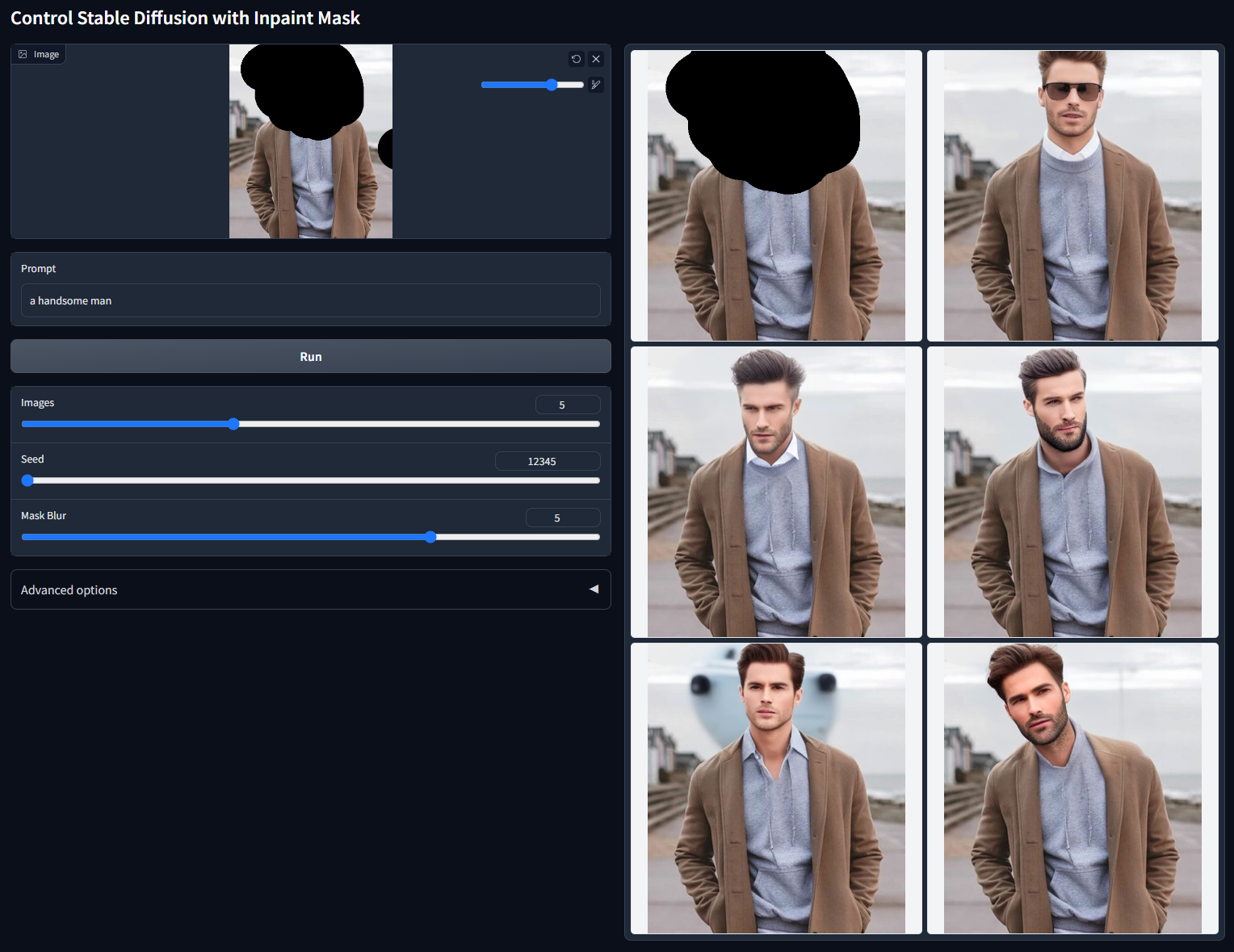
Figure 2. Example batch outputs from ControlNet 1.1 Inpaint for the prompt 'a handsome man', where the masked region of the man's head is rendered with various plausible completions.
A crucial element of the model's functionality is mask-based training. Approximately half of the training utilizes arbitrary random masks, while the remainder employs occlusion masks derived from optical flow data. This dual approach ensures the model can both fill in missing image content and adapt to motion-induced occlusions in video frames. As a result, the model supports not only static image restoration but also video inpainting and optical flow warping applications.
Model Architecture and Training Methods
ControlNet SD 1.5 Inpaint is built upon the ControlNet 1.1 architecture, which itself is closely aligned with the earlier 1.0 release. This consistent architecture enables seamless integration with Stable Diffusion 1.5, utilizing the v1-5-pruned.ckpt checkpoint as the generative foundation.
The training process incorporates two main mask strategies. In the first, the model is exposed to images with randomly positioned and shaped masks, fostering general-purpose inpainting adaptability. In the second, masks are informed by simulated occlusions based on optical flow, a technique commonly used in video analysis to track pixel movements. This blend trains the model to handle both static and dynamic occlusions, facilitating plausible image completions even within complex visual environments.
All annotator submodels required for processing control information (such as HED or OpenPose) can be automatically retrieved or manually installed from the annotators repository, streamlining deployment and experimentation.
Applications and Use Cases
The primary application of ControlNet SD 1.5 Inpaint is guided image completion, where masked areas of an image are filled in contextually, based on adjacent visual information and textual prompts. This capability is widely leveraged in artistic editing, restoration of incomplete or damaged photographs, object removal, and scene modification.
Additionally, the model's exposure to optical flow occlusion masks extends its utility to video-related domains. It can support temporally consistent frame interpolation, video stabilization, and the seamless filling of regions that become exposed due to object motion or camera movement. The controlled approach allows for iterative refinement and fine-tuning of masked content to achieve visually coherent results across multiple frames or images.
Related Models and Extensions
ControlNet 1.1 encompasses a diverse set of models tailored for distinct conditional input types, governed by the Standard ControlNet Naming Rules (SCNNRs). These include models for edge detection, depth estimation, normal maps, line art, pose approximation, semantic segmentation, and more, each optimized with domain-specific dataset augmentations or architectures.
Within this family, the "production-ready" models—for instance, those for depth (control_v11f1p_sd15_depth), canny edges, and normal maps—prioritize robustness and accuracy for practical scenarios. Experimental models explore novel forms of control, such as compositional shuffling or instruction-based editing, as exemplified by the Instruct Pix2Pix variant.
A notable development in the ecosystem is the introduction of Control-LoRAs, a parameter-efficient fine-tuning technique reducing resource demands while maintaining substantial control fidelity. These variants facilitate consumer-level deployment by dramatically decreasing model size without heavily compromising capability.
Limitations
The documentation for ControlNet SD 1.5 Inpaint does not specify unique model-specific limitations, beyond general caveats applicable to machine learning systems—such as potential artifacts in complex masking scenarios or inconsistencies in highly ambiguous regions. As with other models in the suite, successful operation may depend on correct file management and version compatibility with the base Stable Diffusion model and associated annotators.
Licensing and Availability
While explicit licensing details for ControlNet SD 1.5 Inpaint are not detailed in the main documentation, the model and related resources are widely distributed for academic, research, and non-commercial experimentation. Researchers and developers are advised to review individual repositories and documentation for any updated licensing statements.
External Resources
- ControlNet v1.1 Model Page on HuggingFace
- Stable Diffusion v1.5 Checkpoint
- ControlNet Annotator Models
- sd-webui-controlnet GitHub Repository
- Multi-ControlNet Plugin Documentation
- Using ControlNet Inpaint in Automatic1111 Discussion
- Instruct Pix2Pix Dataset for ControlNet
- ComfyUI GitHub
- StableSwarmUI GitHub
- Stability ComfyUI Custom Nodes
More in the Stable Diffusion 1 Family
Stable Diffusion 1.1
Stable Diffusion 1.5
OpenJourney v4
Photon
Juggernaut
Analog Diffusion
Dreamshaper
Realistic Vision
Meina Mix
epiCRealism
Absolute Reality
Cyber Realistic
MajicMIX Realistic
epiCPhotoGasm
ControlNet SD 1.5 Canny
ControlNet SD 1.5 IP2P
ControlNet SD 1.5 Depth
ControlNet SD 1.5 MLSD
ControlNet SD 1.5 Normal
ControlNet SD 1.5 Open Pose
ControlNet SD 1.5 Scribble
ControlNet SD 1.5 Segmentation
ControlNet SD 1.5 Soft Edge
ControlNet SD 1.5 Line Art
ControlNet SD 1.5 Lineart Anime
ControlNet SD 1.5 Shuffle
ControlNet SD 1.5 Tile
ControlNet 1.5 IP Adapter
ControlNet 1.5 QR Code
Compatible Apps
ComfyUI
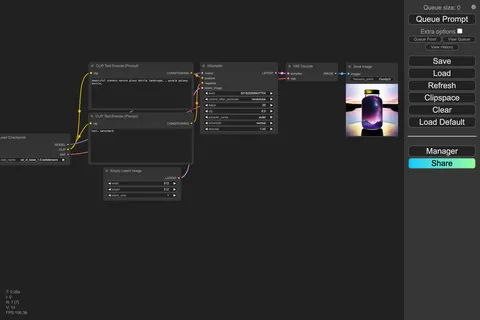
A node-based workflow builder for advanced image and video generation, ideal for custom pipelines, fine control, and power users.
Web UI · API
Image Generation · Video Generation
Stable Diffusion WebUI Forge
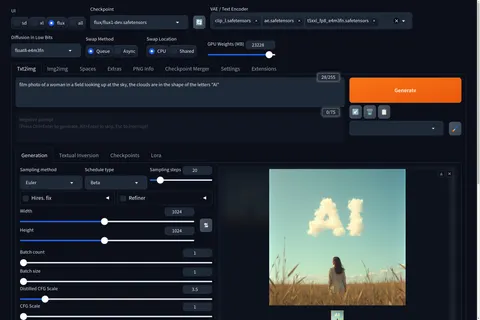
A faster, more experimental Stable Diffusion WebUI variant focused on improved resource use, quicker inference, and modern model support.
Web UI · API
Image Generation
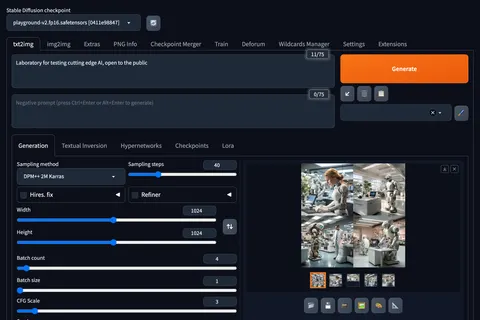
Stable Diffusion Web UI
A full-featured Stable Diffusion interface with deep controls for prompting, inpainting, extensions, and advanced image workflows.
Web UI · API
Image Generation · Video Generation
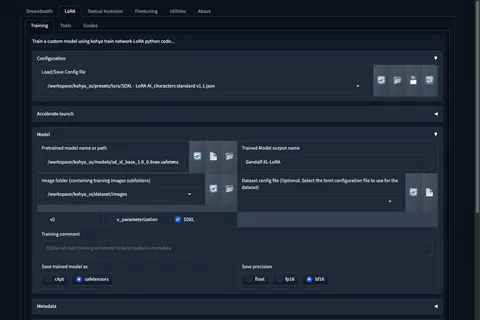
Kohya's GUI
Train LoRAs and fine-tunes for Stable Diffusion and FLUX with a popular GUI for Kohya-based training workflows.
Web UI · API
Fine-Tuning · Image Generation