stabilityai
ControlNet SDXL Recolor
Released
2023-08-29
Family
Stable Diffusion XL
Type
ControlNet Model
Downloads
Model Report
Overview
ControlNet SDXL Recolor is a generative AI model designed for image colorization, functioning as a Control-LoRA extension for the Stable Diffusion XL (SDXL) architecture. This model specializes in adding color to grayscale photographs and hand-drawn sketches, supporting production applications within the broader ControlNet 1.1 model suite. Developed with a focus on efficiency and versatility, ControlNet SDXL Recolor enables users to transform monochrome media into colored outputs. The model implements parameter-efficient fine-tuning strategies, making it suitable for various computational environments and integration with other ControlNet models.
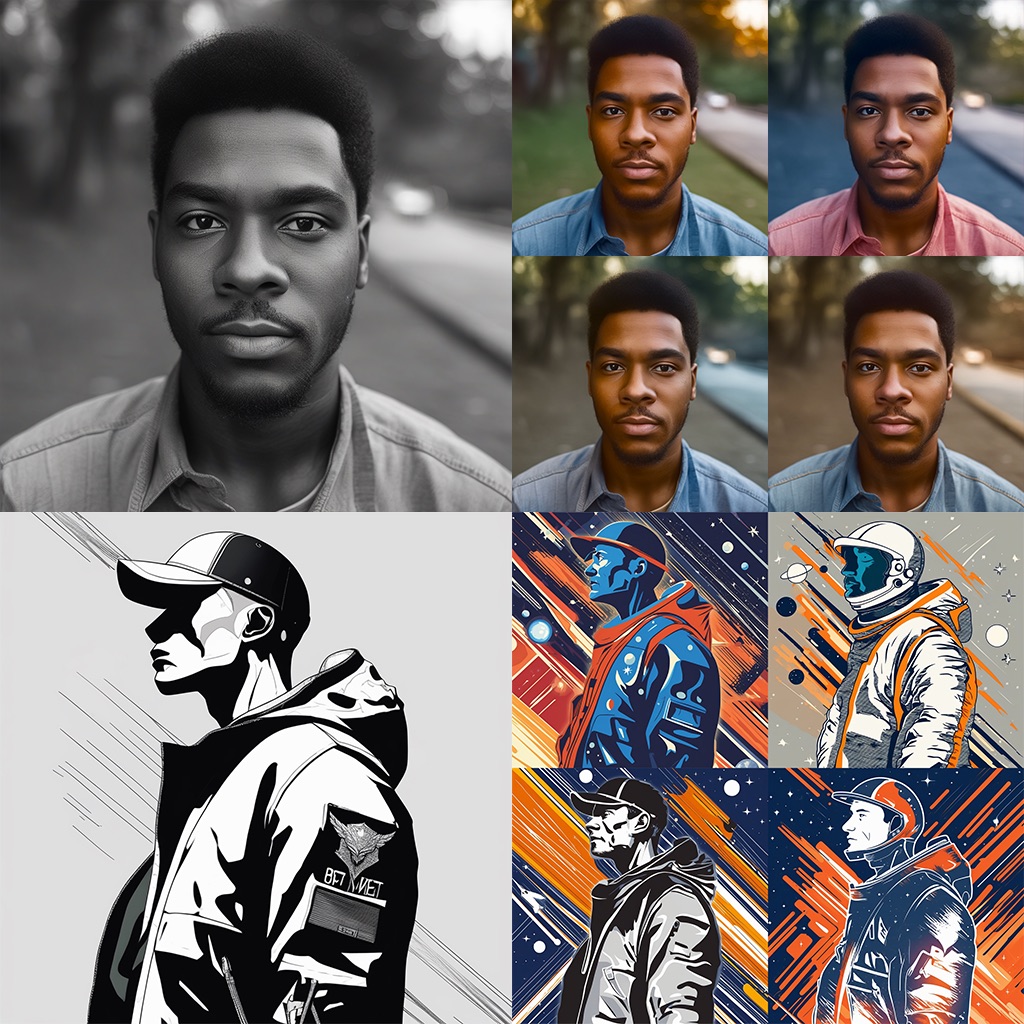
Figure 1. Sample outputs of ControlNet SDXL Recolor: colorized versions of both black and white photographs and sketches demonstrate the model's dual functionality for restoration and creative coloring tasks.
Model Architecture and Technology
ControlNet SDXL Recolor is built upon the ControlNet 1.1 architecture, inheriting the modular framework designed for guided image synthesis. Control-LoRA models utilize low-rank adaptation (LoRA), which introduces parameter-efficient fine-tuning by injecting small trainable matrices into the original architecture. This approach reduces the file size compared to full ControlNet checkpoints, decreasing typical model storage from 4.7GB to as little as 738MB or 377MB, depending on the selected rank, while maintaining performance characteristics consistent with the original model.
At its core, ControlNet overlays conditioning networks onto the image generation pipeline of SDXL, allowing for fine-grained control based on input hints such as edges, depth maps, or, in the case of Recolor, grayscale tonal distribution and sketch outlines. A crucial implementation detail involves the use of global average pooling to aggregate features before merging them into the SDXL UNet layers. This enables efficient modulation of the generation process, ensuring colorization is applied only on the conditional side of the classifier-free guidance (Cfg) scale. These technical improvements foster the model's integration with SDXL, resulting in context-aware colorization from varied forms of monochrome input. Details of the architecture and LoRA methodology are available in the ControlNet 1.1 documentation and Hugging Face release notes.
Colorization Capabilities and Use Cases
ControlNet SDXL Recolor is configured for two principal colorization tasks. First, in “Recolor” mode, it restores and enhances black and white photographs, simulating naturalistic or creatively stylized color palettes. Second, its “Sketch” mode targets white-on-black drawings—either hand-drawn or generated with edge detection methods such as the pidi edge model—providing a framework for artists to apply color to line art.
Both modes employ learned mappings from tonal cues to plausible color distributions, leveraging the SDXL backbone’s expressivity. The model can be deployed for photo restoration, archival enhancement, creative illustration, and preprocessing in digital workflows where coloring is desired. Its compatibility with other ControlNets further expands its utility, facilitating combined operations such as joint colorization and inpainting, or mixing with depth or posture controls for complex image manipulations. General model usage and multi-ControlNet workflows are supported as described in the ControlNet project documentation and the Automatic1111 plugin integration.
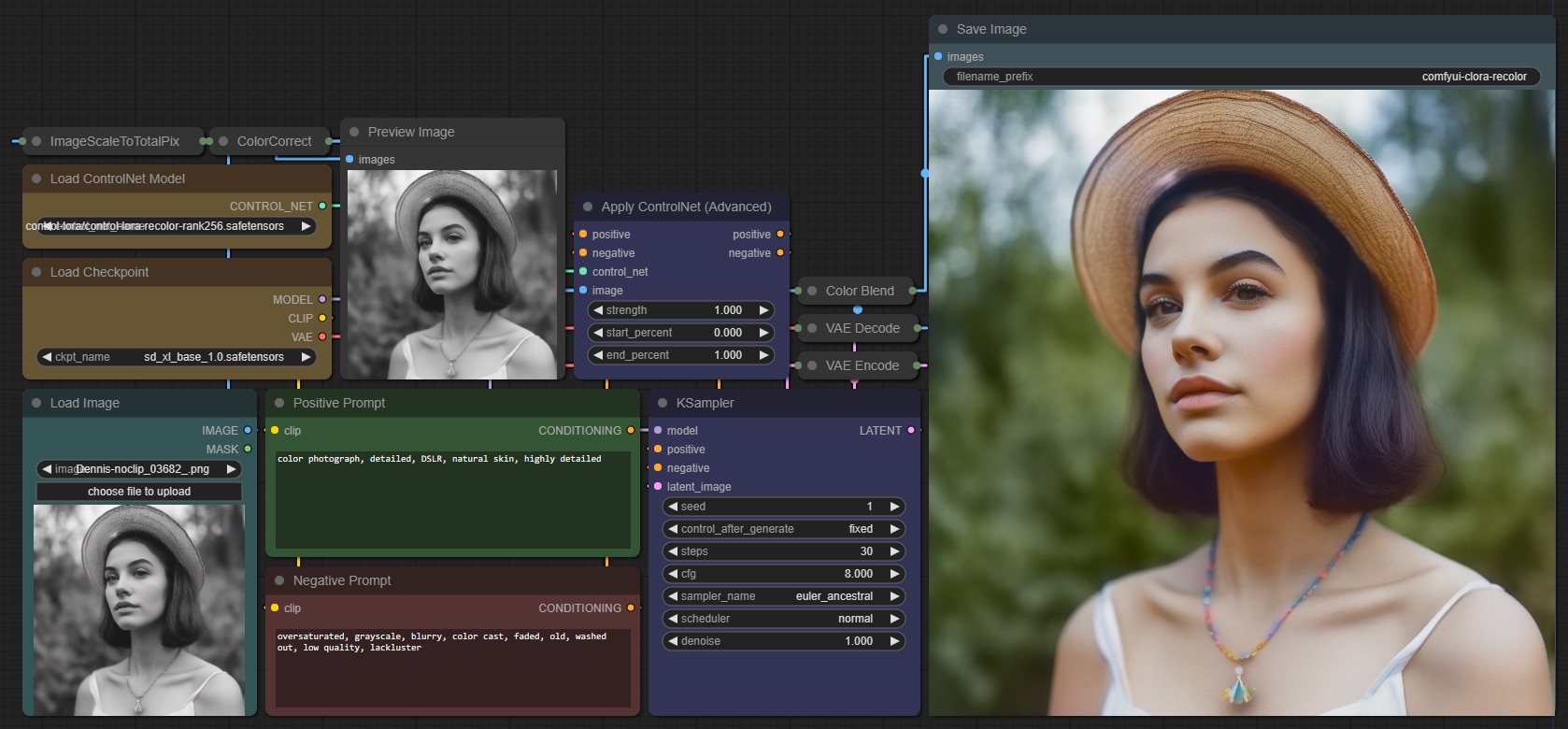
Figure 2. The ComfyUI interface demonstrates ControlNet SDXL Recolor in action: a grayscale portrait is transformed into a realistic, colorized image through a visual processing workflow. The prompt used is a grayscale headshot of a woman, illustrating both the input and the resulting output.
Training Data and Methodology
Details about the precise datasets used to train ControlNet SDXL Recolor have not been fully disclosed. However, the broader ControlNet 1.1 family emphasizes enhanced data quality and augmentation techniques. Enhancements over earlier versions include the removal of duplicate grayscale human images, reduction of low-quality or compressed images, and correction of prompts for better paired training. Augmentation strategies—such as random image flipping—help generalize model performance across diverse photographic and sketch styles. These refinements contribute to reduced artifacts in colorization outcomes, as discussed in the official ControlNet 1.1 updates.
The overall training process involves conditioning the model to learn plausible mappings between input grayscale or line art images and their corresponding colorized forms. The Control-LoRA training procedure focuses on minimizing additional parameter footprint while maintaining fidelity in generated results.
Integration and Compatibility
ControlNet SDXL Recolor is engineered for integration with SDXL workflows, benefiting from compatibility with various user interfaces such as ComfyUI and StableSwarmUI. The model also participates in the “Multi-ControlNet” ecosystem, wherein additive controls from multiple ControlNets (including community models and custom LoRAs) can be arbitrarily combined, especially in production pipelines managed through the Automatic1111 plugin.
Model deployment typically involves referencing the appropriate Control-LoRA checkpoint (by rank and mode), ensuring that associated configuration files activate recommended features such as global average pooling. Implementation instructions, compatibility details, and advanced setup recommendations are regularly maintained in the ControlNet project repositories.
Model Family and Related Models
ControlNet SDXL Recolor belongs to a suite of ControlNet 1.1 models, each designed to condition SDXL-based image generation on different input modalities. Notable models in the family include ControlNet SDXL Canny for edge-based guidance, ControlNet SDXL Depth for spatial awareness, ControlNet SDXL Openpose for pose estimation, and ControlNet SDXL IP-Adapter for image prompt adaptation. This modular approach enables coverage of image transformation tasks, with each Control-LoRA providing efficient, focused parameter updates for its target function.
The full set of ControlNet 1.1 models, including both production-ready and experimental controls, is described in the project documentation. The suite’s heterogeneous architecture and shared integration strategy facilitate advanced, multi-stage workflows in digital art, photography, and research contexts.
Limitations and Known Issues
While ControlNet SDXL Recolor and its companion models offer broad utility, they inherit several known limitations from the ControlNet 1.1 framework. Some models in the family are classified as experimental and may require manual selection of optimal outputs. Functionality such as multi-ControlNet composition or tiled upscaling is primarily supported via specific plugins and user interfaces, with standalone deployments often lacking full feature parity. Dependency on the Automatic1111 plugin is recommended for utilizing advanced orchestration features. Additionally, some related models—such as Anime Lineart—may require supplementary files not provided directly by the project.
External Resources
For further information and technical details, the following resources are available:
- ControlNet GitHub Repository
- Automatic1111 ControlNet Plugin
- ControlNet 1.1 Hugging Face Model Page
- Stable Diffusion 1.5
- Hugging Face Annotators for ControlNet
- ComfyUI GitHub Repository
- StableSwarmUI GitHub Repository
- Stability-AI ComfyUI Custom Nodes
- Instruct Pix2Pix Dataset
- Bae's Normalmap Estimation
- ScanNet Project
More in the Stable Diffusion XL Family
Stable Diffusion XL
SDXL Turbo
SDXL Lightning
OpenDalle
Yamer's Realistic
AlbedoBase XL
Juggernaut XL
Realistic Vision XL
New Reality XL
Realism Engine SDXL
Animagine XL
Nightvision XL
Dreamshaper XL
Pony Diffusion V6 XL
ControlNet SDXL Diffusers Canny
ControlNet SDXL Canny
ControlNet SDXL Diffusers Depth
ControlNet SDXL Depth
ControlNet SDXL IP Adapter
ControlNet SDXL Open Pose
More from stabilityai
Stable Video Diffusion
Stable Video Diffusion XT
Stable Video Diffusion XT 1.1
Stable Video 3D
Stable Video 4D
Stable Fast 3D
Stable Diffusion 2
Stable Diffusion 1.1
Stable Diffusion 1.5
Stable Diffusion 3.5 Large
Stable Diffusion 3.5 Turbo
Stable Cascade Stage A
Stable Cascade Stage B
Stable Cascade Stage C
Stable Audio Open 1.0
Compatible Apps
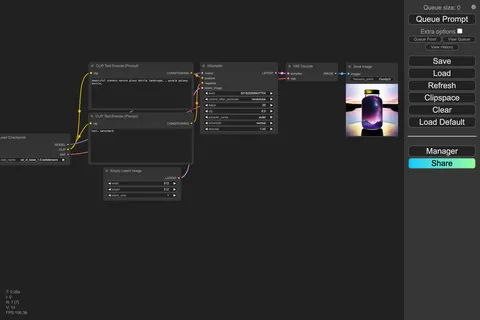
ComfyUI
A node-based workflow builder for advanced image and video generation, ideal for custom pipelines, fine control, and power users.
Web UI · API
Image Generation · Video Generation
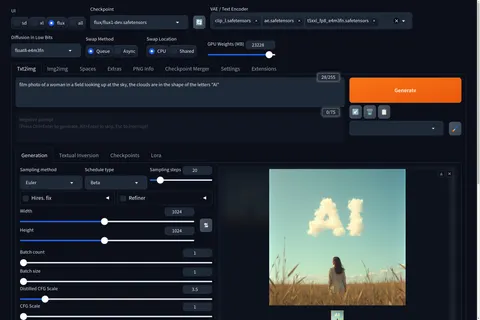
Stable Diffusion WebUI Forge
A faster, more experimental Stable Diffusion WebUI variant focused on improved resource use, quicker inference, and modern model support.
Web UI · API
Image Generation
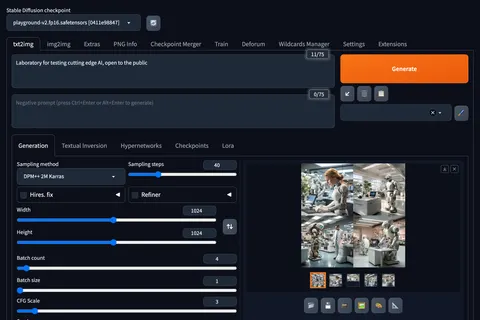
Stable Diffusion Web UI
A full-featured Stable Diffusion interface with deep controls for prompting, inpainting, extensions, and advanced image workflows.
Web UI · API
Image Generation · Video Generation
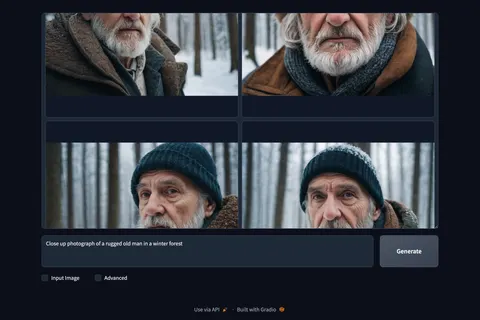
Fooocus
A beginner-friendly image generator focused on strong defaults, with built-in inpainting, outpainting, upscaling, and image prompting.
Web UI · API
Image Generation · Beginner Friendly
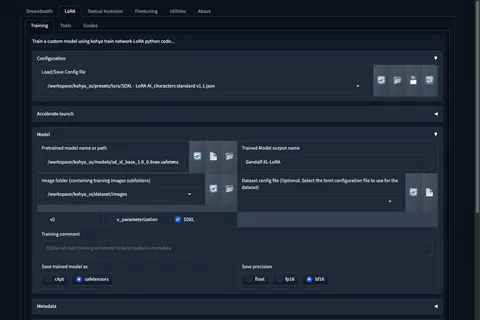
Kohya's GUI
Train LoRAs and fine-tunes for Stable Diffusion and FLUX with a popular GUI for Kohya-based training workflows.
Web UI · API
Fine-Tuning · Image Generation