albedobond
AlbedoBase XL
Released
2024-02-04
Family
Stable Diffusion XL
Type
Fine-Tuned Model
Downloads
Model Report
Overview
AlbedoBase XL is a generative artificial intelligence model developed to serve as a foundational base for SDXL and features image synthesis capabilities across diverse stylistic domains. Originating from the integration and refinement of multiple SDXL models and LoRA (Low-Rank Adaptation) modules, AlbedoBase XL features advanced merging algorithms and versatility in visual output, with prompt understanding and visual fidelity model details.

Figure 1. Sample output from AlbedoBase XL v3.1-Large demonstrating detailed human figure rendering, elaborate costume design, and complex cosmic backgrounds.
Model Architecture and Training Methodology
AlbedoBase XL is architecturally based on the SDXL checkpoint, comprising approximately 3.5 billion parameters in its core, not including a refiner. The model is created through an iterative merging strategy, combining weights from numerous community-contributed SDXL-derived models and custom-trained LoRAs. This approach utilizes a proprietary script that aligns U-NET and CLIP block weights non-linearly, resulting in a fine-tuned model with properties characteristic of this blending method details.
Notably, AlbedoBase XL incorporates self-developed LoRAs, one of which was produced through the annotation of 174 high-fidelity photographs using GPT-4V, contributing to the model's compositional clarity and comprehension of nuanced prompts. The merging process relies on extensive evaluation of public model checkpoints and LoRAs—only those demonstrating robust performance in style, realism, and versatility are selected for inclusion.
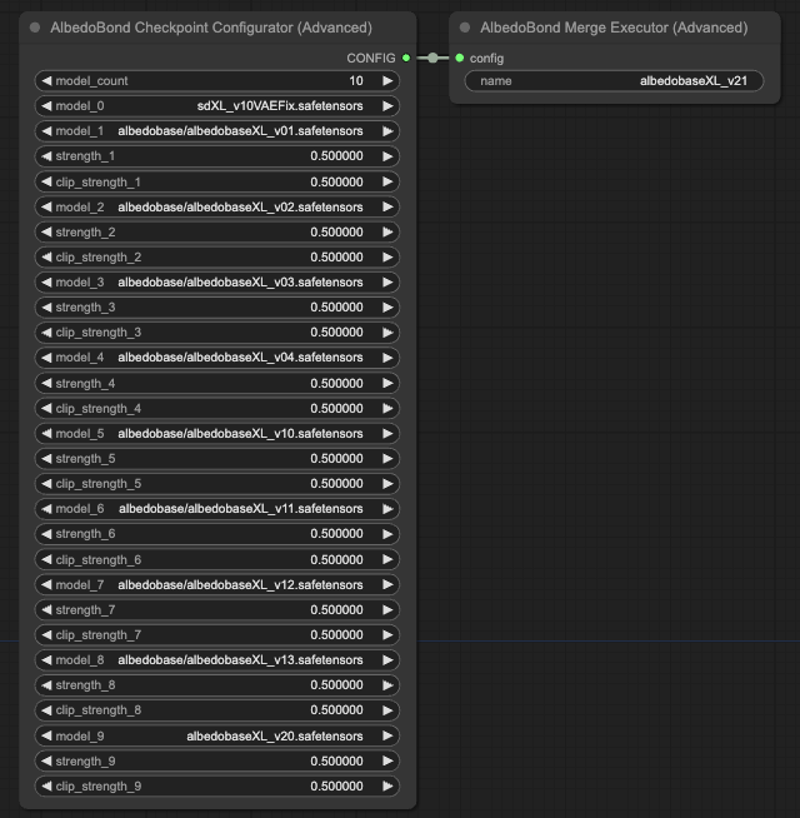
Figure 2. Screenshot of an advanced checkpoint and LoRA merging workflow for AlbedoBase XL v2.1, highlighting detailed configuration controls.
Technical Capabilities and Output Characteristics
AlbedoBase XL is engineered for broad stylistic versatility, generating images in anime, 2D, 3D, photorealistic, and artistic visual genres model description. It does not require a separate refiner, as a built-in Variational Autoencoder (VAE) is included. The model demonstrates understanding of sentence-form prompts, extracting nuanced instructions for both composition and style, while maintaining fidelity across variable image resolutions.
A characteristic of AlbedoBase XL includes its responsiveness to sampling step count: increased steps correlate with more detail or refinement in generations. The model is compatible with a wide range of diffusion samplers, and experiments indicate that results are influenced by configurations of steps and CFG scales.
The model offers robust performance with default settings, and often achieves visual fidelity when the negative prompt field is left empty, especially in recent versions. However, the inclusion of targeted negative prompts can further reduce artifacts such as asymmetrical facial features or pixelation.

Figure 3. Digital portrait generated by AlbedoBase XL, exhibiting realistic facial features and complex texture rendering. Prompt: woman in galaxy-patterned attire, snowy landscape.
Evaluation, Performance, and Benchmarking
Community feedback describes AlbedoBase XL as providing detailed, clear, and compositionally consistent images, with features in rendering hands, faces, and nuanced lighting. Quantitative benchmarks within user communities cite over 119,000 downloads for the latest version and more than 981,000 total downloads as of May 2025. The model has also garnered a user review score indicating positive reception for prompt sensitivity and stylistic flexibility compared to models with similar applications.
Automated grid benchmarks, performed across a range of samplers, scheduling types, and CFG strengths, visually demonstrate that increasing sampling steps influences fidelity and reduces generation errors. These results are further illustrated by spec grids showing consistent subject rendering and reduction of common diffusion artifacts at higher step counts.
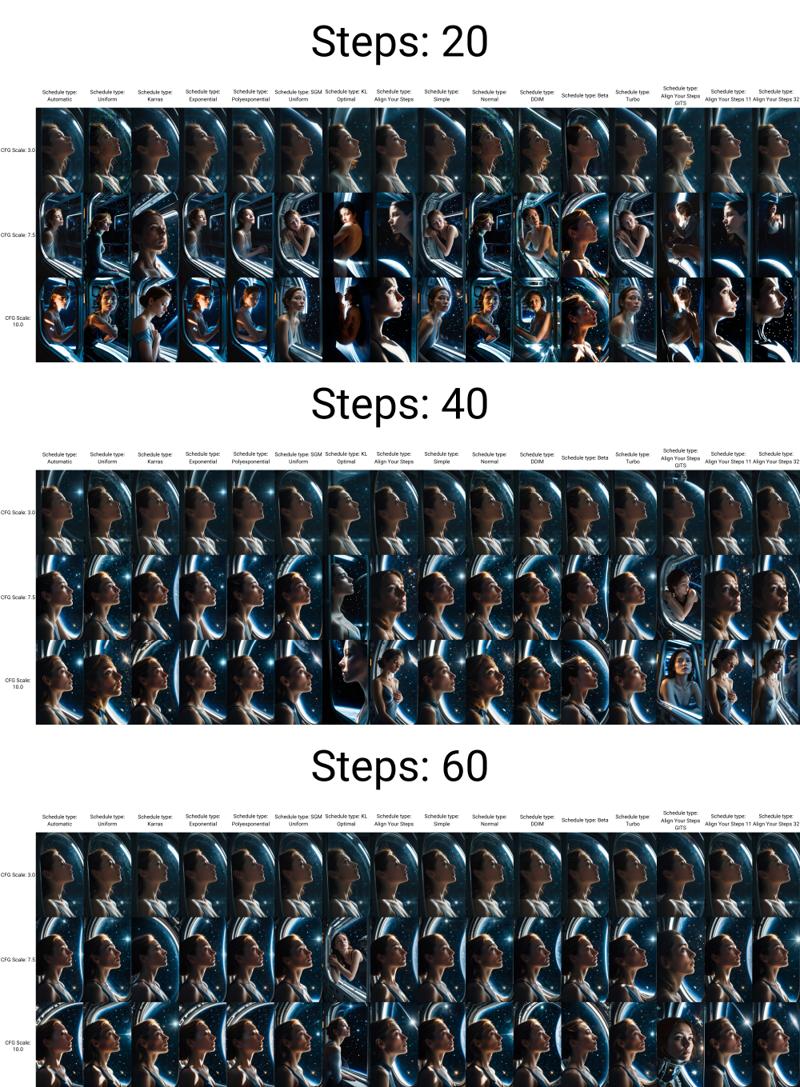
Figure 4. Advanced comparison grid for AlbedoBase XL v3.1-Large output, visualizing the effects of schedule type and CFG scale on image quality at multiple sampling steps.
Applications and Use Cases
AlbedoBase XL is applied within a broad range of generative image workflows due to its base model positioning and adaptability. It is suited for artistic illustration, concept art, anime and photorealistic portrait generation, 3D renders, and further fine-tuning by individual users or researchers application guidance. Its capacity for nuanced prompt comprehension allows for control over subject, style, and composition, making it a foundation for specialized downstream models or creative projects.
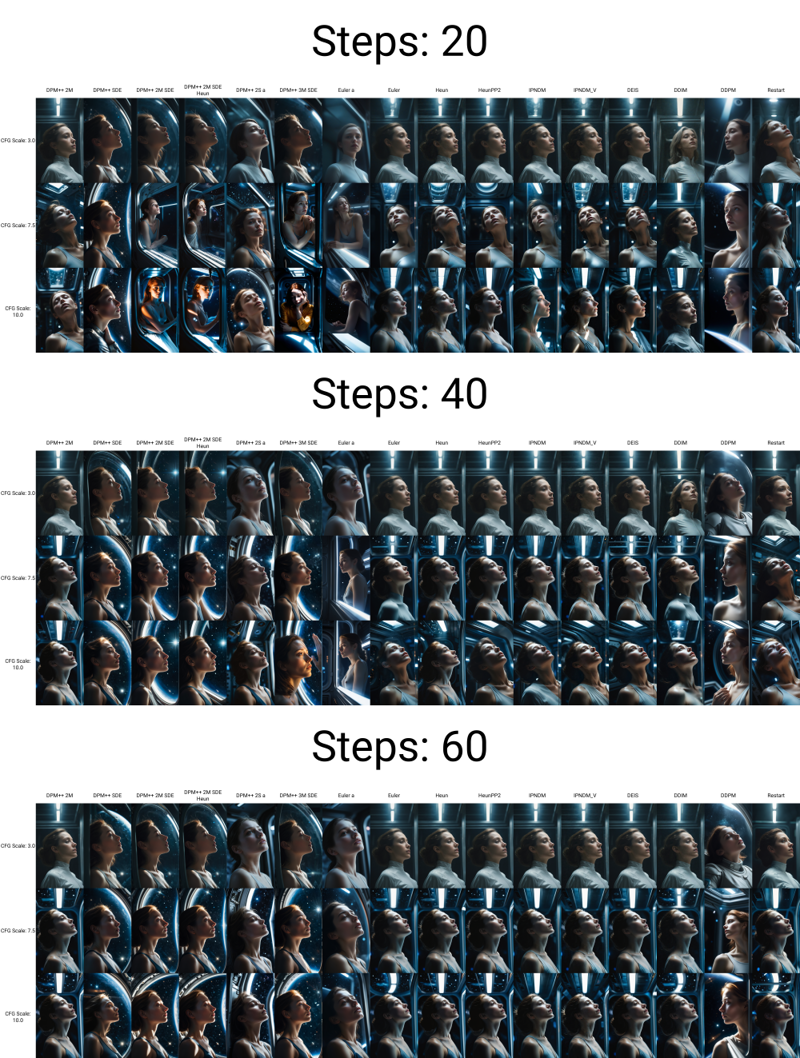
Figure 5. Stylized portrait of a man in formal attire, exemplifying AlbedoBase XL’s capacity for artistic rendering and expressive character illustration.

Figure 6. Example image from 'AlbedoBase XL Pre,' a related model in the same lineage, showing detailed environment and character rendering.
Limitations and Known Issues
Despite its versatility, AlbedoBase XL exhibits certain limitations characteristic of contemporary diffusion-based models. Users have reported isolated prompt recognition bugs, particularly with specific phrase structures that may not be parsed correctly by the underlying CLIP model. Adjusting CLIP SKIP settings or reordering prompt components can often mitigate these issues. Additionally, artifact emergence—such as asymmetrical facial features or detail loss—can occur in challenging prompt scenarios, though targeted negative prompts may ameliorate these defects limitations discussion. Dataset composition may also introduce representational biases; for example, community feedback has noted a tendency for female subjects to be generated more frequently in certain prompts.
Certain licensing restrictions on external models limit the developer’s ability to integrate all desired community checkpoints, and model merging is subject to the terms of the CreativeML Open RAIL++-M license with an addendum.
External Resources
- AlbedoBase XL on Civitai – Model details, updates, and documentation
- CreativeML Open RAIL++-M License (SDXL 1.0) – Full text of the governing license
- SDXL 1.0 Explanation Video – In-depth technical overview of the SDXL 1.0 architecture
- Civitai’s Guide to Resource Types – Explanation of generative AI model formats on Civitai
- How-to-use Fine-tuned Models on Civitai – Practical instructions for deploying and utilizing checkpoint-based models
- AlbedoBond's Hugging Face Profile – Repository of related and experimental models
- AlbedoBond's Linktree – Central directory for developer updates and community channels
More in the Stable Diffusion XL Family
Stable Diffusion XL
SDXL Turbo
SDXL Lightning
OpenDalle
Yamer's Realistic
Juggernaut XL
Realistic Vision XL
New Reality XL
Realism Engine SDXL
Animagine XL
Nightvision XL
Dreamshaper XL
Pony Diffusion V6 XL
ControlNet SDXL Diffusers Canny
ControlNet SDXL Canny
ControlNet SDXL Diffusers Depth
ControlNet SDXL Depth
ControlNet SDXL Recolor
ControlNet SDXL IP Adapter
ControlNet SDXL Open Pose
Compatible Apps
ComfyUI
A node-based workflow builder for advanced image and video generation, ideal for custom pipelines, fine control, and power users.
Web UI · API
Image Generation · Video Generation
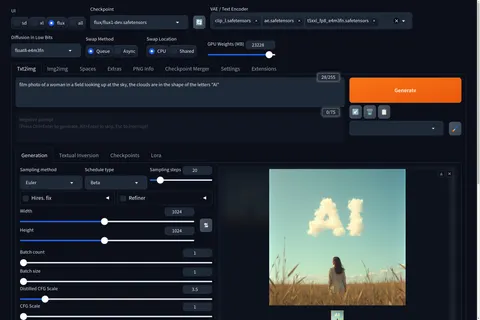
Stable Diffusion WebUI Forge
A faster, more experimental Stable Diffusion WebUI variant focused on improved resource use, quicker inference, and modern model support.
Web UI · API
Image Generation
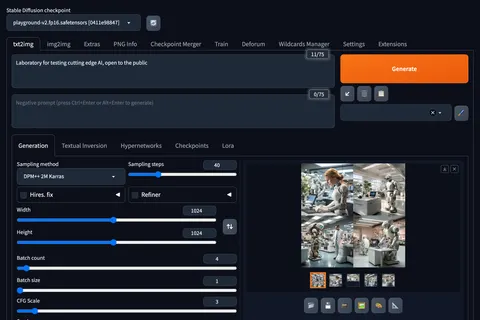
Stable Diffusion Web UI
A full-featured Stable Diffusion interface with deep controls for prompting, inpainting, extensions, and advanced image workflows.
Web UI · API
Image Generation · Video Generation
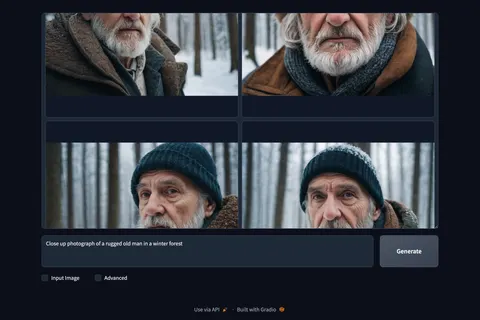
Fooocus
A beginner-friendly image generator focused on strong defaults, with built-in inpainting, outpainting, upscaling, and image prompting.
Web UI · API
Image Generation · Beginner Friendly
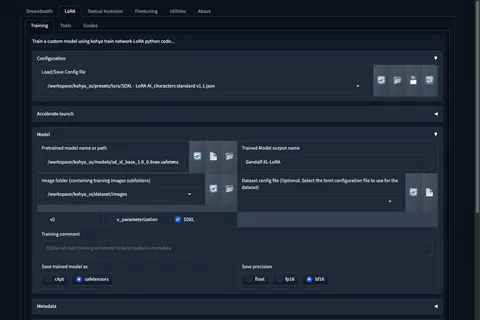
Kohya's GUI
Train LoRAs and fine-tunes for Stable Diffusion and FLUX with a popular GUI for Kohya-based training workflows.
Web UI · API
Fine-Tuning · Image Generation