razzz
Realism Engine SDXL
Released
2024-01-10
Family
Stable Diffusion XL
Type
Fine-Tuned Model
Downloads
Model Report
Overview
Realism Engine SDXL is a generative artificial intelligence model designed for creating photorealistic images. The model is constructed upon the SDXL base architecture and employs advanced fine-tuning techniques to emphasize high realism, improved prompt responsiveness, and the ability to synthesize coherent and detailed visual outputs. Since its official launch in January 2024, Realism Engine SDXL has undergone multiple version updates, each bringing refinements in visual fidelity and user control.
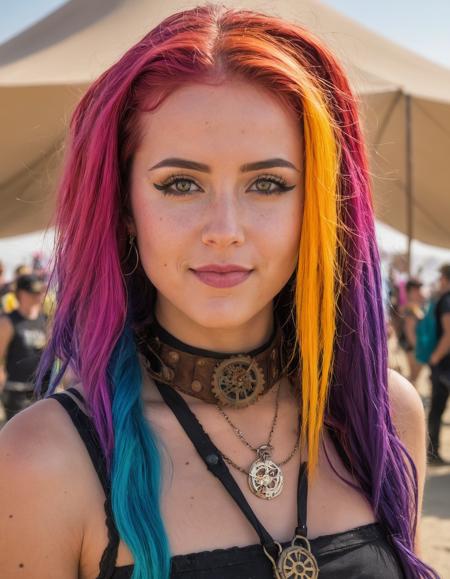
Figure 1. A sample output from Realism Engine SDXL version 3.0 VAE, illustrating intricate detail, vibrant coloration, and lifelike rendering from a text prompt.
Model Architecture and Technology
The core of Realism Engine SDXL lies in the SDXL foundation, utilizing strategies such as Dreambooth fine-tuning to specialize the model in generating highly photorealistic images. This foundation allows the model to interpret a wide array of prompts and produce visually coherent scenes. From version 2.0 onwards, Realism Engine SDXL incorporates an integrated Variational Autoencoder (VAE), which streamlines the image generation pipeline and enhances the quality of final outputs.
Model files are distributed in the SafeTensor format, which is designed to ensure secure, efficient, and cross-platform compatible storage and execution. The pruned fp16 variant of the model occupies 6.46 GB. The model checkpoint, identified with the AutoV2 hash 2D5AF23726, encapsulates the weights and configurations established through its fine-tuning process.
Development Timeline and Version Improvements
Realism Engine SDXL’s initial release was published on January 10, 2024, with subsequent rapid updates based on user feedback and internal research. The introduction of version 2.0 brought notable enhancements in prompt responsiveness and image coherence, including improved rendering of facial expressions, a greater diversity of human poses and backgrounds, and more accurate depiction of hands and nighttime scenes. Version 2.0 also marked the formal inclusion of the built-in VAE, simplifying the generation process for new users.
With the advent of version 3.0 VAE, the model’s capabilities in rendering skin tones, eyes, and overall anatomical detail were strengthened even further. Each update has been structured to address observed limitations and to augment the model’s alignment with photorealistic visual standards, ensuring that generated images maintain high fidelity across a diverse range of subjects and conditions. The model continues to be iteratively refined, leveraging user feedback and technical advances outlined in community discussions and release notes available on the model’s public hub.
Technical Features and Recommended Usage
Realism Engine SDXL emphasizes flexibility and user control. Its fine-tuned prompt responsiveness allows the model to adapt output closely to user intent, while internal mechanisms help achieve visual coherence in complex scenes. Optimal results are typically achieved using samplers such as DPM++ 2S a, with classifier-free guidance (CFG) scale settings in the range of 5–9, as documented in user best practices. When upscaling outputs to higher resolutions, the recommended workflow involves the DPM++ SDE Karras sampler and the ESRGAN_4x upscaler, with a typical refiner switch set at 0.9 during the initial pass. These techniques, as described in community recommendations, help maximize the model’s fidelity and mitigate artifacts.

Figure 2. An AI-generated headshot using Realism Engine SDXL version 3.0 VAE, demonstrating realistic lighting, detailed textures, and nuanced facial features from a text prompt.
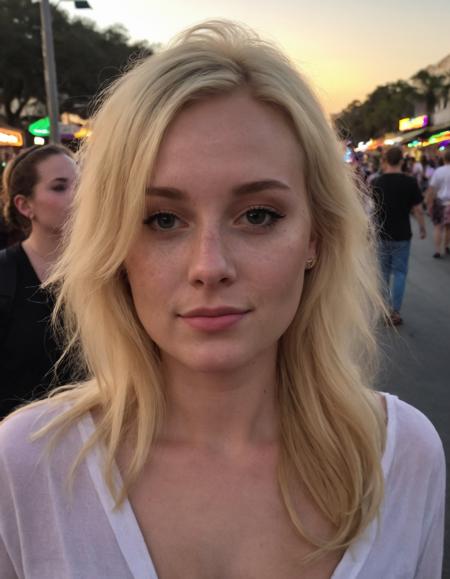
Figure 3. A model output highlighting the generation of realistic people and atmospheric outdoor backgrounds based on a descriptive prompt.
Performance, Community Reception, and Limitations
Following its release, Realism Engine SDXL quickly attracted a large user base and received substantial community feedback, reflected by positive reviews and high usage statistics. As of the most recent update, the model has been downloaded over 703,200 times, viewed by more than 89,000 unique users, and generated more than 1.3 million total views, according to the project’s public metrics. Users have noted improvements in image quality and diversity across successive updates, with particular praise directed toward the model’s handling of photorealistic portraiture.
While the model is engineered for high realism, some limitations have been observed. These include occasional color artifacts—such as “distorted blue portraits” in specific scenarios—as well as areas where anatomical detail could be further refined. The developers actively monitor user feedback and have indicated ongoing plans for continued updates to address outstanding challenges.
Legal and Ethical Considerations
Realism Engine SDXL is distributed under the CreativeML Open RAIL++-M license, which sets out guidelines for responsible use and redistribution. This license is widely employed for large generative AI models developed on the Stability AI platform, ensuring both openness and ethical compliance. The model includes an addendum specific to derivative works and community usage. For detailed license terms, the full license text is available online.
Further Resources
- How to use fine-tuned model checkpoints (Dreambooth models) — Civitai’s technical guide to understanding model checkpoints and their deployment.
- SDXL explained — A detailed video overview of the SDXL base model, which underpins Realism Engine SDXL.
- CreativeML Open RAIL++-M License — The full text of the model’s open license.
- Civitai's guide to resource types — Educational resource on types of generative models and checkpoints.
More in the Stable Diffusion XL Family
Stable Diffusion XL
SDXL Turbo
SDXL Lightning
OpenDalle
Yamer's Realistic
AlbedoBase XL
Juggernaut XL
Realistic Vision XL
New Reality XL
Animagine XL
Nightvision XL
Dreamshaper XL
Pony Diffusion V6 XL
ControlNet SDXL Diffusers Canny
ControlNet SDXL Canny
ControlNet SDXL Diffusers Depth
ControlNet SDXL Depth
ControlNet SDXL Recolor
ControlNet SDXL IP Adapter
ControlNet SDXL Open Pose
Compatible Apps
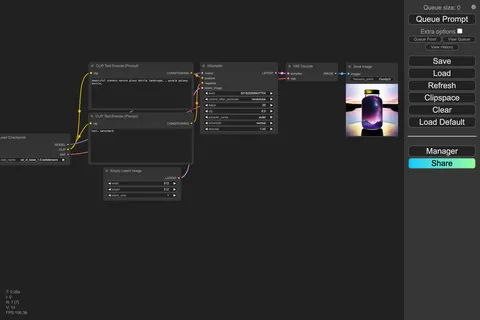
ComfyUI
A node-based workflow builder for advanced image and video generation, ideal for custom pipelines, fine control, and power users.
Web UI · API
Image Generation · Video Generation
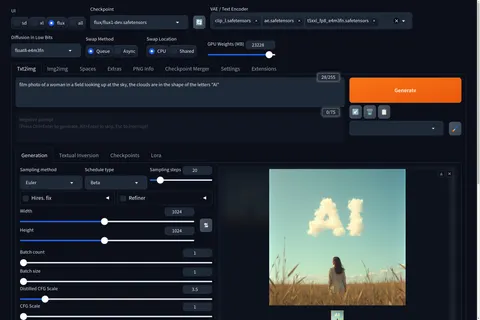
Stable Diffusion WebUI Forge
A faster, more experimental Stable Diffusion WebUI variant focused on improved resource use, quicker inference, and modern model support.
Web UI · API
Image Generation
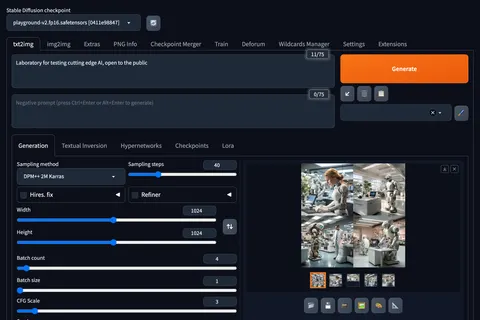
Stable Diffusion Web UI
A full-featured Stable Diffusion interface with deep controls for prompting, inpainting, extensions, and advanced image workflows.
Web UI · API
Image Generation · Video Generation
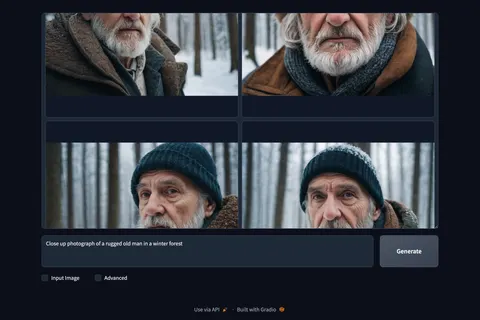
Fooocus
A beginner-friendly image generator focused on strong defaults, with built-in inpainting, outpainting, upscaling, and image prompting.
Web UI · API
Image Generation · Beginner Friendly
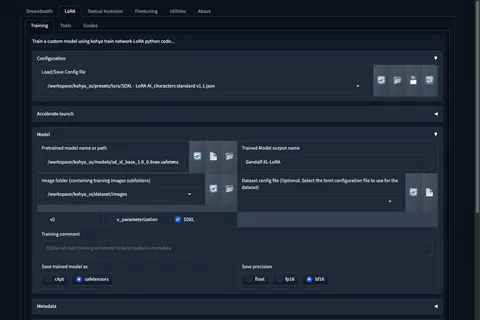
Kohya's GUI
Train LoRAs and fine-tunes for Stable Diffusion and FLUX with a popular GUI for Kohya-based training workflows.
Web UI · API
Fine-Tuning · Image Generation