SoCalGuitarist
Nightvision XL
Released
2024-06-16
Family
Stable Diffusion XL
Type
Fine-Tuned Model
Downloads
Model Report
Overview
NightVisionXL is a generative AI model designed to produce photorealistic images with a particular emphasis on portraiture. Developed and fine-tuned by socalguitarist, NightVisionXL is based on the SDXL 1.0 model architecture and incorporates design choices aimed at producing high-quality, visually appealing output without requiring complex prompting. The model is distributed under the CreativeML Open RAIL++-M license and adheres to an open and accessible development philosophy, deliberately avoiding the inclusion of proprietary or restrictively licensed components.
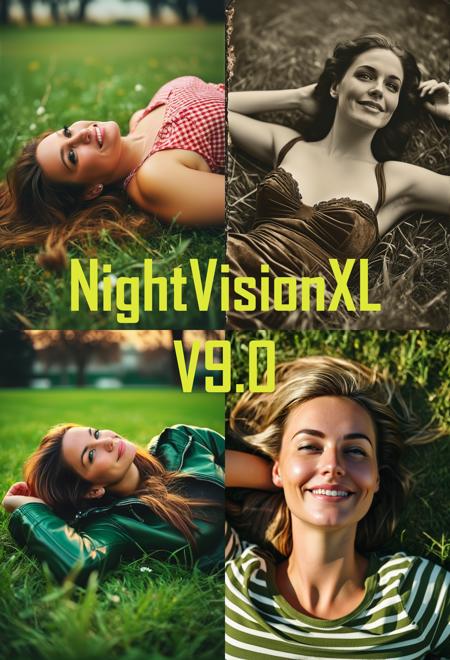
Figure 1. NightVisionXL V9.0 sample outputs—a collage of four diverse, photorealistic female portraits. Prompt: Not specified.
Model Architecture and Technical Features
NightVisionXL is a fine-tuned checkpoint derived from SDXL 1.0, which utilizes aspects of its base model related to multimodal understanding and diffusion-based image synthesis. The architecture remains a "pure" variant of SDXL, explicitly avoiding speed-up modifications, alternative licensing, or integration of other rapid-inference techniques. NightVisionXL prioritizes aspects of output quality, with an extended focus on realism and coherency across varied image sizes and aspect ratios.
A distinguishing feature is its "baked" Variational Autoencoder (VAE), which is integrated directly into the model. This removes the need for users to supply an external VAE and simplifies the inference process. NightVisionXL supports natural language prompting, enabling users to describe their intended result in plain English without requiring specialized prompt engineering.
The model is designed to reproduce nuanced lighting conditions—from deep blacks in nighttime scenes to brightly illuminated environments—and generate detailed portraits. The developer specifically cautions against the use of the SDXL Refiner with NightVisionXL, as this combination has been found to decrease output quality.
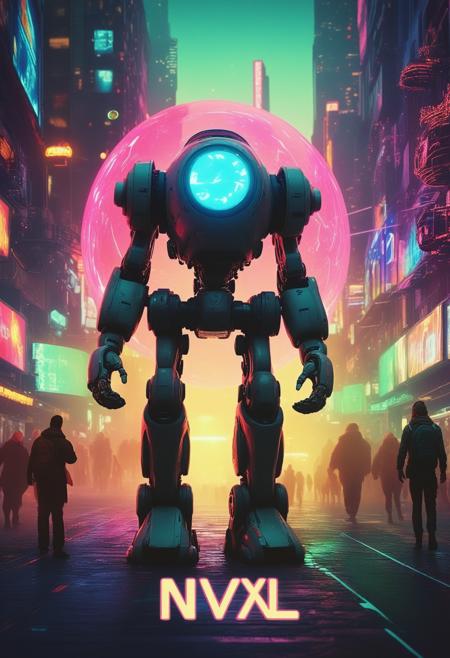
Figure 2. NightVisionXL model output illustrating the generation of a detailed cyberpunk robot amidst a neon-lit cityscape. Prompt: Not specified.
Training Data and Methodology
The training corpus for NightVisionXL version 9.0.0 encompasses approximately 10,000 high-resolution images, sourced with the aim of promoting visual diversity and realism. The dataset consists of roughly 40% photographs from a curated photography dataset, 40% images from the extensively filtered and recaptioned Laion Pop dataset, and 10% from a cinematic image dataset—a technique reminiscent of the approach utilized in CineVisionXL. The remaining 10% comprises a synthetic mixture of hand-selected images derived from platforms such as Civitai and Midjourney, all captioned by an internal tool, "Spicy Burrito," and further processed with GPT-based captioning methods.
All images were high quality, spanning a broad range of aspect ratios and resolutions, and were bucketed during training to expose the model to varied compositional constraints. This process enhances NightVisionXL’s capacity for generating coherent output across both conventional and uncommon aspect ratios, such as panoramic or vertically elongated images.
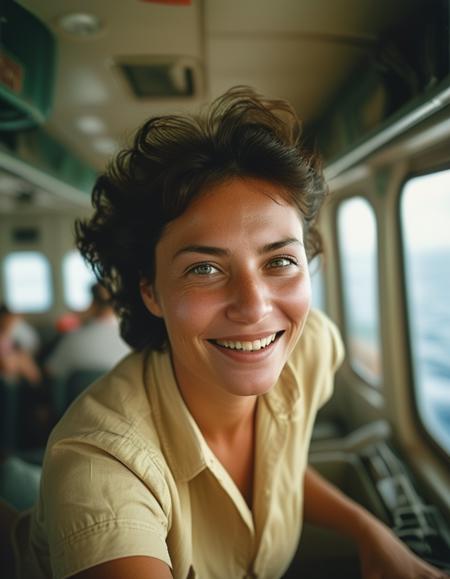
Figure 3. NightVisionXL-generated photorealistic portrait of an individual in a cabin setting, exemplifying detail and environmental accuracy. Prompt: Not specified.
Applications and Typical Use Cases
NightVisionXL is primarily applied to generating photorealistic images, with a focus on portraiture for contexts such as social media, creative projects, and digital art workflows. The model is fine-tuned to output stylized portraits that may be used for public presentation or profile avatars. Owing to its exposure to diverse datasets and stylistic influences, it is also suited for general-purpose image synthesis across a variety of themes and genres.
In addition to portraiture, NightVisionXL has demonstrated competence in rendering urban scenes, night-time environments, and scenes requiring sophisticated lighting treatment. The natural language prompt interface allows for nuanced scene descriptions, which the model translates into detailed and contextually coherent visuals.
Limitations and Known Issues
NightVisionXL exhibits characteristics common to current generative diffusion models, including certain limitations. Generation speed is not a primary focus, and outputs may require longer processing times relative to models optimized for real-time synthesis. The model occasionally encounters challenges with detailed rendering of hands, particularly when holding objects; users may observe an estimated 85–90% success rate in typical cases.
Some issues, such as upside-down or off-angle facial renderings, and a loss of facial detail at medium distances, can arise due to constraints in the SDXL VAE foundation, which the developer states cannot be addressed within the confines of this project. Users are explicitly instructed not to use the SDXL Refiner in conjunction with NightVisionXL, as doing so has been shown to degrade output quality.
NightVisionXL is distributed with a fully integrated VAE and does not require additional VAE configuration. No explicit recommendations for hyperparameters such as CFG (classifier-free guidance scale), steps, or CLIP skip are provided by the model developer.
Model Variants, Related Projects, and Release History
NightVisionXL is one of several models developed by socalguitarist, whose portfolio includes CineVisionXL, which shares cinematic dataset elements, TurboVisionXL, a variant designed for faster inference, and DynaVision XL, oriented toward stylized 3D outputs.
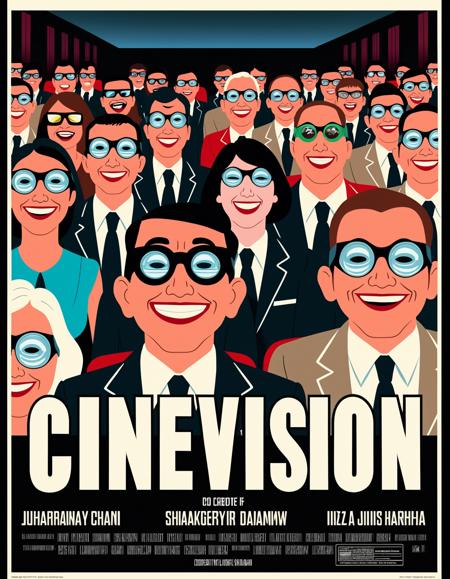
Figure 4. CineVisionXL model output—related to NightVisionXL—showcasing cinematic aesthetic generation. Prompt: Not specified.
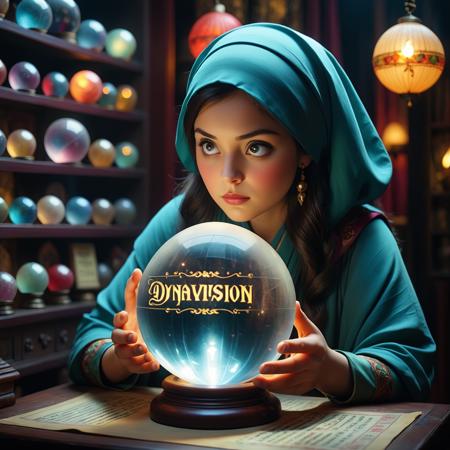
Figure 5. DynaVision XL output, highlighting 3D stylization within the developer's model family. Prompt: Not specified.
NightVisionXL has undergone successive versioning, with its public release initially on June 16, 2024, and the latest update, version 9.0.0, released on October 5, 2024. Earlier versions introduced incremental improvements in output realism, VAE integration, and prompt interpretation.
Licensing and Availability
NightVisionXL is made available under the CreativeML Open RAIL++-M license, with an open-source ethos and an addendum provided by the developer. This licensing choice allows for broad accessibility and adaptation while maintaining attribution and ethical usage requirements. The project explicitly eschews the integration of proprietary or restrictively licensed datasets and components, aligning with the principles of transparency and openness in generative AI research.
Helpful External Resources
- Civitai's Guide to Resource Types — In-depth explanation of model resource types and their usage.
- SDXL 1.0 Architecture Overview (YouTube) — Technical background on the SDXL 1.0 model.
- CreativeML Open RAIL++-M License Full Text
- Developer's Instagram
- Project Community Discord
- Threads Profile
More in the Stable Diffusion XL Family
Stable Diffusion XL
SDXL Turbo
SDXL Lightning
OpenDalle
Yamer's Realistic
AlbedoBase XL
Juggernaut XL
Realistic Vision XL
New Reality XL
Realism Engine SDXL
Animagine XL
Dreamshaper XL
Pony Diffusion V6 XL
ControlNet SDXL Diffusers Canny
ControlNet SDXL Canny
ControlNet SDXL Diffusers Depth
ControlNet SDXL Depth
ControlNet SDXL Recolor
ControlNet SDXL IP Adapter
ControlNet SDXL Open Pose
Compatible Apps
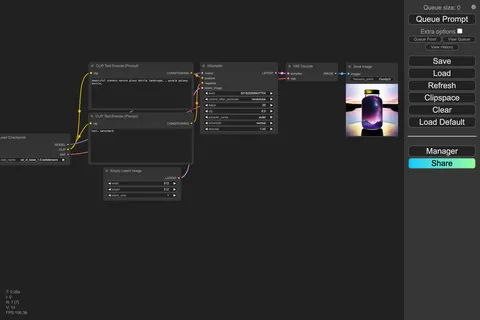
ComfyUI
A node-based workflow builder for advanced image and video generation, ideal for custom pipelines, fine control, and power users.
Web UI · API
Image Generation · Video Generation
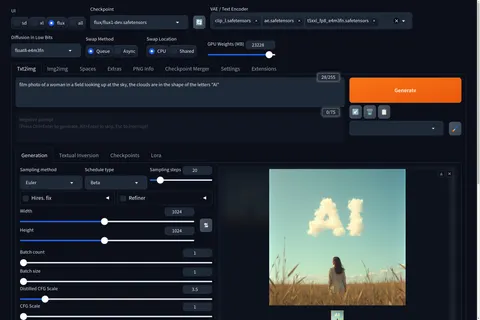
Stable Diffusion WebUI Forge
A faster, more experimental Stable Diffusion WebUI variant focused on improved resource use, quicker inference, and modern model support.
Web UI · API
Image Generation
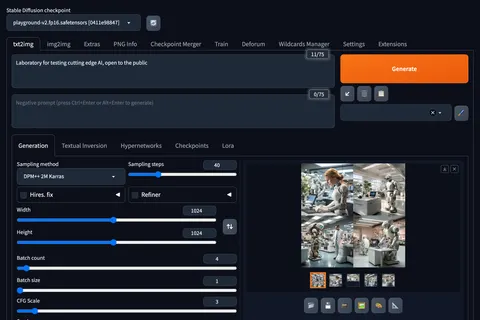
Stable Diffusion Web UI
A full-featured Stable Diffusion interface with deep controls for prompting, inpainting, extensions, and advanced image workflows.
Web UI · API
Image Generation · Video Generation
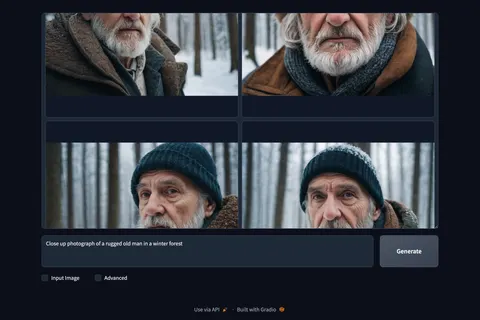
Fooocus
A beginner-friendly image generator focused on strong defaults, with built-in inpainting, outpainting, upscaling, and image prompting.
Web UI · API
Image Generation · Beginner Friendly
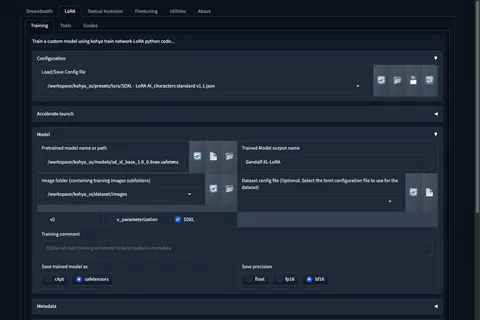
Kohya's GUI
Train LoRAs and fine-tunes for Stable Diffusion and FLUX with a popular GUI for Kohya-based training workflows.
Web UI · API
Fine-Tuning · Image Generation