Meta
Llama 2 7B
Downloads
Model Report
Overview
Llama 2 7B is a large language model developed by Meta, forming part of the Llama 2 family of generative text models. Llama 2 7B has 7 billion parameters and is part of the Llama 2 series, which also includes 13B and 70B parameter variants. Released for both research and commercial purposes, Llama 2 models facilitate access to language generation capabilities. The Llama 2-Chat variants have been fine-tuned for dialogue and exhibit performance on standard benchmarks consistent with human preferences for useful and safe outputs, as described in the Llama 2 research paper.
Figure 1. Stylized graphic highlighting Llama 2 and its model variants, including the 7B, 13B, and 70B parameter options.
Model Architecture and Training
Llama 2 7B belongs to the class of transformer-based language models using an auto-regressive architecture. The model is pretrained with 7 billion parameters on a corpus comprising two trillion tokens of publicly available online data. The training data represents a 40% increase compared to its predecessor, Llama 1, and the context length is extended to 4,096 tokens, twice that of previous versions. The fine-tuned "Llama-2-Chat" variants utilize supervised fine-tuning and reinforcement learning from human feedback (RLHF) to further optimize for dialogue quality, safety, and helpfulness, employing methods such as rejection sampling and proximal policy optimization, as detailed in the official model documentation.
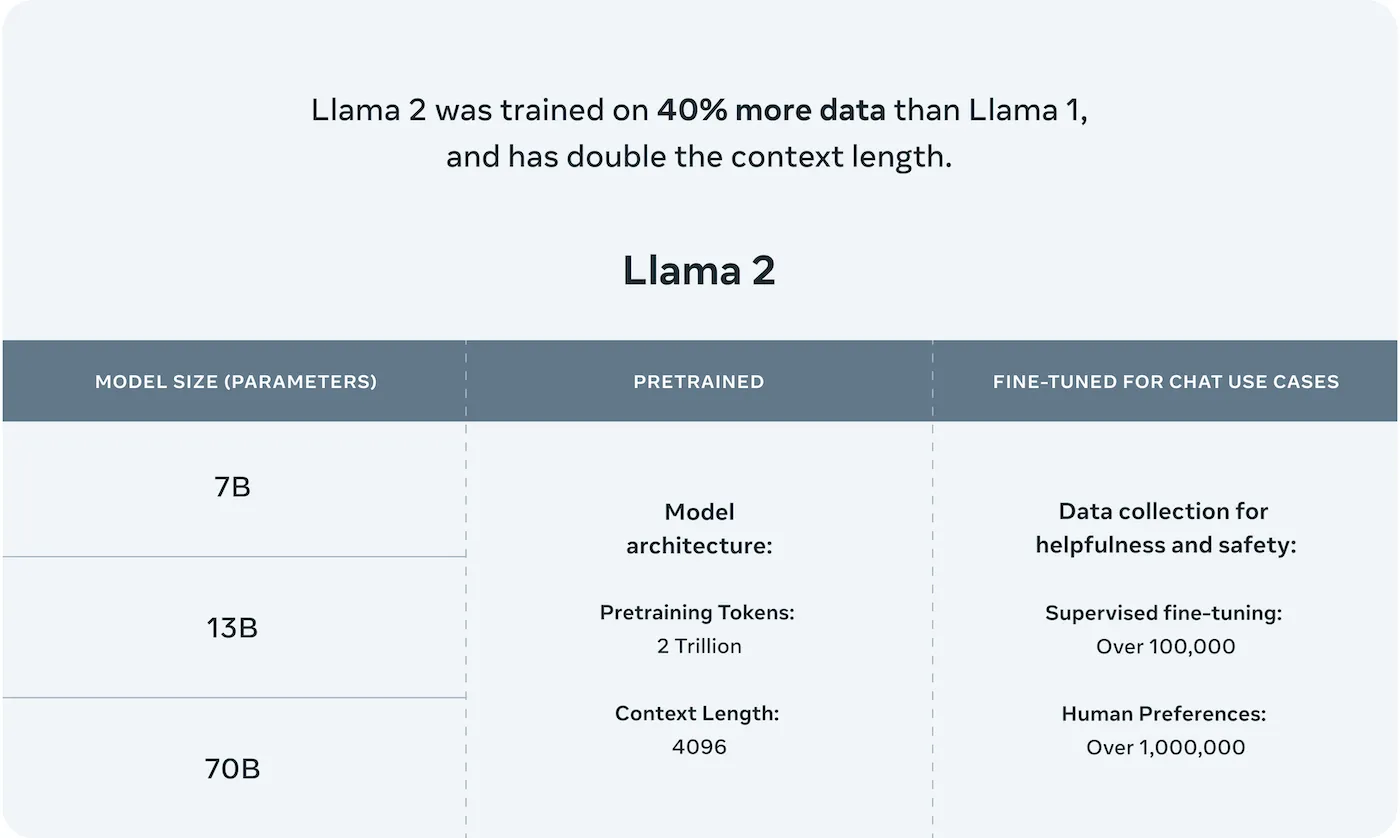
Figure 2. Infographic showing the scale of Llama 2's training data, context length, and supervised fine-tuning process across model sizes.
Llama 2 7B, like the larger variants, does not use Meta user data for training or fine-tuning. Data for pretraining has a cutoff of September 2022, while supervised and preference-aligned data for fine-tuning includes examples curated up to July 2023. The training pipeline incorporates Meta’s large-scale infrastructure and custom libraries, leveraging both proprietary and third-party computing resources.
Fine-Tuning and Human Feedback
Alignment with human intent and safety has been prioritized in the development of Llama-2-Chat models. After pretraining, the model undergoes supervised fine-tuning using instructional datasets and a substantial set of human-annotated examples. The RLHF procedure integrates human preference data to build reward models for helpfulness and safety, which then guide further optimization.
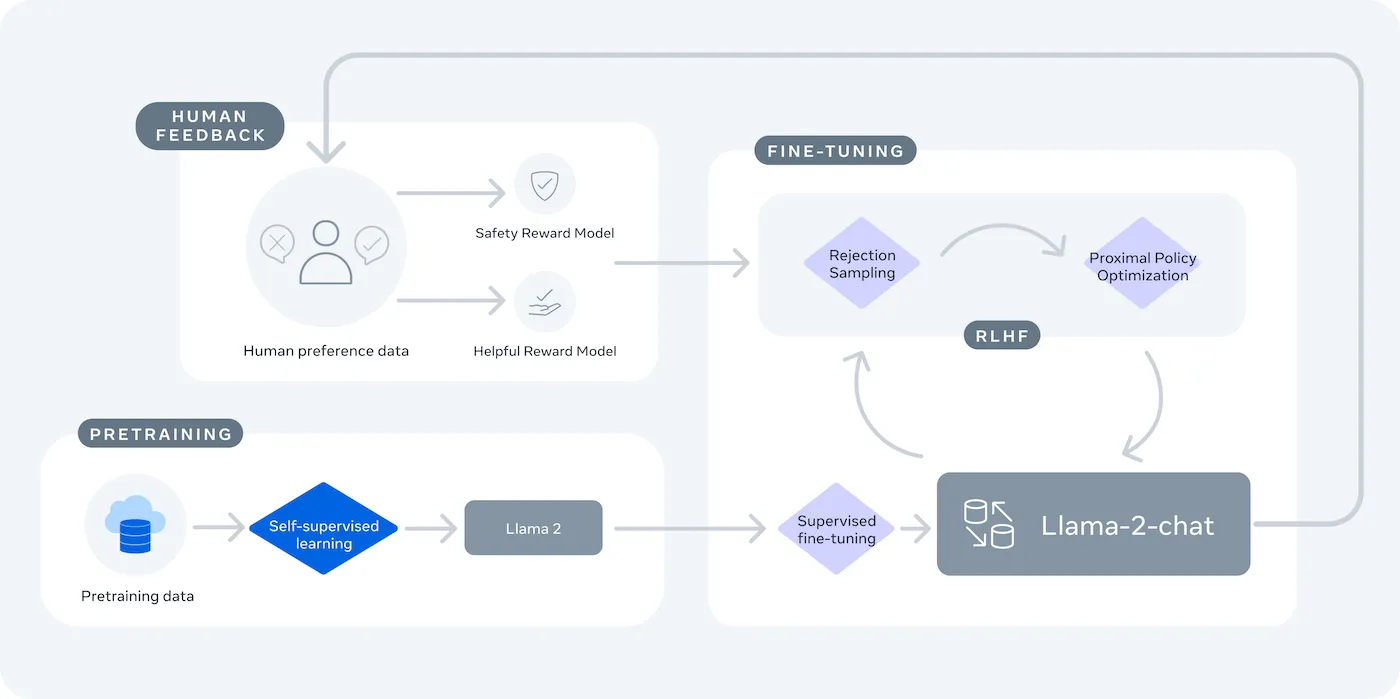
Figure 3. Flow chart illustrating how Reinforcement Learning from Human Feedback (RLHF) is applied to produce Llama-2-Chat models focused on safety and helpfulness.
Supervised fine-tuning (SFT) is used as an initial phase, followed by iterative reinforcement learning steps that refine outputs in light of human judgement using techniques such as rejection sampling and proximal policy optimization. This alignment methodology is documented in the Llama 2 paper.
Performance and Benchmarking
Llama 2 7B exhibits enhanced performance compared to previous models across a variety of academic benchmarks. When evaluated, Llama 2 7B achieves higher scores in areas such as code generation, commonsense reasoning, and reading comprehension relative to comparable open models. For instance, the Llama 2 7B model reaches 45.3 in MMLU, 14.6 in math, and 16.8 in code evaluations, surpassing Llama 1 7B in each category. The fine-tuned Llama-2-Chat variant outperforms both open-source and select proprietary models in specific helpfulness and truthfulness tests, as reflected in side-by-side academic comparisons benchmark results.
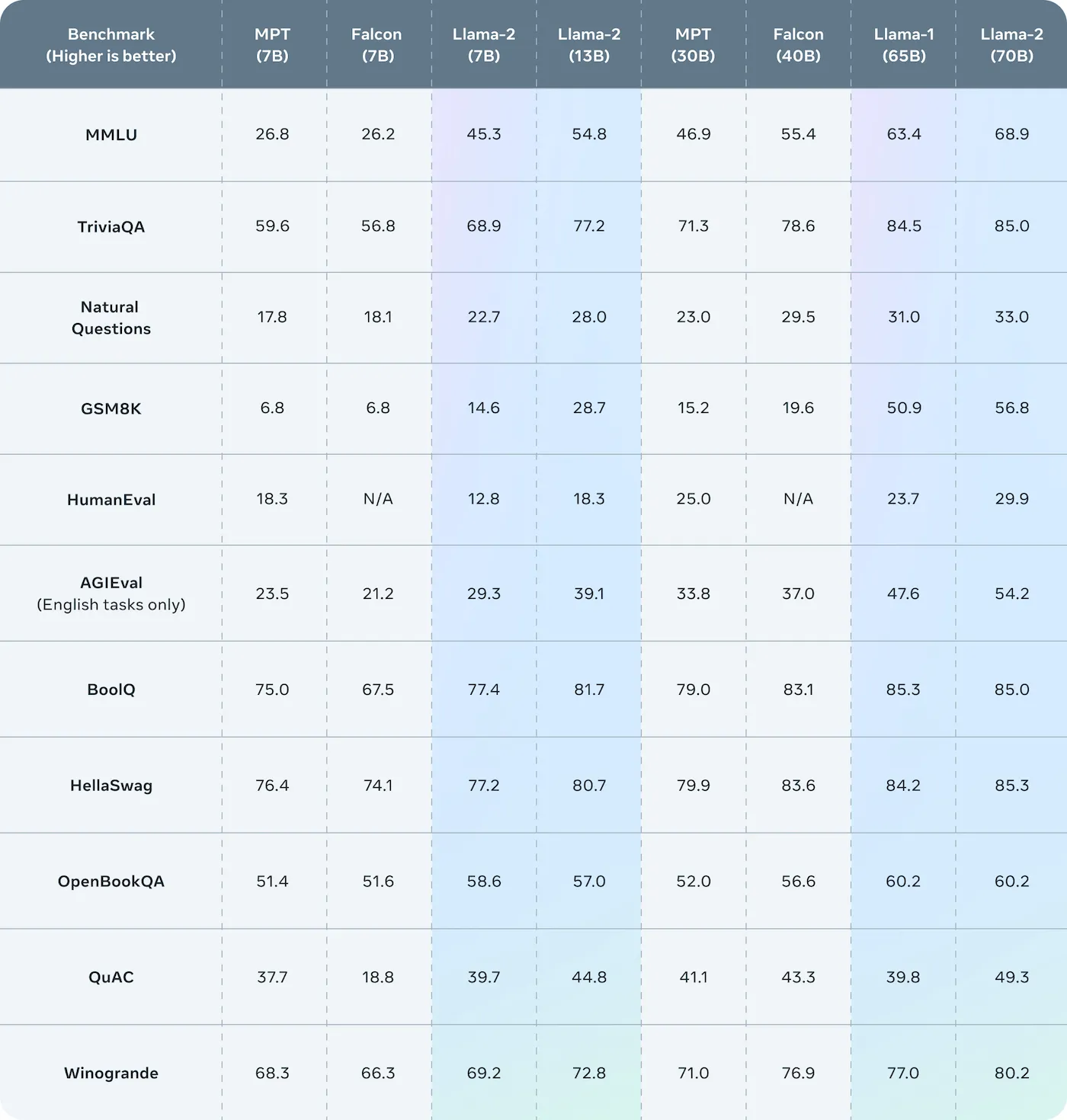
Figure 4. Benchmark table comparing Llama 2 with other language models across key tasks, emphasizing performance gains in MMLU, world knowledge, code, and more.
Improvements over earlier iterations include increased scores on TruthfulQA and a reduction in toxicity as measured by ToxiGen. These results contribute to model deployments that exhibit lower toxicity and higher truthfulness in practical applications.
Capabilities and Use Cases
Llama 2 7B is designed primarily for text generation in English, with additional exposure to data from 27 other languages. The model can be adapted for a broad array of tasks that require natural language understanding and generation, including conversational agents, document summarization, question answering, and code completion. The chat-optimized versions, Llama-2-Chat, are tailored for interactive dialogue applications and virtual assistants, incorporating extensive supervised and RLHF fine-tuning.
While non-English capabilities are present, output quality is generally higher in English, and performance may vary across other languages. Meta provides guidance for safe and responsible application development to assist users in developing applications based on Llama 2.
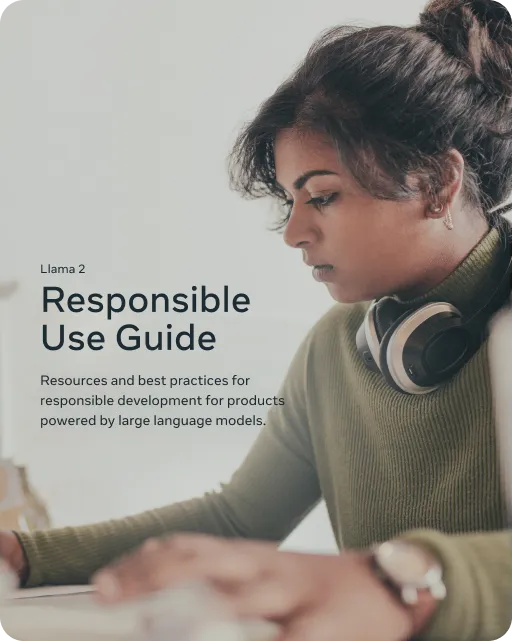
Figure 5. Visual cover for Meta's Responsible Use Guide, outlining best practices for developers working with Llama 2 models.
Limitations and Licensing
Llama 2 7B, consistent with other large language models, is subject to inherent unpredictability in its outputs and may occasionally generate inaccurate, biased, or objectionable content. The model's safety evaluations focus mainly on English, and thorough application-specific risk assessments are recommended prior to deployment. Use cases must comply with local laws, Meta’s Acceptable Use Policy, and licensing agreements.
The model is distributed under the custom LLAMA 2 Community License, which allows use, modification, and distribution under defined conditions. Terms include mandatory attribution, adherence to an acceptable use policy, restrictions against leveraging Llama 2 outputs to improve other large language models, and special provisions for entities with over 700 million monthly active users, who must seek a separate license.
Timeline and Ecosystem
Llama 2 models were trained from January to July 2023 and publicly announced with the release of the foundational Llama 2 research paper on July 18, 2023. The open availability of Llama 2 has led to an ecosystem of collaborators, partners, and research initiatives focused on expanding the use and assessment of large language models.
Figure 6. Collage of partner logos, representing global collaborators and supporters in the Llama 2 ecosystem.
Further Reading and External Resources
- Llama 2 research paper (ArXiv)
- Llama 2 model card
- Meta AI Llama 2 downloads
- Responsible Use Guide
- Llama 2 Acceptable Use Policy
- Llama 2 on Hugging Face
- Llama 2 Getting Started Guide
- Llama 2 FAQ
- Meta Whitehat Program
- Llama Output Feedback Portal
- Meta AI Research Overview
These resources provide technical documentation, responsible usage guidelines, community developments, and detailed instructions for working with the Llama 2 7B model.
More in the Llama 2 Family
CodeLlama 7B
Vicuna 7B
Pygmalion 2 7B
OpenChat 3.5 7B
Xwin LM 7B
Llama 2 13B
CodeLlama 13B
Nous Hermes 13b
Vicuna 13B
MythoMax L2
WizardLM 13B
Pygmalion 2 13B
Mythalion 13B
Xwin LM 13B
CodeLlama 34B
Llama 2 70B
CodeLlama 70B
Xwin 70B
WizardLM 70B
Nous Hermes Llama 2 70B
More from Meta
LLaMA 7B
LLaMA 13B
LLaMA 33B
LLaMA 65B
Llama 4 Scout (17Bx16E)
Llama 4 Maverick (17Bx128E)
Llama 3 8B
Llama 3 70B
Llama 3.1 8B
Llama 3.1 70B
Llama 3.2 3B
Llama 3.3 70B
MusicGen
Magnet
Seamless
Compatible Apps
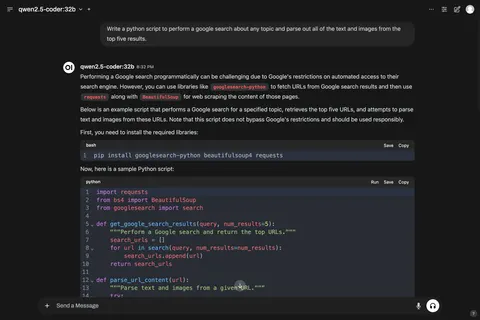
Open WebUI
A polished, self-hosted chat interface for LLMs with Ollama integration, multimodal prompts, and extensive workspace customization.
Web UI
Chat UIs · Beginner Friendly
llama.cpp
GGUF model inference with a polished web UI and OpenAI-format API. CPU-only build — high hardware compatibility, works on any machine without a GPU.
Web UI · API · CLI
LLM Inference · Chat UIs
llama.cpp (CUDA)
GGUF model inference with a polished web UI and OpenAI-format API. CUDA build — GPU-accelerated for NVIDIA GPUs.
Web UI · API · CLI
LLM Inference · Chat UIs
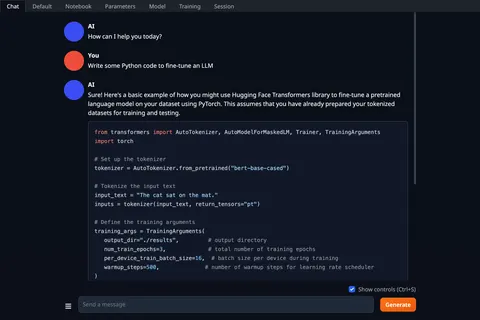
Text Generation Web UI
A feature-rich interface for running and experimenting with open-weight LLMs, including multiple inference backends, plugins, and tuning controls.
Web UI · API
Chat UIs · LLM Inference