PygmalionAI
Pygmalion 2 13B
Downloads
Model Report
Overview
Pygmalion-2 13B is an instruction-tuned generative language model tailored for conversational and fictional text generation. Developed by PygmalionAI and previously referred to as Metharme, the model builds upon Meta AI's Llama-2 13B architecture and has been refined to optimize interactions involving storytelling, roleplay, and nuanced dialogue. Public documentation and release notes reveal that Pygmalion-2 13B is primarily intended for entertainment and creative writing applications, supported by a mix of proprietary and community-driven training datasets.
Model Architecture and Technical Foundations
At its core, Pygmalion-2 13B leverages the Llama-2 13B architecture by Meta AI, benefiting from the transformer-based design and 13 billion parameters configured in a BF16 tensor format. The model keeps the underlying architectural specifications consistent with Llama-2 but undergoes further supervised fine-tuning to adapt its behavior for structured instruction compliance, conversational ease, and fictional engagement. The development and training of Pygmalion-2 13B were sponsored by SpicyChat, with model weights and training artifacts distributed under the Llama-2 license terms, permitting both research and broader commercial or non-commercial usage.
Training Data and Methodology
The model’s conversational and creative strengths derive from its training corpus, which is a composite of conventional instruction data, roleplay interactions, fictional narratives, and dialogues containing synthetically generated instructions. Notably, Pygmalion-2 13B incorporates the proprietary PIPPA dataset curated by PygmalionAI, in addition to various public instruction datasets and roleplaying forum data. Supervised fine-tuning techniques were employed to instill the model with a strong aptitude for following prompts and imitating role-specific dialogue, enhancing its ability to produce contextually appropriate and imaginative responses in diverse creative writing scenarios.
Prompting Format and Usage
Effective interaction with Pygmalion-2 13B is achieved through a structured prompting scheme that uses explicit tokens to demarcate roles and conversation turns. According to official documentation on model interaction, prompts are constructed using <|system|>, <|user|>, and <|model|> tokens. The <|system|> token serves to inject narrative context, behavioral instructions, or constraints on response characteristics, such as specifying "Enter RP mode. Pretend to be {{char}} whose persona follows: {{persona}}. You shall reply to the user while staying in character, and generate long responses." The <|user|> and <|model|> tokens, respectively, designate the user's input and the model's subsequent response. This scheme supports multi-turn dialogues through token chaining, enabling persistent role identity and scenario consistency across conversation sessions.
Applications and Intended Use
Pygmalion-2 13B was conceived with a primary focus on entertainment-oriented creative writing, including character-driven roleplay, collaborative storytelling, and dialogue simulation. Its conversational tuning and narrative orientation make it well-suited for applications in text-based fiction, gamified chat interactions, and as an auxiliary tool for authors in developing character dialogue or imaginative scenarios. The model’s design intentionally emphasizes adaptability to natural language instructions, facilitating intuitive prompt guidance across various creative contexts.
Limitations and Ethical Considerations
The training and fine-tuning pipeline for Pygmalion-2 13B did not incorporate specialized safety alignment or adversarial filtering for harmful content. Both the original Llama-2 base model and the subsequent fine-tuned variant have been exposed to training data containing language and themes that may be inappropriate or offensive in general contexts. As a result, the model is prone to generating outputs that are factually unreliable, potentially misleading, or socially undesirable from a non-fiction prompt. The developers explicitly restrict its application scope to fictional entertainment and do not recommend its deployment in environments or tasks demanding factual precision or safety-sensitive dialogue handling. Ongoing use beyond creative entertainment may require additional risk and output management controls.
Model Family and Licensing
Pygmalion-2 13B is part of a broader family of models curated by PygmalionAI, which includes additional fine-tuned, merged, and quantized variants designed for specific performance or accessibility needs. Consistent with the open-model ethos, Pygmalion-2 13B is available under terms compatible with the Llama-2 license, allowing both research experimentation and wider deployment across sectors, provided license compliance.
External Resources
More in the Llama 2 Family
Llama 2 7B
CodeLlama 7B
Vicuna 7B
Pygmalion 2 7B
OpenChat 3.5 7B
Xwin LM 7B
Llama 2 13B
CodeLlama 13B
Nous Hermes 13b
Vicuna 13B
MythoMax L2
WizardLM 13B
Mythalion 13B
Xwin LM 13B
CodeLlama 34B
Llama 2 70B
CodeLlama 70B
Xwin 70B
WizardLM 70B
Nous Hermes Llama 2 70B
Compatible Apps
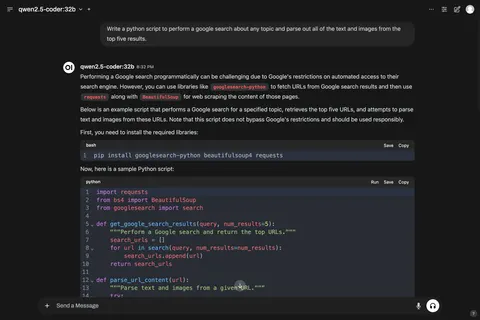
Open WebUI
A polished, self-hosted chat interface for LLMs with Ollama integration, multimodal prompts, and extensive workspace customization.
Web UI
Chat UIs · Beginner Friendly
llama.cpp
GGUF model inference with a polished web UI and OpenAI-format API. CPU-only build — high hardware compatibility, works on any machine without a GPU.
Web UI · API · CLI
LLM Inference · Chat UIs
llama.cpp (CUDA)
GGUF model inference with a polished web UI and OpenAI-format API. CUDA build — GPU-accelerated for NVIDIA GPUs.
Web UI · API · CLI
LLM Inference · Chat UIs
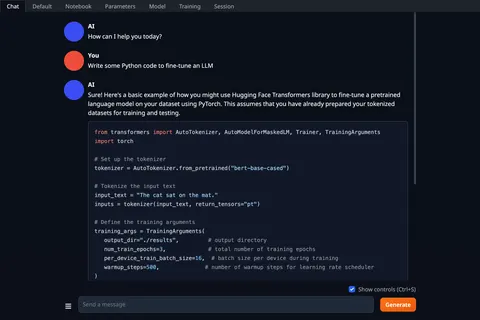
Text Generation Web UI
A feature-rich interface for running and experimenting with open-weight LLMs, including multiple inference backends, plugins, and tuning controls.
Web UI · API
Chat UIs · LLM Inference