lmsys
Vicuna 7B
Downloads
Model Report
Overview
Vicuna 7B is an open-source large language model developed by the LMSYS organization, designed primarily for research into conversational AI and the development of advanced chatbot systems. As part of the Vicuna model family, which also includes variants such as Vicuna 13B, Vicuna 7B builds upon the transformer architecture, specifically leveraging and fine-tuning Meta's LLaMA and Llama 2 models. Its release has facilitated widespread experimentation within the academic and open-source communities, supporting multi-turn dialogue, instruction following, and extended context capabilities.

Figure 1. Stylized logo representing the Vicuna model, reflecting the model's namesake and branding.
Model Architecture and Training
Vicuna 7B adopts the transformer-based architecture initially introduced in Meta's LLaMA and extends it through targeted fine-tuning. Distinctively, later versions such as Vicuna v1.5 are based on Llama 2. The model’s architecture implements several enhancements over its predecessors, including support for longer context windows and optimizations for multi-turn conversational tasks. One of the notable technical advancements involves the adaptation of training scripts from Stanford Alpaca, where the loss computation focuses exclusively on the chatbot’s responses during fine-tuning, allowing for improved dialogue coherence.
Training also incorporates memory optimization strategies such as gradient checkpointing and Flash Attention, which are essential for handling the expanded context window of up to 2048 tokens—substantially longer than the original 512 tokens in Alpaca. The use of PyTorch Fully Sharded Data Parallel (FSDP) enables distributed training while maintaining efficiency on multi-GPU clusters.
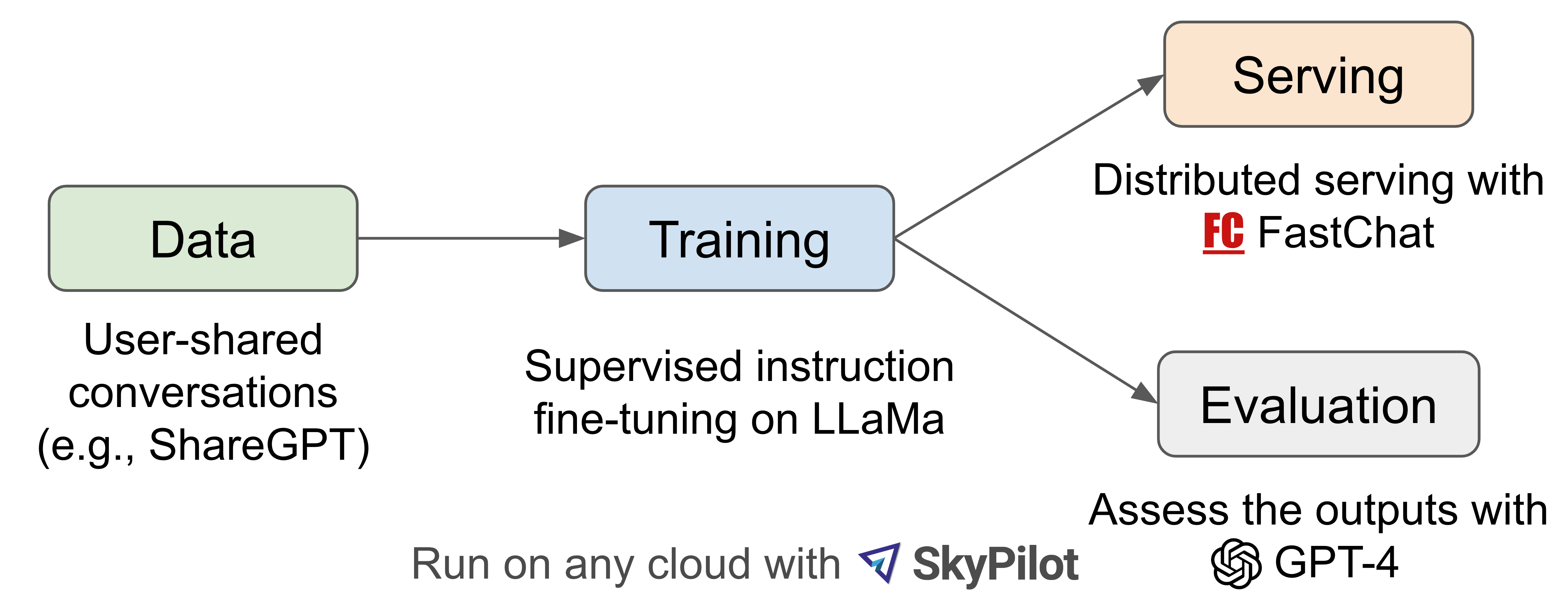
Figure 2. Workflow diagram outlining Vicuna's stages including data collection, training, serving, and evaluation.
Data Sources and Training Methodology
Vicuna 7B's training data consists predominantly of user-contributed conversations from ShareGPT.com, offering a wide array of real-world dialogue scenarios. The initial version was fine-tuned on approximately 70,000 multi-turn conversations, while recent updates expanded the dataset to around 125,000 conversations for improved robustness.
Data preprocessing involved conversion from HTML to Markdown and rigorous filtering to remove inappropriate or low-quality entries. Additionally, lengthy discussions were segmented to fit the model’s context limit, thereby ensuring the integrity of each training sample. Typical training hyperparameters included a batch size of 128, a learning rate of 2e-5, and multiple epochs to optimize for generalization.
The training process was notably cost-efficient, with the team leveraging SkyPilot’s managed spot instances and memory-saving algorithms to bring down computational expenses substantially.
Evaluation, Metrics, and Comparative Performance
Evaluating conversational AI remains a challenging task. Vicuna 7B was assessed using both automated and crowd-sourced approaches. Notably, the evaluation framework employed GPT-4 as a judge, wherein GPT-4 provided consistent rankings and detailed analysis of chatbot-generated responses. This LLM-as-a-judge strategy demonstrated a high level of agreement with human preferences, validating its use as a scalable evaluation tool for model development.
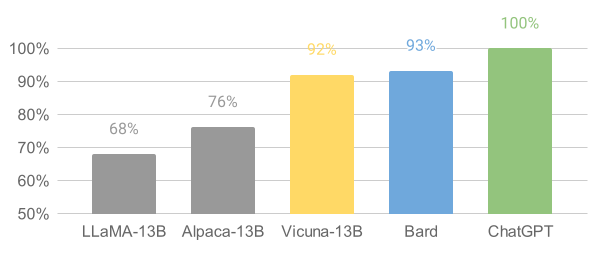
Figure 3. Bar chart showing the relative response quality of Vicuna and other models as assessed by GPT-4.
Multiple benchmarks were used to quantify Vicuna 7B's performance. The MT-Bench test suite, comprising 80 high-quality multi-turn questions across various categories, highlighted the model’s conversational and instruction-following strengths. Vicuna 7B achieved MT-Bench scores ranging from 5.95 to 6.04 depending on training data size, outperforming models like LLaMA-7B and Alpaca-7B in terms of dialogue quality and consistency. Additional standardized benchmarks, including MMLU (5-shot) and TruthfulQA (0-shot), demonstrate Vicuna 7B’s improvements over its foundational LLaMA variant.
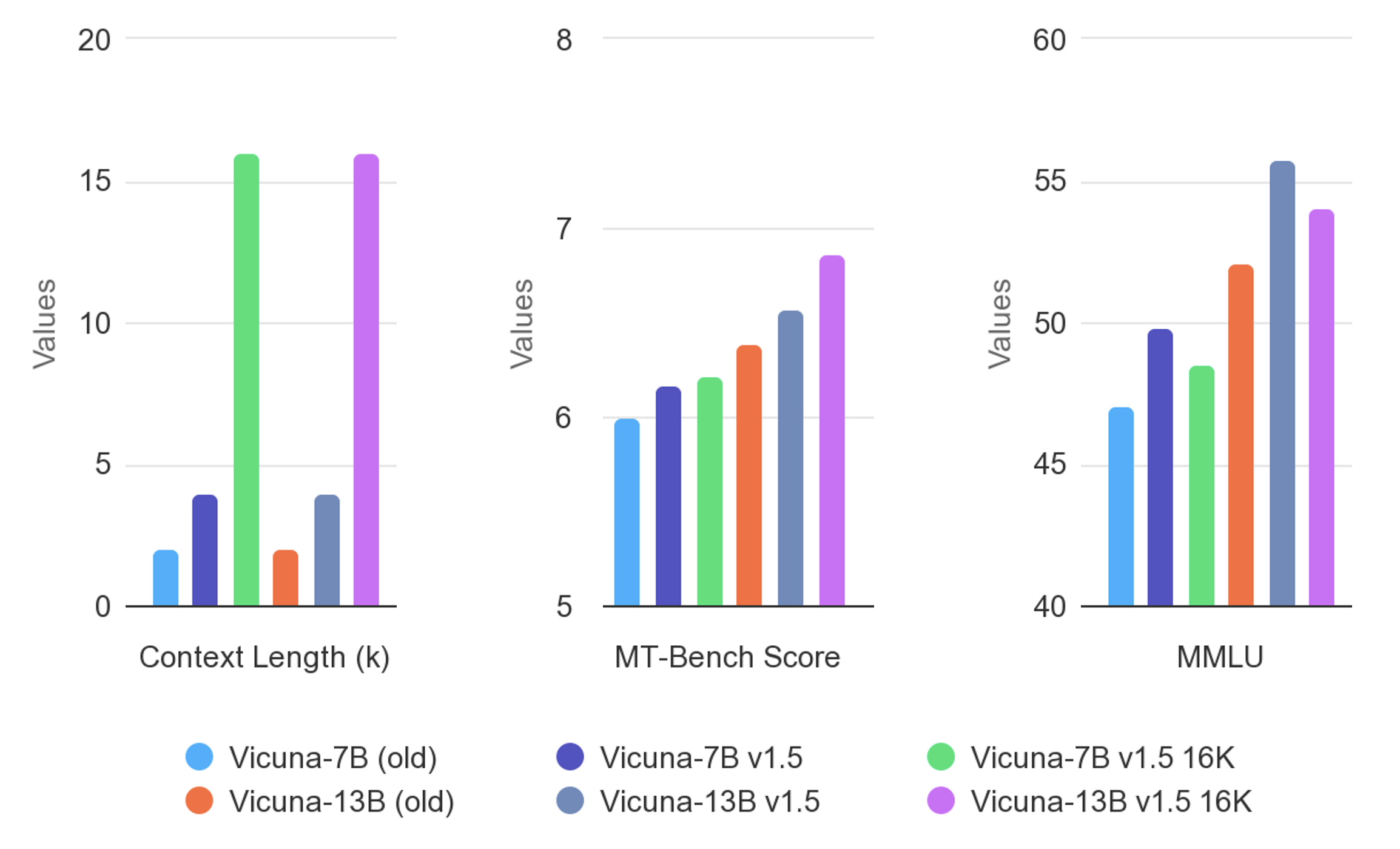
Figure 4. Three bar charts comparing Vicuna v1.5 and earlier model versions across context length, MT-Bench Score, and MMLU.
Beyond supervised testing, the Chatbot Arena platform enabled real-time, crowdsourced comparison between anonymous chatbot models, aggregating thousands of head-to-head user ratings.
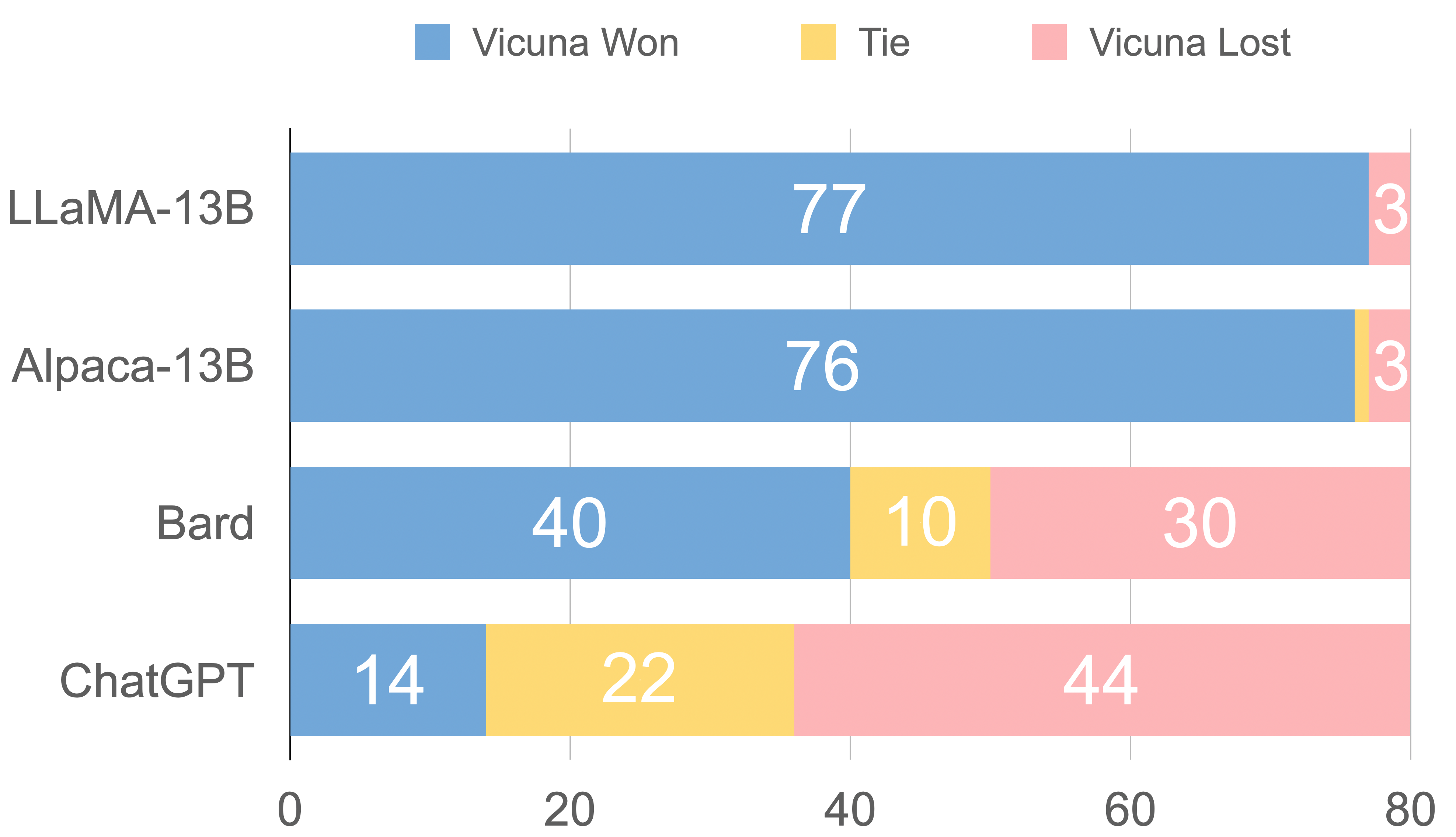
Figure 5. Stacked bar chart showing Vicuna's win/tie/loss rates compared to baseline models, using GPT-4 as a judge.
Applications, Limitations, and Model Family
Vicuna 7B serves primarily as a research instrument for the study and development of conversational AI, benefitting researchers and practitioners in fields such as natural language processing and machine learning. Its design enables multi-turn, long-context dialogues suitable for chatbots, virtual assistants, and exploratory deployments in academic settings.
Within its family, Vicuna 13B offers a larger parameter size and greater benchmark scores, but the core methodology and open training philosophy remain consistent across variants. Both versions have benefited from iterative updates, such as the integration with Llama 2 in Vicuna v1.5.
Like other large language models, Vicuna 7B exhibits certain limitations. Its reasoning and mathematical problem-solving remain imperfect, with some evaluation methodologies highlighting susceptibility to inaccuracies when compared with human judgement. The model may occasionally misidentify itself or produce outputs lacking factual rigor, and is not specifically optimized to address safety, bias, or toxicity concerns. In deployed demos, external systems such as the OpenAI moderation API are employed to mitigate these risks.
Licensing, Release, and Documentation
Vicuna 7B is distributed under the Llama 2 Community License Agreement for the model weights, promoting open sharing of research outputs. The source code is available via Apache License 2.0. Live demos and model checkpoints are offered exclusively for non-commercial research and are subject to the associated model and data licenses.
Documentation and technical resources are maintained in the FastChat GitHub repository, which provides source code, training scripts, evaluation utilities, and details on versioning and reproducibility.
Helpful Links
- FastChat GitHub Repository: Source code, training, serving, and evaluation tools for Vicuna models.
- Vicuna Model Weights: Access to Vicuna-7B and related model weights.
- SkyPilot GitHub Repository: Cloud resource management toolkit utilized in Vicuna’s efficient training.
- SkyPilot Managed Spot Examples: Illustrates cost-saving strategies during model training.
- LLM-as-a-Judge Paper (arXiv): Formal research on language model evaluation using LLMs.
- LLaMA Model Card: Full license and model description for LLaMA, Vicuna’s base model.
- OpenAI Moderation API Overview: Details on moderation tools for chatbots.
- Stanford Alpaca Blog: Background on an influential precursor to Vicuna.
- MT-Bench and Judging Tools: Suite for rigorous model assessment.
- Chatbot Arena Leaderboard: Real-time, crowdsourced performance comparisons.
- Vicuna Weights Version Documentation: Details on differences between Vicuna model versions.
- GPT-4 Judgment Examples: In-depth illustrations of evaluation using GPT-4.
More in the Llama 2 Family
Llama 2 7B
CodeLlama 7B
Pygmalion 2 7B
OpenChat 3.5 7B
Xwin LM 7B
Llama 2 13B
CodeLlama 13B
Nous Hermes 13b
Vicuna 13B
MythoMax L2
WizardLM 13B
Pygmalion 2 13B
Mythalion 13B
Xwin LM 13B
CodeLlama 34B
Llama 2 70B
CodeLlama 70B
Xwin 70B
WizardLM 70B
Nous Hermes Llama 2 70B
Compatible Apps
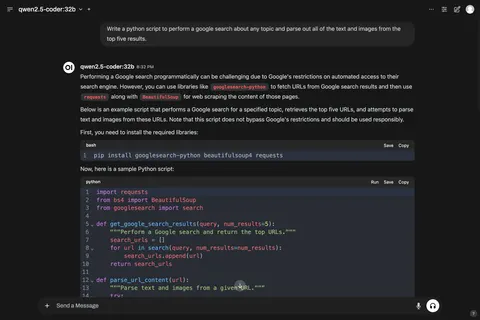
Open WebUI
A polished, self-hosted chat interface for LLMs with Ollama integration, multimodal prompts, and extensive workspace customization.
Web UI
Chat UIs · Beginner Friendly
llama.cpp
GGUF model inference with a polished web UI and OpenAI-format API. CPU-only build — high hardware compatibility, works on any machine without a GPU.
Web UI · API · CLI
LLM Inference · Chat UIs
llama.cpp (CUDA)
GGUF model inference with a polished web UI and OpenAI-format API. CUDA build — GPU-accelerated for NVIDIA GPUs.
Web UI · API · CLI
LLM Inference · Chat UIs
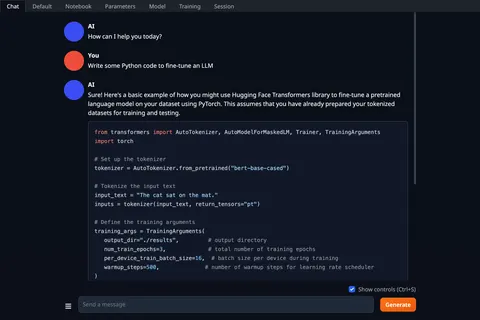
Text Generation Web UI
A feature-rich interface for running and experimenting with open-weight LLMs, including multiple inference backends, plugins, and tuning controls.
Web UI · API
Chat UIs · LLM Inference