WizardLM
WizardLM 70B
Downloads
Model Report
Overview
WizardLM 70B is a large language model developed through a collaboration between Microsoft and Peking University, belonging to the broader WizardLM family of models. Released in August 2023, WizardLM 70B builds on advancements in instruction-following natural language processing by employing a specific data construction and fine-tuning methodology designed to improve the ability of language models to follow complex and nuanced instructions. The model employs an automated evolution pipeline for dataset creation.
Data Generation and Evol-Instruct Methodology
A defining aspect of WizardLM 70B is its data generation pipeline, known as Evol-Instruct. Unlike conventional manual curation of instruction datasets, Evol-Instruct utilizes a large language model to autonomously and iteratively rewrite a base set of instructions into increasingly complex forms. This process consists of several components: the Instruction Evolver produces new prompts by making instructions more challenging or covering a broader array of topics, the Response Generation module outputs answers to these evolved prompts, and the Elimination Evolving step removes ineffective or problematic instructions.
The evolutionary process begins with an initial collection of instructions, such as the 52k dataset from Alpaca. Through multiple rounds (typically four), the Instruction Evolver transforms these seed instructions, introducing additional constraints, deeper reasoning steps, or new conceptual challenges. The resulting expanded dataset is subjected to quality filters to ensure that only meaningful and answerable instructions remain. Ultimately, the instruction set grows in both size and diversity, providing a robust foundation for fine-tuning.
Model Architecture and Training
WizardLM 70B leverages the Llama 2 70B architecture as its foundational base. Building on this, the model undergoes instruction fine-tuning utilizing the curated dataset produced by the Evol-Instruct pipeline. To ensure a fair distribution of prompt complexity and diversity, the final fine-tuning corpus combines both initial and evolved instructions, with randomized sampling across difficulty levels.
The conversational prompt format adopted for WizardLM 70B closely mirrors that used by Vicuna, structuring interactions as extended dialogs between a user and an AI assistant. For example: "A chat between a curious user and an artificial intelligence assistant. The assistant gives helpful, detailed, and polite answers to the user’s questions. USER: Hi ASSISTANT: Hello.</s> USER: Who are you? ASSISTANT: I am WizardLM.</s>..."
Training took place over three epochs, employing DeepSpeed ZeRO-3 distributed training strategies to efficiently manage model parameters, gradients, and optimizer states at scale.
Datasets and Experimental Design
The dataset construction for WizardLM 70B begins with the Alpaca 52k instruction dataset. The Evol-Instruct pipeline applies four rounds of evolution to each original prompt, generating approximately 250,000 unique instructions—each a product of randomly chosen in-depth or in-breadth evolution prompts. To enable comparison with other models such as Vicuna, a subset of 70,000 instructions is selected for the final fine-tuning process.
Executing the full evolution required an estimated 624,000 API calls, underscoring the computational scale underlying the construction of such a diverse and challenging dataset. The diversity and complexity resulting from this approach have been shown to improve downstream instruction-following capabilities.
Performance and Evaluation
WizardLM 70B has been extensively benchmarked across a range of evaluation tasks relevant to language reasoning, mathematics, and code generation. In automated benchmark testing, WizardLM 70B achieved scores such as 63.32 on MMLU, 64.52 on ARC, 83.21 on HellaSwag, and demonstrated scores in mathematics and code, including 70.61 on GSM8k and 42.1 pass@1 on HumanEval.
Alternative evaluations via HuggingFace's model repository report scores of 7.78 on MT-Bench, 92.91% on AlpacaEval, 77.6% on GSM8k, and 50.6 pass@1 on HumanEval. The effectiveness of the Evol-Instruct approach is confirmed through ablation studies, revealing improved performance compared to models fine-tuned on non-evolved or less diverse instruction sets.
Limitations
Despite its advancements, WizardLM 70B faces certain limitations. The scalability and reliability of automatic evaluation via models such as GPT-4 and human assessments are noted challenges, as evaluation coverage may not fully reflect the breadth of real-world language understanding. Additionally, the proprietary composition of some test sets, such as WizardEval, means that there may be domains or application areas not thoroughly represented within the standard evaluation procedures.
Licensing and Family Variants
WizardLM 70B is released under the terms of the Llama 2 License. The WizardLM family encompasses a variety of specialized models, including WizardCoder for code generation and WizardMath for advanced mathematical reasoning. These models, available in multiple sizes and with instruction sets targeting domain-specific challenges, demonstrate the adaptability of the Evol-Instruct methodology across diverse large language model architectures.
Helpful Links
- WizardLM Official Home Page
- WizardLM HuggingFace Model Repository
- WizardLM GitHub Repository
- WizardLM: Empowering Large Pre-Trained Language Models to Follow Complex Instructions (arXiv)
- WizardCoder: Empowering Code Large Language Models with Evol-Instruct
- WizardMath: Empowering Mathematical Reasoning in Large Language Models
- Llama 2 License
- HumanEval Benchmark
- GSM8k Benchmark
- MATH Benchmark
More in the Llama 2 Family
Llama 2 7B
CodeLlama 7B
Vicuna 7B
Pygmalion 2 7B
OpenChat 3.5 7B
Xwin LM 7B
Llama 2 13B
CodeLlama 13B
Nous Hermes 13b
Vicuna 13B
MythoMax L2
WizardLM 13B
Pygmalion 2 13B
Mythalion 13B
Xwin LM 13B
CodeLlama 34B
Llama 2 70B
CodeLlama 70B
Xwin 70B
Nous Hermes Llama 2 70B
Compatible Apps
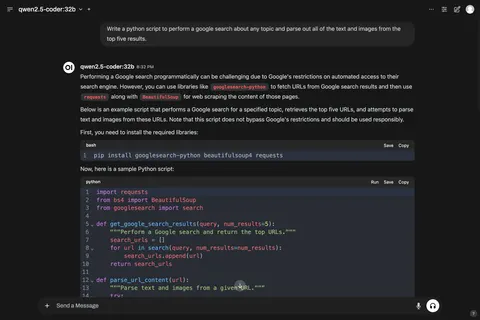
Open WebUI
A polished, self-hosted chat interface for LLMs with Ollama integration, multimodal prompts, and extensive workspace customization.
Web UI
Chat UIs · Beginner Friendly
llama.cpp
GGUF model inference with a polished web UI and OpenAI-format API. CPU-only build — high hardware compatibility, works on any machine without a GPU.
Web UI · API · CLI
LLM Inference · Chat UIs
llama.cpp (CUDA)
GGUF model inference with a polished web UI and OpenAI-format API. CUDA build — GPU-accelerated for NVIDIA GPUs.
Web UI · API · CLI
LLM Inference · Chat UIs
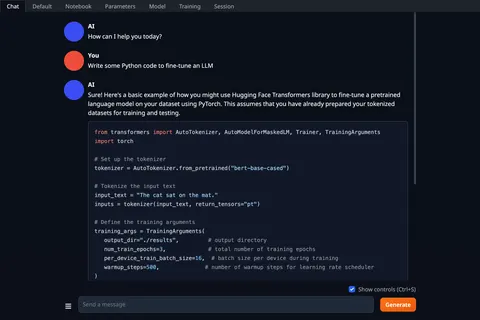
Text Generation Web UI
A feature-rich interface for running and experimenting with open-weight LLMs, including multiple inference backends, plugins, and tuning controls.
Web UI · API
Chat UIs · LLM Inference