Deep Cogito
Cogito V1 Preview 3B
Downloads
Model Report
Overview
Cogito V1 Preview 3B is a large language model (LLM) developed by Deep Cogito, released on April 8, 2025. As the smallest member of the Cogito V1 Preview model family—which includes versions of 3B, 8B, 14B, 32B, and 70B parameters—the 3B variant demonstrates advances in efficiency, reasoning, instruction following, and tool use. Cogito models are primarily instruction-tuned, text-in/text-out generative transformers designed to support multilingual applications, agentic behaviors, and code generation. These models are trained using the Iterated Distillation and Amplification (IDA) alignment strategy and maintain a context window of up to 128k tokens. Cogito V1 Preview 3B builds upon a Llama/Qwen base checkpoint, specifically Llama 3.2 3B.
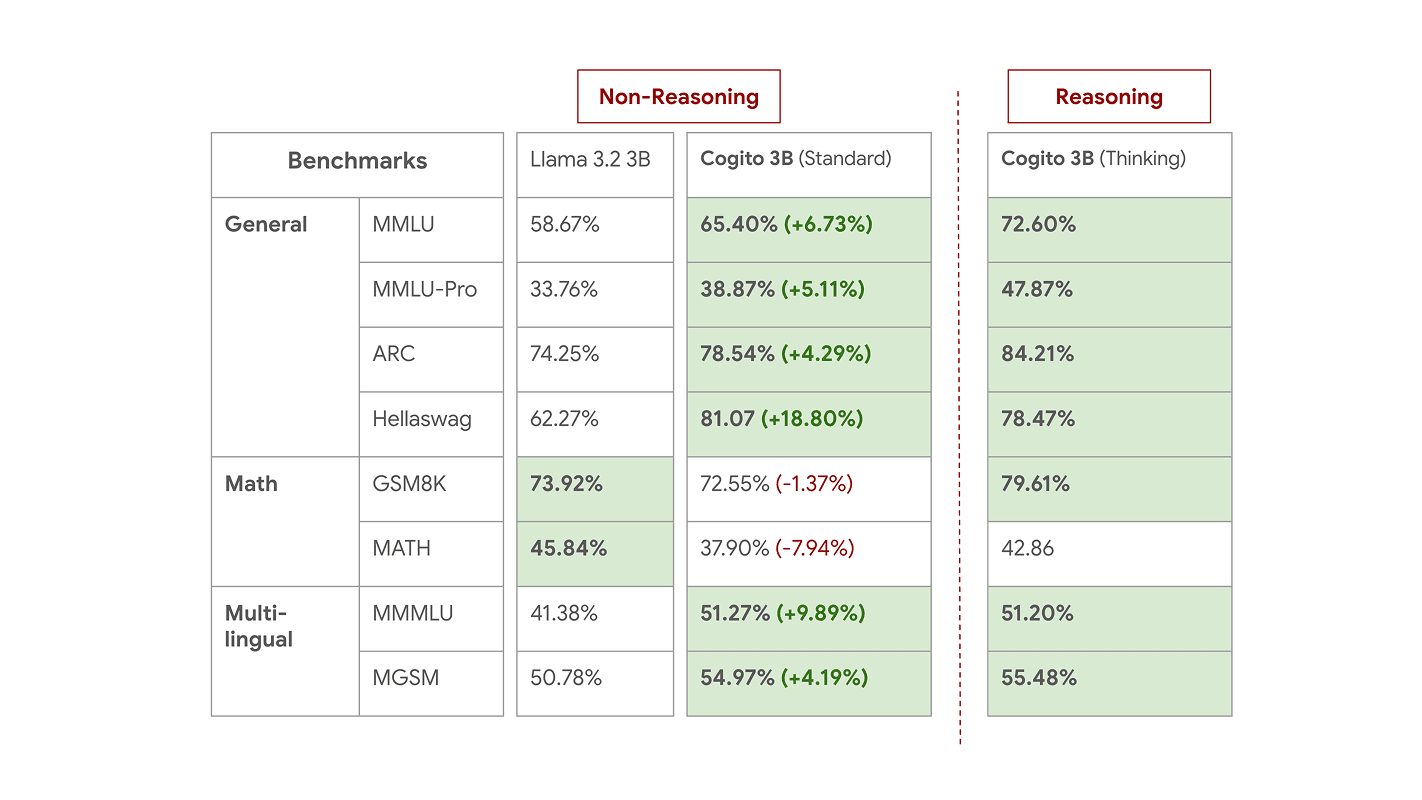
Figure 1. A comprehensive data table illustrating performance comparisons across benchmarks for Cogito 3B (Standard), Cogito 3B (Thinking), and Llama 3.2 3B in both 'General', 'Math', and 'Multi-lingual' categories.
Architecture and Training Methodologies
Cogito V1 Preview 3B employs the Iterated Distillation and Amplification (IDA) alignment strategy, which is designed for scalable, efficient model alignment. In IDA, each iteration consists of two main stages: amplification and distillation. Amplification involves assembling an overseer—potentially the model itself or a collection of models—tasked with solving a given problem, often leveraging additional computational tools such as chain-of-thought (CoT) reasoning or answer verification. Distillation then compresses the overseer's complex outputs into the model's own parameters, enabling the model to internalize higher-level reasoning over time.
This framework permits a positive feedback loop: with every cycle of IDA, the model's intelligence and reasoning improve, not limited by the original overseer's capacity. This contrasts with traditional alignment strategies like RLHF or simple teacher-student distillation, providing more flexible and scalable alignment mechanisms as discussed in the IDA technical article.
Cogito V1 Preview 3B is initialized from a pre-trained Llama 3.2 3B checkpoint, and then subjected to extensive instruction tuning, multilingual data augmentation, and tool-calling specific fine-tuning.
Key Features and Capabilities
A distinctive element of the Cogito V1 Preview models is their dual operational modes. In standard mode, the model acts as a conventional LLM, producing responses immediately to user prompts. In reasoning mode (also called "Extended Thinking"), the model engages in a brief phase of internal reflection prior to response generation, imitating the multi-step reasoning seen in more advanced, deliberative models. This mode is similar in spirit to approaches used in models like Claude 3.7, but optimized to balance computational efficiency and quality, rather than pursuing arbitrarily long chains of reasoning.
Cogito V1 Preview 3B is configured to excel at coding, function calling, agentic scenarios, STEM tasks, and general instruction following. The model natively supports over 30 languages and is capable of handling sequences up to 128k tokens long. Evaluation results indicate that Cogito models display improved multilingual performance, competitive coding abilities, and enhanced tool-calling compared to other open 3B-parameter models.
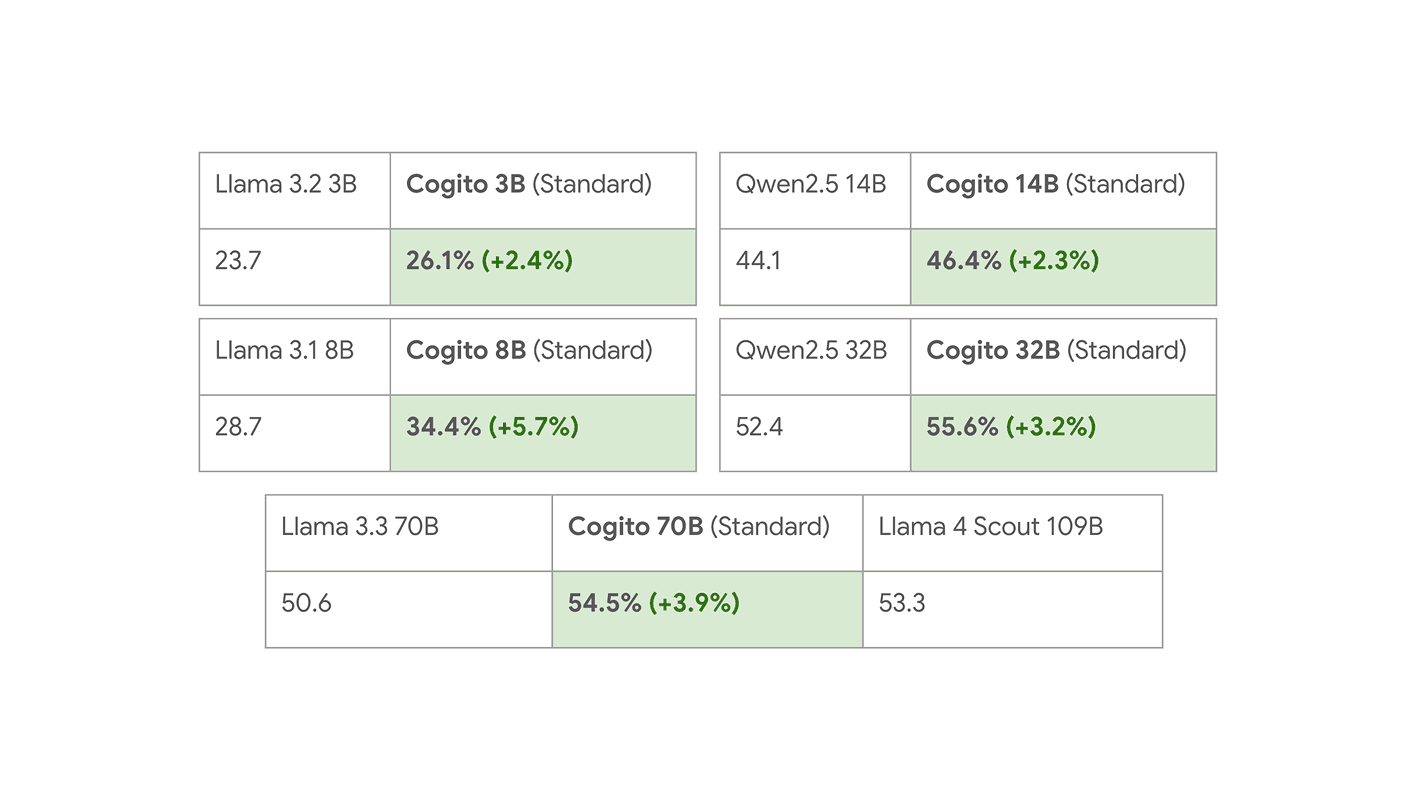
Figure 2. Comparison tables summarizing numerical benchmark gains for Cogito 3B relative to other open-source models, with data highlighting improvements in multilingual and instructional tasks.
Benchmark Performance and Tool Calling
Cogito V1 Preview 3B has been extensively evaluated against industry-standard benchmarks in both direct (standard) and reasoning (extended thinking) modes. Results, as documented by Deep Cogito, demonstrate that Cogito 3B consistently outperforms Llama 3.2 3B and similar models across a spectrum of domains, including general knowledge, mathematics, and multilingual tasks.
The model displays substantial improvements in tool-calling abilities. Unlike equivalent Llama 3B models, which do not natively support structured external tool use, Cogito 3B can execute single, parallel, multiple, and parallel-multiple tool calls. Tool usage is enabled in both standard and extended thinking modes. Notably, however, improvements over Llama 3B are, in part, attributable to limited post-training for tool use in Llama's architecture, rather than inherent model capability alone.
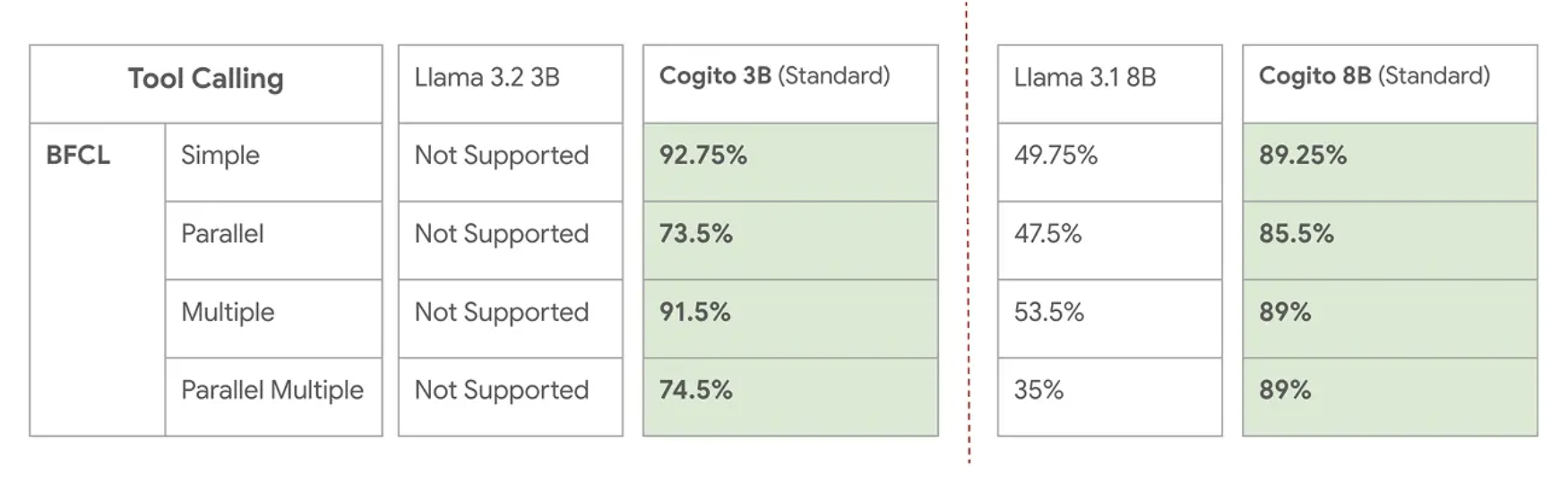
Figure 3. A quantitative benchmark table comparing 'Tool Calling' capabilities for Cogito 3B and Llama 3.2 3B, indicating high percentage success rates for Cogito 3B across a variety of tool usage scenarios.
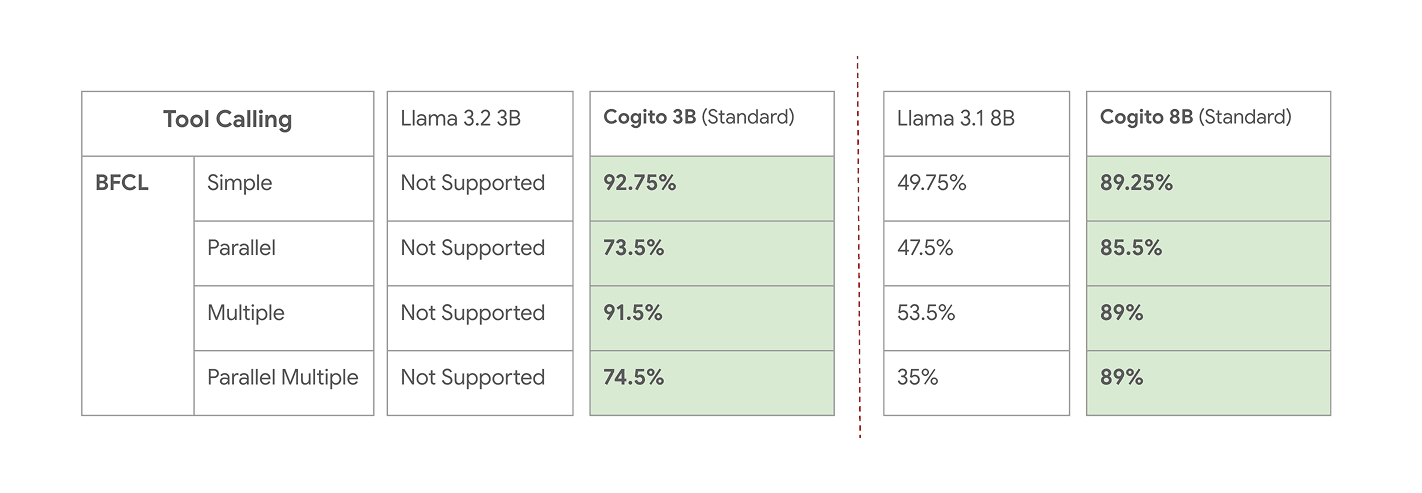
Figure 4. Benchmark table showing Cogito 3B's support for tool calling across different scenarios in contrast to Llama 3.2 3B, which records 'Not Supported' in all tested cases.
For rigorous assessment, Cogito models are benchmarked with test sets explicitly excluded from training data using strict string matching to guard against train-test contamination.
Applications and Use Cases
Cogito V1 Preview 3B is optimized for a set of practical, research, and developmental applications. It is proficient in code generation and review, function and API call handling, and autonomous agent frameworks. The model's strong multilingual support makes it suitable for global natural language tasks, and its efficiency-focused reasoning design allows for rapid generation of useful responses in instruction-following scenarios or STEM problem-solving contexts.
In addition to general text completion and dialog, Cogito 3B's structured tool-calling allows for formal integrations with external APIs and computational resources, facilitating applications in digital assistants, automation agents, and workflow orchestration where dynamic function execution is required.
Limitations
Despite its wide-ranging utility, Cogito V1 Preview 3B is not optimized for extended, multi-step reasoning chains. Its extended thinking mode is designed to deliver distilled, computationally efficient deliberation rather than pursuing arbitrarily long inference sequences. Tool-calling metrics, while improved relative to similar models, are at least partially the result of baseline models lacking proper post-training for tool use, and not solely due to architectural or dataset enhancements. Benchmark scores, while indicative of improvement, do not always directly translate to real-world performance, as acknowledged by Deep Cogito.
Licensing and Model Access
Cogito V1 Preview 3B is released under the Llama 3.2 Community License Agreement, which permits open use and commercial deployment. The model weights and associated resources are publicly available for research and practical deployments, adhering to the licensing framework established by the Meta Llama models on which Cogito is based.
Cogito Model Family and Roadmap
The Cogito V1 Preview family spans parameter sizes of 3B, 8B, 14B, 32B, and 70B, all trained with a consistent IDA-based methodology. The 70B version, according to internal comparisons, demonstrates competitive performance with other large models such as Llama 4 109B MoE and Llama 3.3 70B. Planned expansions include even larger models, with future releases targeting 109B, 400B, and 671B (Mixture-of-Experts) configurations.
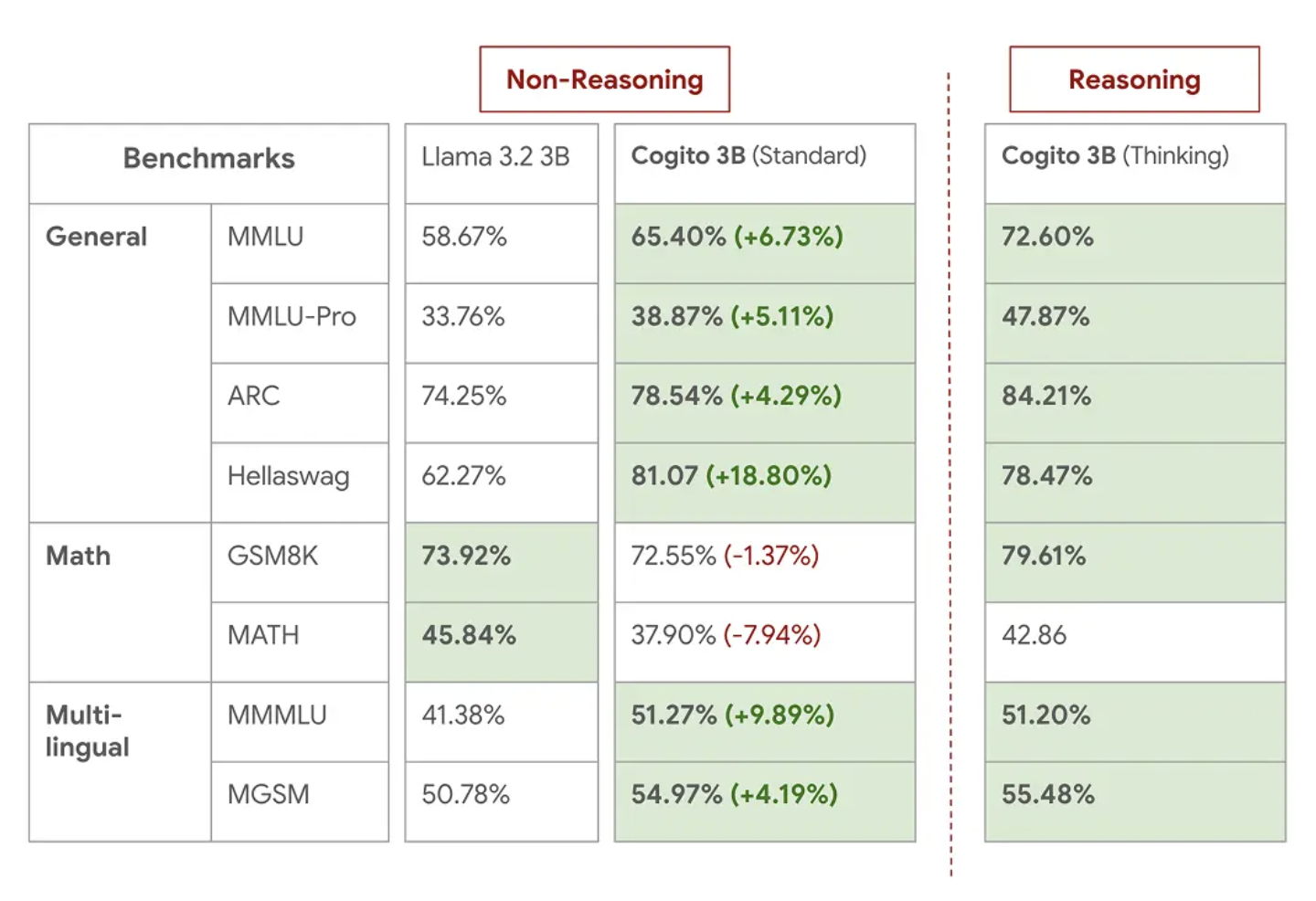
Figure 5. Detailed benchmark comparison displaying Cogito 3B's evaluation results in direct and reasoning modes against baseline open 3B models.
External Resources
- Cogito V1 Preview Collection on Hugging Face: Model weights and documentation.
- IDA Research Paper (arXiv): Full technical description of the Iterated Distillation and Amplification alignment method.
- IDA Alignment Method Overview: Background and practical detail on the IDA process.
- Llama 3.2 Community License Agreement: License text governing Cogito V1 Preview models.
- Deep Cogito official model page: Official documentation, benchmarks, and release notes.
More in the Llama 3 Family
Llama 3 8B
Llama 3 70B
Llama 3.1 8B
Llama 3.1 8B Stheno v3.4
DeepSeek R1 Distill Llama 8B
Cogito V1 Preview 8B
Llama 3.1 70B
Cogito V1 Preview 70B
Llama 3.2 3B
Dolphin 3.0 Llama3.2 3B
Llama 3.3 70B
L3.3 70B Euryale v2.3
70B L3.3 Cirrus x1
Anubis 70B v1
Anubis 70B v1.1
Wayfarer Large 70B Llama 3.3
DeepSeek R1 Distill Llama 70B
More from Deep Cogito
Cogito V1 Preview 14B
Cogito V1 Preview 32B
Compatible Apps
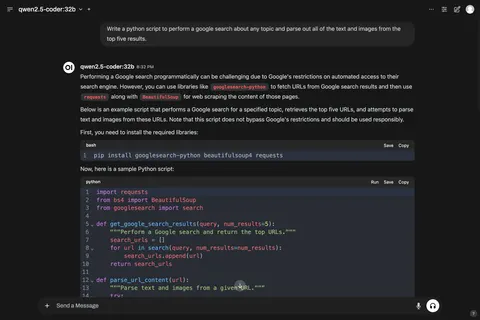
Open WebUI
A polished, self-hosted chat interface for LLMs with Ollama integration, multimodal prompts, and extensive workspace customization.
Web UI
Chat UIs · Beginner Friendly
llama.cpp
GGUF model inference with a polished web UI and OpenAI-format API. CPU-only build — high hardware compatibility, works on any machine without a GPU.
Web UI · API · CLI
LLM Inference · Chat UIs
llama.cpp (CUDA)
GGUF model inference with a polished web UI and OpenAI-format API. CUDA build — GPU-accelerated for NVIDIA GPUs.
Web UI · API · CLI
LLM Inference · Chat UIs
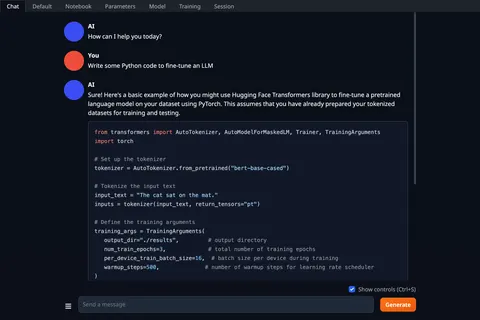
Text Generation Web UI
A feature-rich interface for running and experimenting with open-weight LLMs, including multiple inference backends, plugins, and tuning controls.
Web UI · API
Chat UIs · LLM Inference