TheDrummer
Anubis 70B v1.1
Downloads
Model Report
Overview
Anubis 70B v1.1, also known as "Shimmer Edition," is a large language model designed for generative AI tasks, with a particular emphasis on character consistency and dynamic dialogue. Developed by TheDrummer, Anubis 70B v1.1 builds upon its predecessor, Anubis 70B v1.0, with improvements in its ability to adhere to specific character traits and conversational nuances. The model uses fine-tuning techniques applied to Meta's Llama 3.3-70B-Instruct architecture, resulting in capabilities for creative text generation and interactive storytelling.

Figure 1. Anubis 70B v1.1 Shimmer Edition is represented by a futuristic spaceship in a cosmic environment, reflecting the model's unique branding and capabilities.
Development and Model Architecture
Anubis 70B v1.1 is a product of fine-tuning on top of the Llama 3.3-70B-Instruct model, which itself derives from the Llama 3.1-70B architecture. The model contains approximately 70.6 billion parameters and utilizes the BF16 tensor format, enabling efficient computation and inference at scale. This fine-tuning process was designed to enhance aspects such as character adherence and to allow for more nuanced text generation styles.
The "Shimmer Edition" designation signifies the distinct stylistic direction taken in this iteration. Unlike standard Llama derivatives, Anubis 70B v1.1 aims to offer a different approach to character-driven content, positioning itself as a tool for role-play and creative writing scenarios. According to the original source, users have observed that the model captures character mannerisms and dialogue shifts with higher fidelity than prior versions.
Training Approach and Data Foundations
While explicit details regarding the training datasets and methodologies used for Anubis 70B v1.1 are not available in the published information, it is confirmed that the model builds directly upon the Llama 3.3-70B-Instruct foundation. This fine-tuning process adapts general large language modeling capabilities to more targeted use cases, such as dialogue, persona adoption, and creativity in text output.
The model's training objectives centered on improving "unalignment," allowing for more open-ended and diverse responses beyond constrained outputs, as well as advancing its adherence to stylistic and behavioral patterns of defined characters. Empirical feedback from the community suggests that these adjustments facilitate more consistent characterization, even when interacting with elaborate or historically accurate character cards, broadening the scope for interactive fiction and narrative simulation.
Capabilities and Use Cases
A core strength of Anubis 70B v1.1 lies in its ability to simulate characters with consistent voice, behavior, and style across extended dialogues. This makes it suitable for applications where nuanced role-play and immersive storytelling are essential. The model demonstrates proficiency in maintaining distinct character voices, mannerisms, and contextual engagement—a trait valued for writers, interactive fiction platforms, and creative AI environments.
Common use cases highlighted for Anubis 70B v1.1 include:
- Role-playing assistants capable of long-term persona retention.
- Creative writing tools that generate dialogue and narrative with consistent characterization.
- Interactive storytelling applications benefitting from dynamic, responsive characters.
Users have noted that Anubis 70B v1.1 brings a distinctive quality to its output, offering a contrasting writing style compared to previous Llama-based models and even to its own prior version.
Model Access, Instructions, and Deployment
Anubis 70B v1.1 is designed for compatibility with the Llama 3 Chat Template, enabling integration with conversational interfaces. Multiple format conversions are available for deployment across various inference environments, including GGUF, iMatrix, and EXL3 formats, as provided by the model's maintainers.
The model is publicly accessible for research and development through distribution platforms, facilitating both experimentation and academic study. Documentation for implementation, input formatting, and supported templates align with those prescribed for Llama 3-family models.
Model Family, Iterative Improvements, and Limitations
Anubis 70B v1.1 directly succeeds Anubis 70B v1.0, with user and developer feedback noting changes in its "character adherence" and output diversity. The update represents a modification of model behavior through targeted fine-tuning, yielding a different user experience.
As with many large generative models, explicit limitations are not outlined in the available sources. Performance may vary based on the complexity of requested character simulations, the length of contextual inputs, and application-specific requirements. License information for Anubis 70B v1.1 is not specified in the public documentation.
Helpful External Resources
For further exploration, technical materials, or community engagement, the following resources may be useful:
More in the Llama 3 Family
Llama 3 8B
Llama 3 70B
Llama 3.1 8B
Llama 3.1 8B Stheno v3.4
DeepSeek R1 Distill Llama 8B
Cogito V1 Preview 8B
Llama 3.1 70B
Cogito V1 Preview 70B
Llama 3.2 3B
Dolphin 3.0 Llama3.2 3B
Cogito V1 Preview 3B
Llama 3.3 70B
L3.3 70B Euryale v2.3
70B L3.3 Cirrus x1
Anubis 70B v1
Wayfarer Large 70B Llama 3.3
DeepSeek R1 Distill Llama 70B
More from TheDrummer
Behemoth 123B v1.2
Cydonia 24B v2
Rocinante 12B v1.1
Compatible Apps
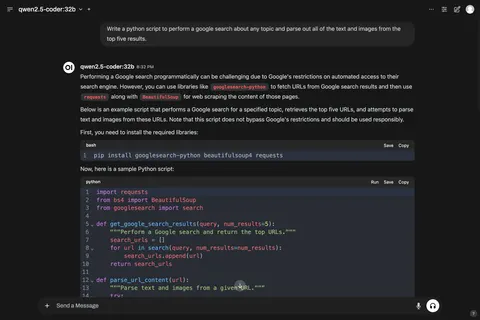
Open WebUI
A polished, self-hosted chat interface for LLMs with Ollama integration, multimodal prompts, and extensive workspace customization.
Web UI
Chat UIs · Beginner Friendly
llama.cpp
GGUF model inference with a polished web UI and OpenAI-format API. CPU-only build — high hardware compatibility, works on any machine without a GPU.
Web UI · API · CLI
LLM Inference · Chat UIs
llama.cpp (CUDA)
GGUF model inference with a polished web UI and OpenAI-format API. CUDA build — GPU-accelerated for NVIDIA GPUs.
Web UI · API · CLI
LLM Inference · Chat UIs
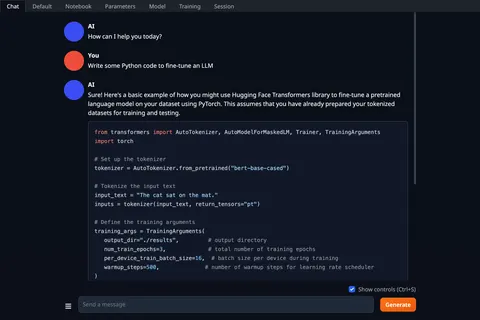
Text Generation Web UI
A feature-rich interface for running and experimenting with open-weight LLMs, including multiple inference backends, plugins, and tuning controls.
Web UI · API
Chat UIs · LLM Inference