Mistral AI
Mistral Small 3.2 (2506)
Downloads
Model Report
Overview
Mistral Small 3.2 (2506) is a generative AI model developed by Mistral AI, released as a minor update to the earlier Mistral Small 3.1 (2503). This model belongs to the "Mistral Small" family, maintaining the same 24-billion parameter scale as its predecessor while integrating targeted improvements in instruction following, function calling, repetition avoidance, and multimodal capabilities. It builds on the architectural foundation of Mistral Small 3.1 and continues to support a broad range of languages, long context windows, and both textual and visual reasoning tasks.
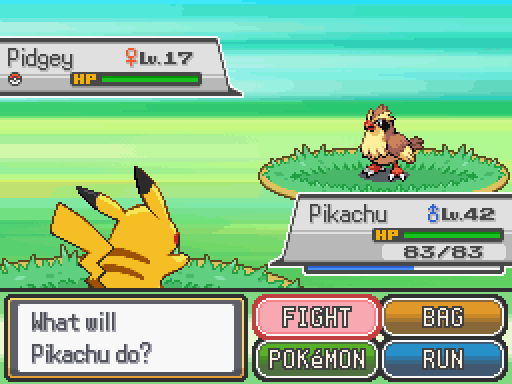
Figure 1. Screenshot from a video game used to demonstrate the model's vision reasoning: Mistral Small 3.2 can analyze game states and recommend actions based on visual inputs. Example prompt: Analyzing a turn-based battle scenario.
Technical Capabilities
Mistral Small 3.2 (2506) advances instruction following by minimizing repetition errors and enhancing robustness in function calling tasks. Compared to the previous Mistral Small 3.1 model, version 3.2 shows improved adherence to given instructions, generates more coherent and less repetitive responses, and demonstrates a more reliable implementation of external function calls—functionality critical for tool-assisted reasoning. The model maintains vision capabilities, offering the ability to interpret images for tasks such as visual diagnostics and analysis. Multilingual support continues to be strong, allowing operation across a wide range of languages.
Long-context processing is preserved, with support for up to 128,000 tokens, enabling reliable handling of lengthy documents or multi-modal data streams. The architecture remains based on the Mistral-Small-3.1-24B-Base, and the instruct tuning in the 3.2 update focuses on practical task performance and adaptability.
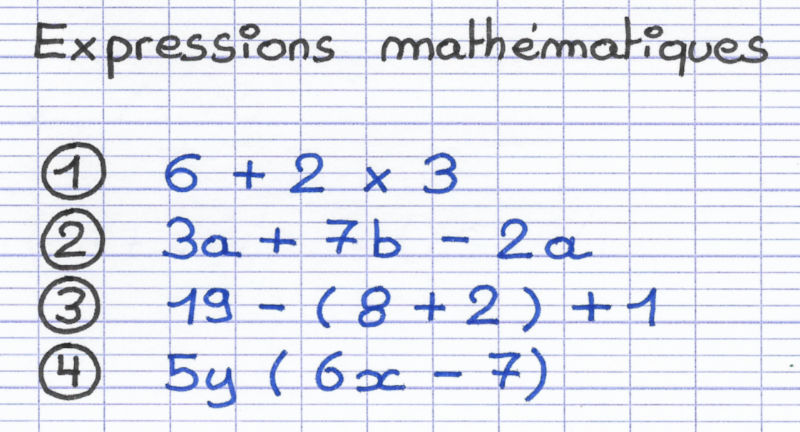
Figure 2. Handwritten mathematical expressions as input to Mistral Small 3.2 for function calling: the model leverages external calculator tools to analyze and solve equations.
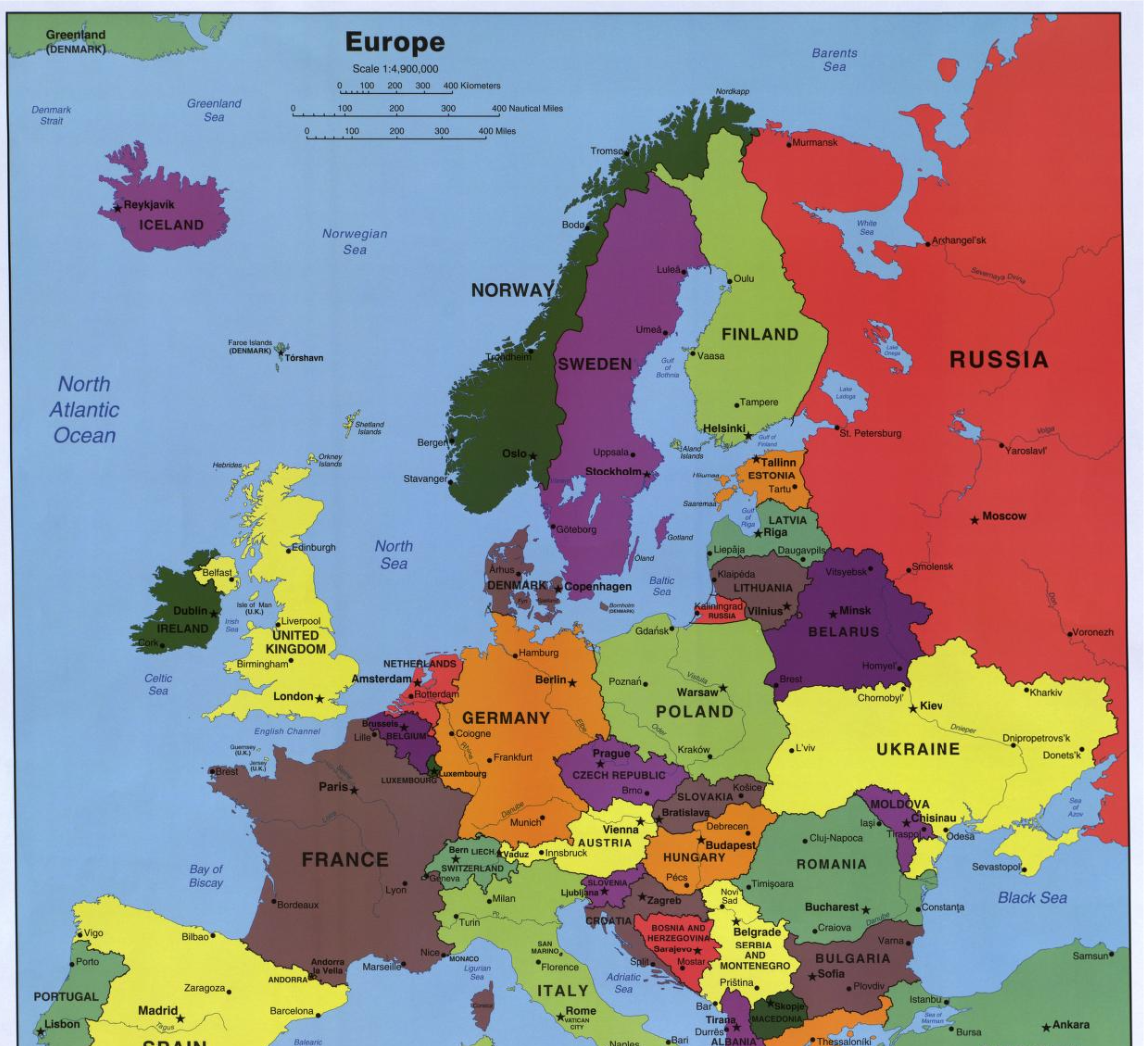
Figure 3. Political map of Europe used to demonstrate visual comprehension and function calling—Mistral Small 3.2 can identify information from visual input and interact with external tools, such as population databases.
Performance and Benchmarks
Mistral Small 3.2 yields incremental yet measurable improvements over Mistral Small 3.1 across several important benchmarks. Internal evaluations show better results in instruction following and reduced instances of infinite or repetitive generations. For example, the model achieves 65.33% on the Wildbench v2 benchmark and 43.1% on Arena Hard v2, both reflecting notable gains in conversational accuracy and naturalness. Function calling reliability has been enhanced in the 3.2 update, ensuring more robust execution within automated workflows.
STEM and coding benchmarks present slight improvements, with HumanEval Plus (code generation) reaching 92.9% and MBPP Plus at 78.33%. Context-specific vision benchmarks, such as ChartQA and DocVQA, report minor gains, while others like MMMU and Mathvista register small decreases. The model's overall performance trends match or slightly exceed the previous release, with some metrics reporting small regressions that remain within standard operational variance.
A comparison of latency and complex reasoning performance—such as the GPQA-Diamond benchmark—shows that this series maintains a strong balance between speed and capacity, outperforming models of similar size and scope.
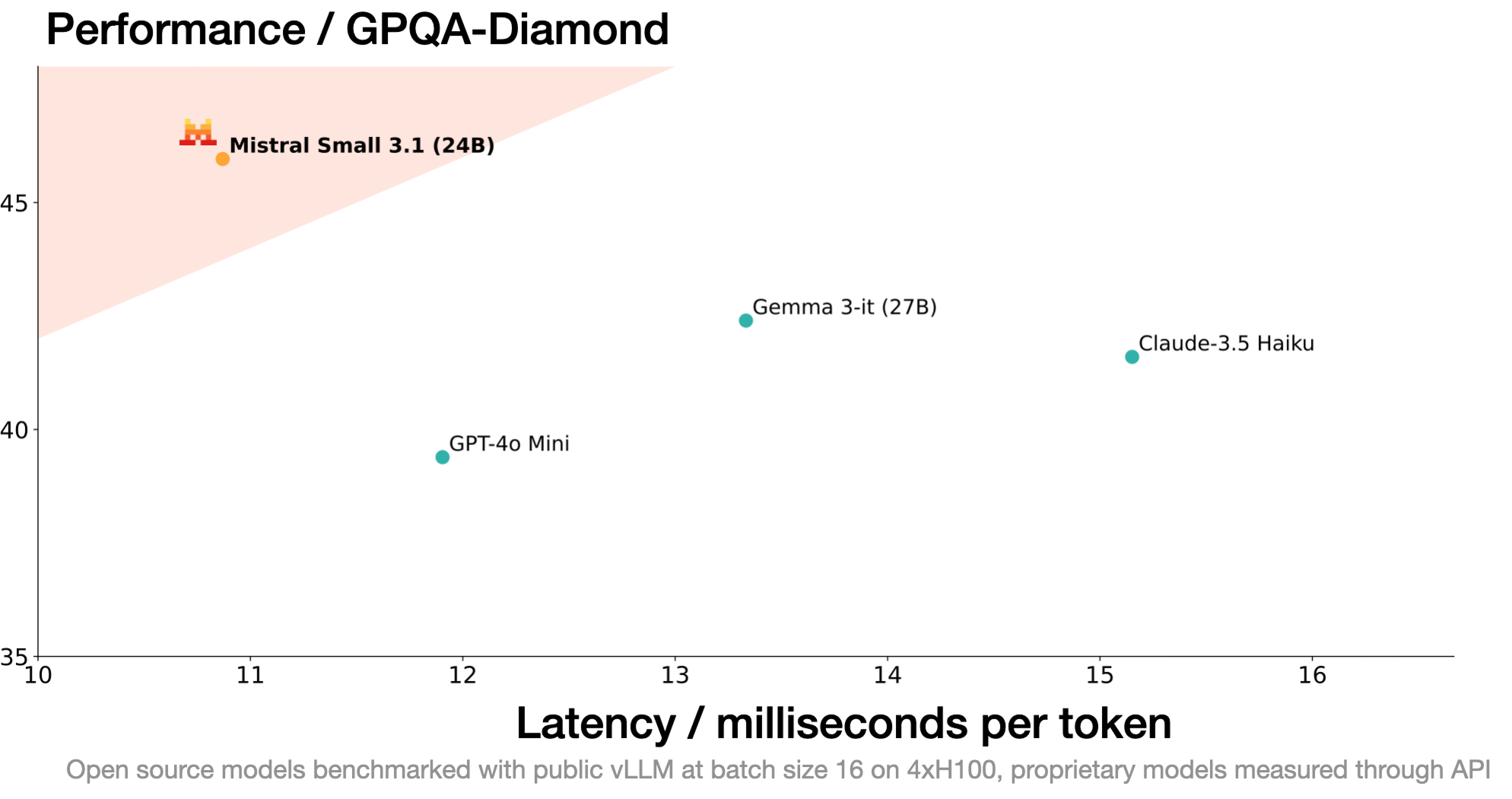
Figure 4. Performance chart comparing Mistral Small 3.1 to other models on GPQA-Diamond: illustrates a favorable balance of low latency and high performance.
Model Architecture and Training
Mistral Small 3.2 (2506) is constructed with 24 billion parameters and leverages the transformer-based structure established by its 3.1 base variant. While the precise dataset composition for this update is not publicly detailed, the training emphasizes instruction tuning atop the pre-existing base, optimizing for general-purpose reasoning, multimodal understanding, and multilingual support.
Instruction tuning continues to be a central feature, enhancing the model's ability to follow complex prompts and integrate context-sensitive behaviors. Improvements in the function calling template are specifically targeted to reduce ambiguity and increase the reliability of integrations with external APIs or computational tools. Vision capabilities are inherited from the instruct-tuned predecessor, supporting image analysis tasks ranging from document inspection to mathematical reasoning.
Applications and Use Cases
Mistral Small 3.2 is designed for a wide range of general-purpose and specialized tasks. Its strong instruction following performance and reduced repetition make it effective in conversational AI, virtual assistance, and structured reasoning workflows. The function calling enhancements facilitate robust tool integration, applicable in scenarios such as automated diagnostics, document verification, and code execution.
Multimodal applications include both image-based reasoning—such as reading and interpreting handwritten mathematical equations—and complex visual inspection requiring context-driven conclusions. The model's multilingual capabilities make it suitable for cross-lingual question answering and content generation. Extended context handling allows practitioners to deploy the model in document parsing, long-form content synthesis, and multimodal streams where high memory capacity is required.
The model architecture and openness also enable research groups and developers to further fine-tune it for specialized domains, including legal or medical support, by leveraging the instruct and base checkpoints as foundational layers for subject matter expertise.
Limitations and Licensing
Although Mistral Small 3.2 introduces improvements in instruction handling and function calling, some metrics related to STEM and vision tasks (e.g., MMLU, GPQA Main, MMMU, Mathvista) experienced marginal declines in this release. These fluctuations are typical in iterative model development and generally do not impact the overall balance of capabilities. No model-specific or architecture-specific limitations are noted beyond those common to large language models, such as susceptibility to hallucination and domain drift in edge cases.
Mistral Small 3.2, like its predecessor, is released under an Apache 2.0 license, permitting broad use and modification for research and commercial purposes.
Helpful Links
More in the Mistral Family
Mistral Large 2
Behemoth 123B v1.2
Mistral Small (2409)
Mistral Small 3.1 (2503)
Harbinger 24B
Devstral Small 1.0
Mistral Small 3 (2501)
Cydonia 24B v2
Dolphin 3.0 Mistral 24B
Mistral NeMo 12B
Rocinante 12B v1.1
More from Mistral AI
Mistral 7B
Codestral 22B v0.1
Mixtral 8x7B
Mixtral 8x22B
Compatible Apps
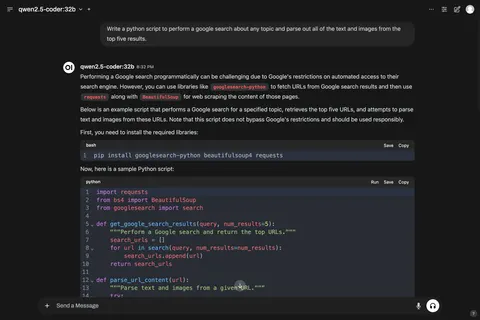
Open WebUI
A polished, self-hosted chat interface for LLMs with Ollama integration, multimodal prompts, and extensive workspace customization.
Web UI
Chat UIs · Beginner Friendly
llama.cpp
GGUF model inference with a polished web UI and OpenAI-format API. CPU-only build — high hardware compatibility, works on any machine without a GPU.
Web UI · API · CLI
LLM Inference · Chat UIs
llama.cpp (CUDA)
GGUF model inference with a polished web UI and OpenAI-format API. CUDA build — GPU-accelerated for NVIDIA GPUs.
Web UI · API · CLI
LLM Inference · Chat UIs
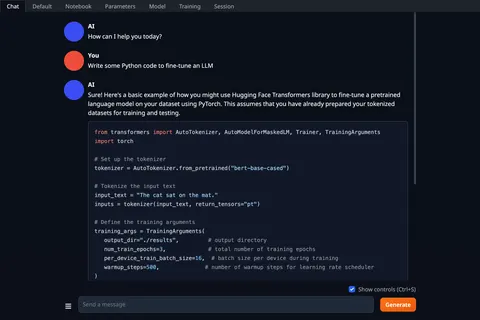
Text Generation Web UI
A feature-rich interface for running and experimenting with open-weight LLMs, including multiple inference backends, plugins, and tuning controls.
Web UI · API
Chat UIs · LLM Inference