Cognitive Computations
Dolphin 3.0 Mistral 24B
Downloads
Model Report
Overview
Dolphin 3.0 Mistral 24B is an open-source generative AI model developed as part of the Dolphin 3.0 Collection and curated by Eric Hartford, Ben Gitter, BlouseJury, and Cognitive Computations. This model is designed as a general-purpose instruction-tuned large language model, emphasizing user control, transparency, and flexibility in deployment. Dolphin 3.0 Mistral 24B differentiates itself from many commercial systems through its uncensored approach, offering users the ability to directly influence model alignment and behavior. The model builds upon advances in large language model research, leveraging a substantial parameter count and diverse training data to address use cases in coding, mathematics, agentic reasoning, and general conversation.

Figure 1. A featured visual introducing AI and machine learning, thematically connecting with the open approach adopted by Dolphin 3.0 Mistral 24B.
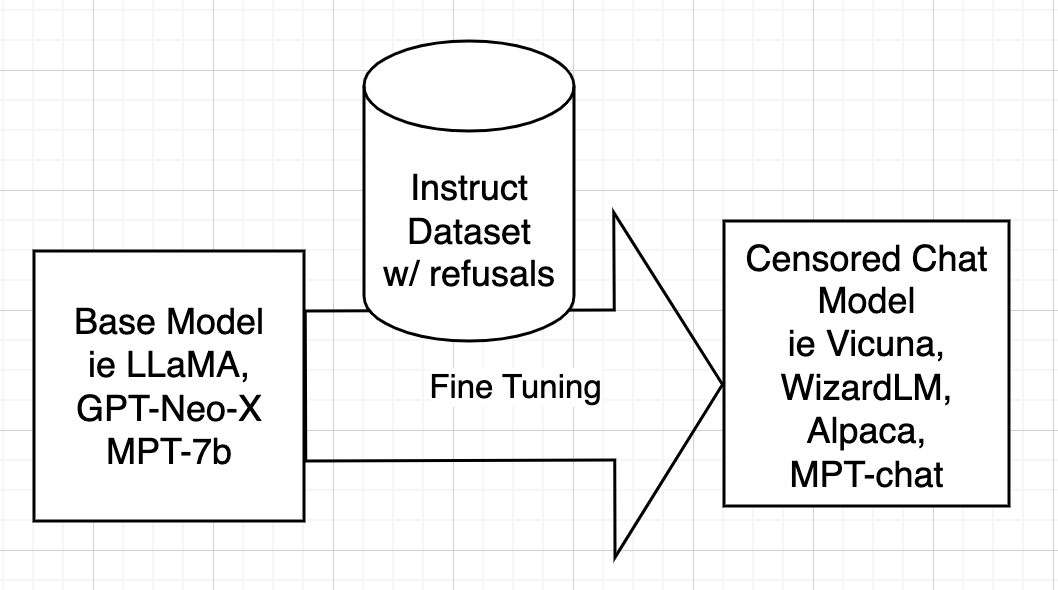
Figure 2. Diagram representing how common language model alignment involves fine-tuning a base model with instruction datasets that include refusals, resulting in a censored chat model.
Philosophy and Approach
Dolphin 3.0 Mistral 24B is oriented toward the principle of maximal user autonomy, drawing from a philosophy that open-source AI systems should act as tools of their users rather than as autonomous agents with built-in ethical alignment. According to Eric Hartford's discussion on uncensored models, Dolphin 3.0 Mistral 24B does not impose predefined moral guidelines or content filters, in contrast to commercial offerings such as ChatGPT, Claude, or Gemini. Instead, the model places full control over system prompts, operational rules, and data management directly in the hands of the user or system operator.
In practice, this uncensored architecture allows for a composable alignment strategy. Users can define and enforce their own boundaries or personas through system prompts, tailoring the model’s responses to fit different cultural norms, creative applications, or technical tasks. The deliberate omission of alignment refusals facilitates a wider array of outputs, without the model injecting refusals or defaulting to content denials seen in many contemporary LLMs.
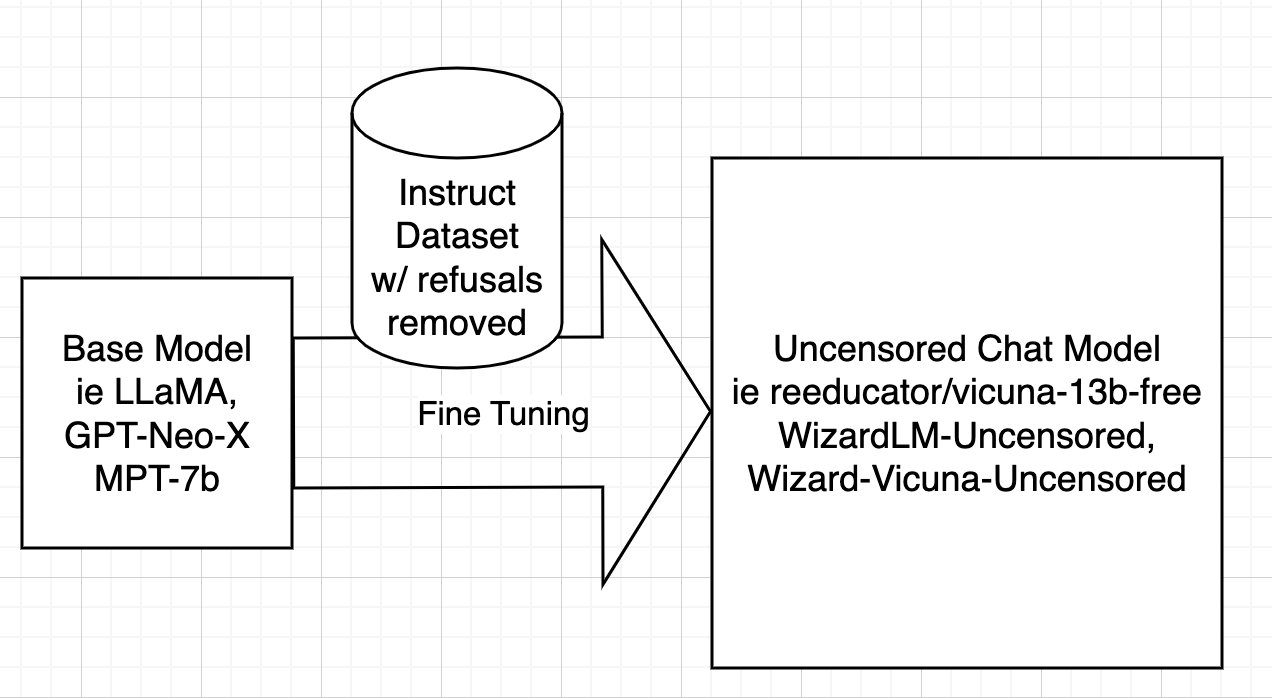
Figure 3. Diagram illustrating the process behind uncensoring, where a base model is fine-tuned with instruct datasets stripped of refusals to yield an uncensored chat model.
Model Architecture and Technical Design
Dolphin 3.0 Mistral 24B is based on the mistralai/Mistral-Small-24B-Base-2501 architecture. It contains approximately 23.6 billion parameters. The training process centers on instruction-tuning methodology: the base model is fine-tuned on a curated corpus of instruction datasets, with particular attention paid to removing examples where aligned systems would traditionally refuse to comply with unconventional or disallowed prompts.
The technical design enables the model to be effective across a range of tasks, including natural language conversation, code generation, mathematical problem solving, and multi-step agentic workflows. Its architecture supports conventional sequence modeling and completion, rendering it suitable for deployment in environments demanding real-time dialogue or guided task completion.

Figure 4. Digital art representing the Dolphin 3.0 Mistral 24B model with a cyberpunk dolphin, alluding to the model’s name.
Data Sources and Uncensoring Techniques
Training of Dolphin 3.0 Mistral 24B extensively leveraged a diverse collection of open datasets. These include major contributions from the OpenCoder-LLM, Microsoft's orca agent instruct series, NousResearch function-calling set, AI-MO mathematical datasets, AllenAI’s tulu-3 mixture, as well as additional data from HuggingFaceTB, and M-A-P. Data augmentation and refinement were supported by models and resources from Meta, Qwen, Deepseek, and RLHFlow, among others.
A distinguishing aspect of the model’s methodology is the explicit filtering of instruction datasets to remove “refusal” and bias artifacts. This process aims to ensure that responses to a wide variety of prompts are not preemptively restricted, thereby producing an instruction-following model unconstrained by the default content filters or refusals often found in aligned models. This uncensoring approach diverges from conventional instruction-tuning pipelines, and is intended to promote scientific transparency and composability for downstream alignment.
Interaction Protocols and Model Usage
Dolphin 3.0 Mistral 24B employs the ChatML message formatting for interactive contexts, supporting multi-turn dialogues and agentic task flows. Users are encouraged to specify detailed system prompts to set the context, persona, and response guidelines of the model. If a system prompt is omitted, the model defaults to general assistant behavior.
Empirical observations recommend operating the model with a low sampling temperature, typically in the range between 0.05 and 0.1, to achieve more deterministic and precise outputs—particularly when using Mistral-24B–derived checkpoints. For applications requiring strict adherence to rules (such as enforcing exclusive use of a single programming language in responses), users are directed to encode explicit instructions in the system prompt.
The model is provided in a variety of formats suitable for local inference environments and supports quantized builds to facilitate deployment across a spectrum of hardware configurations. Download and integration mechanisms are described on its main Hugging Face model page, with additional quantizations available from community repositories.
Limitations and Considerations
The primary relative limitation of Dolphin 3.0 Mistral 24B, as articulated by its developers, is its uncensored design, which deliberately omits built-in content filtering present in many aligned language models. Consequently, the model may generate responses to prompts that are declined by safety-aligned systems. Responsibility for content generated with the model is explicitly ascribed to the user. At present, detailed quantitative benchmark evaluations and standardized performance metrics remain forthcoming; users are encouraged to explore and assess the model directly for their particular tasks.
The model’s licensing information can be found on its official Hugging Face repository. Emphasis is placed on open-source availability and freedom for research, development, and customization.
Helpful Links
- Dolphin 3.0 Mistral 24B Model Card on Hugging Face
- Dolphin 3.0 Collection Overview
- Eric Hartford’s Uncensored Models Article
- OpenCoder-LLM Datasets
- GGUF Quantizations for Dolphin 3.0 Mistral 24B
- Cognitive Computations Organization
- NousResearch Function Calling Dataset
- RLHFlow for Reward Model Techniques
More in the Mistral Family
Mistral Large 2
Behemoth 123B v1.2
Mistral Small (2409)
Mistral Small 3.2 (2506)
Mistral Small 3.1 (2503)
Harbinger 24B
Devstral Small 1.0
Mistral Small 3 (2501)
Cydonia 24B v2
Mistral NeMo 12B
Rocinante 12B v1.1
More from Cognitive Computations
Compatible Apps
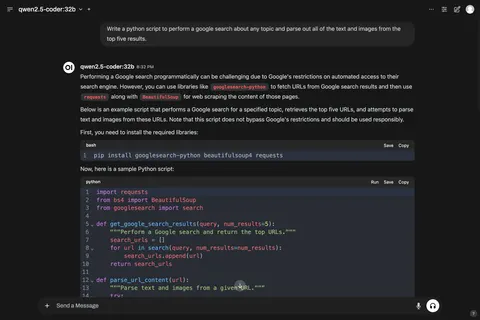
Open WebUI
A polished, self-hosted chat interface for LLMs with Ollama integration, multimodal prompts, and extensive workspace customization.
Web UI
Chat UIs · Beginner Friendly
llama.cpp
GGUF model inference with a polished web UI and OpenAI-format API. CPU-only build — high hardware compatibility, works on any machine without a GPU.
Web UI · API · CLI
LLM Inference · Chat UIs
llama.cpp (CUDA)
GGUF model inference with a polished web UI and OpenAI-format API. CUDA build — GPU-accelerated for NVIDIA GPUs.
Web UI · API · CLI
LLM Inference · Chat UIs
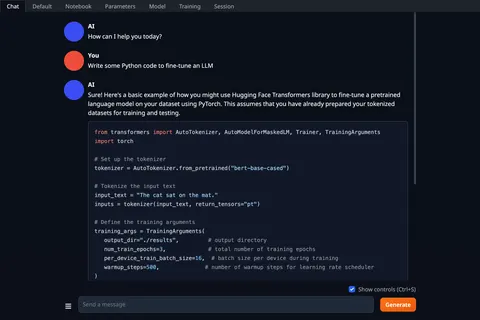
Text Generation Web UI
A feature-rich interface for running and experimenting with open-weight LLMs, including multiple inference backends, plugins, and tuning controls.
Web UI · API
Chat UIs · LLM Inference