Cohere
Command R (08-2024)
Downloads
Model Report
Overview
Command R 08-2024 is a 32-billion parameter generative large language model developed by Cohere and Cohere Labs and released as a research product in August 2024. As part of the Command R series—including both Command R and Command R+—this model is designed for robust performance in areas such as retrieval-augmented generation (RAG), multilingual comprehension, reasoning, and advanced tool interactions. With a strong focus on enterprise and research applications, Command R 08-2024 introduces upgraded capabilities in efficiency, accuracy, and safety.
Figure 1. Command R & R+ series promotional graphic, representing the latest model updates in August 2024.
Technical Foundations and Architecture
Command R 08-2024 operates as an auto-regressive transformer, employing advancements for higher throughput and reduced latency relative to its predecessors. The model utilizes Grouped Query Attention (GQA), significantly enhancing inference efficiency. It accepts sequences with up to a 128,000-token context window, catering to long-document applications and complex workflows. After pretraining, the model undergoes supervised fine-tuning and preference alignment, ensuring outputs that reflect human preferences for utility and safety.
Multilingual Training and Data Coverage
To achieve robust multilingual capability, Command R 08-2024 is pretrained on a diverse corpus spanning 23 languages. These include English, French, Spanish, Italian, German, Portuguese, Japanese, Korean, Arabic, Simplified Chinese, Russian, Polish, Turkish, Vietnamese, Dutch, Czech, Indonesian, Ukrainian, Romanian, Greek, Hindi, Hebrew, and Persian. Evaluation is conducted across 10 core languages, optimizing performance for global use cases. The training methodology leverages a mixture of supervised and preference-based fine-tuning, especially for tasks involving citation generation and advanced tool use.
Retrieval Augmented Generation and Tool Use
A defining feature of Command R 08-2024 is its advanced retrieval-augmented generation, which allows the model to generate grounded responses with explicit citations. This system is trained to incorporate document snippets and annotate responses with "grounding spans," marking the provenance of generated content. Two citation modes are available: “accurate,” which optimizes for correctness by sequentially selecting relevant documents before final generation, and “fast,” which expedites generation by merging citation and response steps.
The model also integrates advanced tool use functionality. Its single-step tool use, often referenced as function calling, enables the model to interact with external APIs, databases, or search interfaces by selecting appropriate tools and constructing parameterized calls. Multi-step tool use—implemented as "agents"—enables intricate workflows where the model iteratively plans actions, observes outcomes, and refines its strategy accordingly.
For code-related tasks, Command R 08-2024 is optimized to answer queries, provide explanations, or produce code snippets. Notably, lower temperature settings are recommended for code generation to ensure deterministic and precise outputs.
Performance and Benchmarking
Command R 08-2024 demonstrates notable advancements in performance metrics compared to its previous version. In direct evaluations across general, coding, and STEM-specific prompts, the updated model consistently receives higher human preference ratings. The horizontal bar chart below summarizes these results, with 'cmd-r 08-2024' exhibiting substantial increases in all categories.
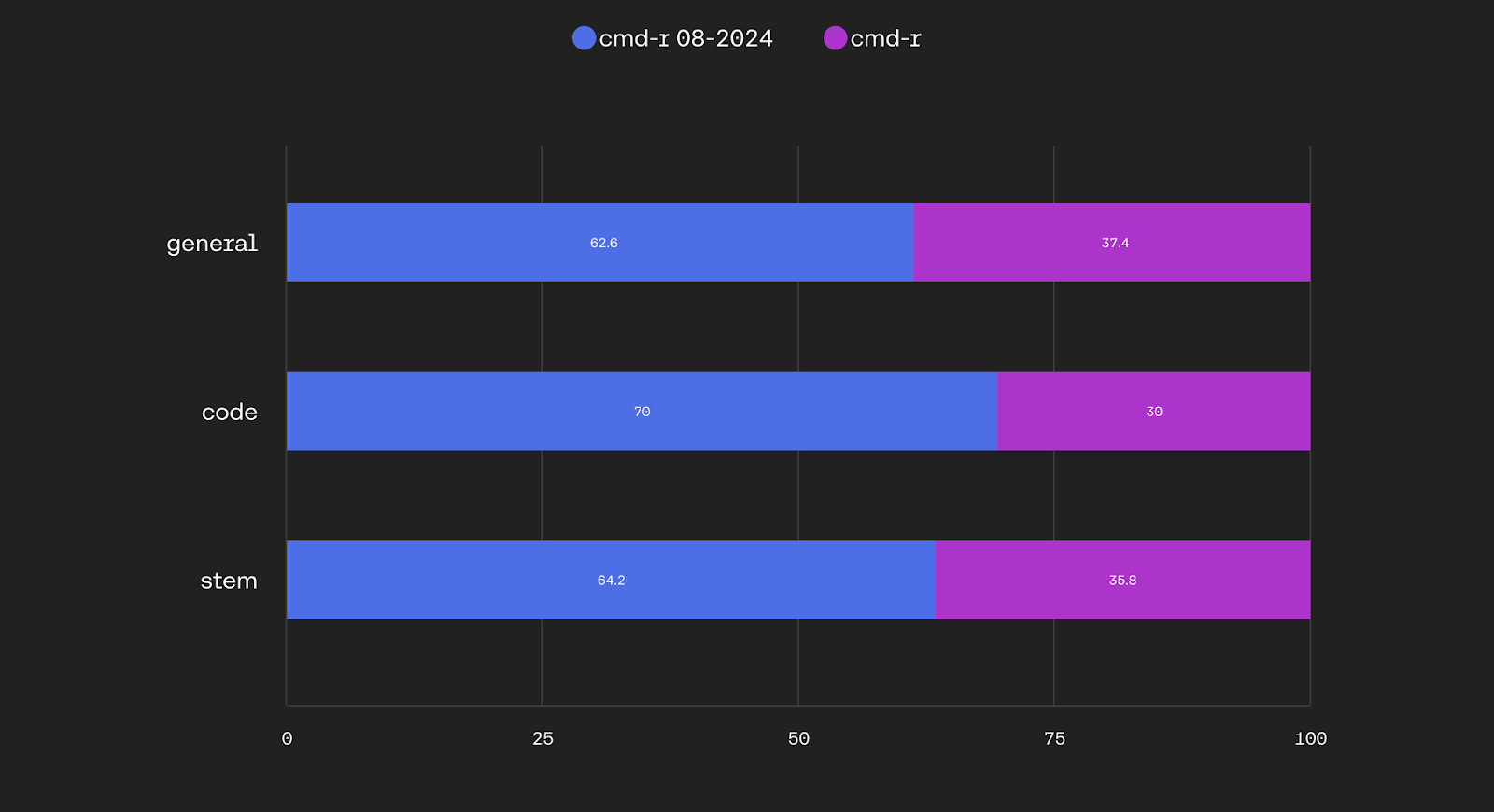
Figure 2. Head-to-head human preference results: Command R 08-2024 outperforms the original Command R across general, code, and STEM prompt categories.
Further, the updated architecture yields approximately 50% higher throughput and 20% lower latency relative to prior models, while reducing the operational footprint.
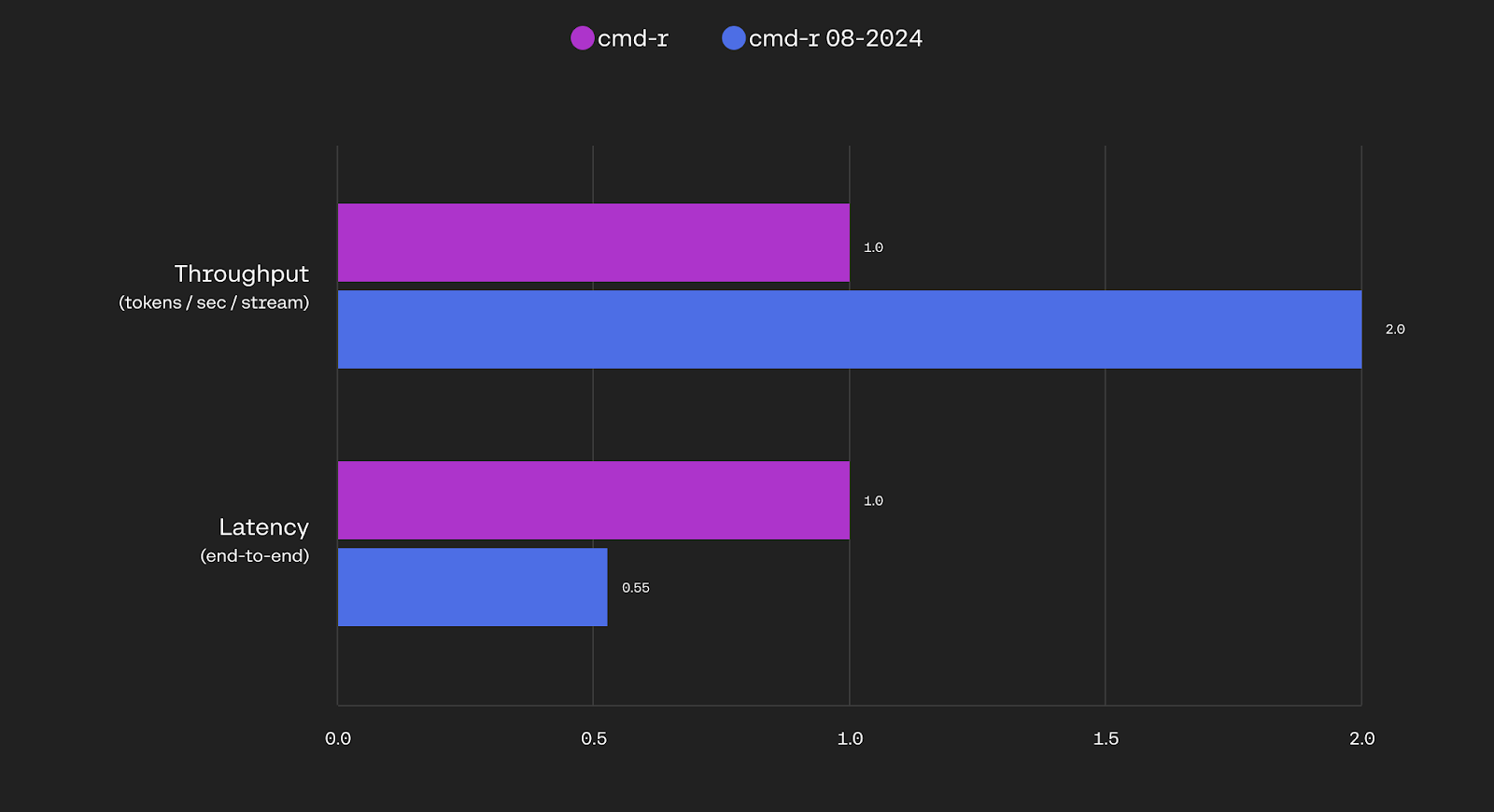
Figure 3. Performance comparison: cmd-r 08-2024 achieves doubled throughput and significantly reduced latency compared to the original version.
For the larger Command R+ variant, similar efficiency gains are observed:
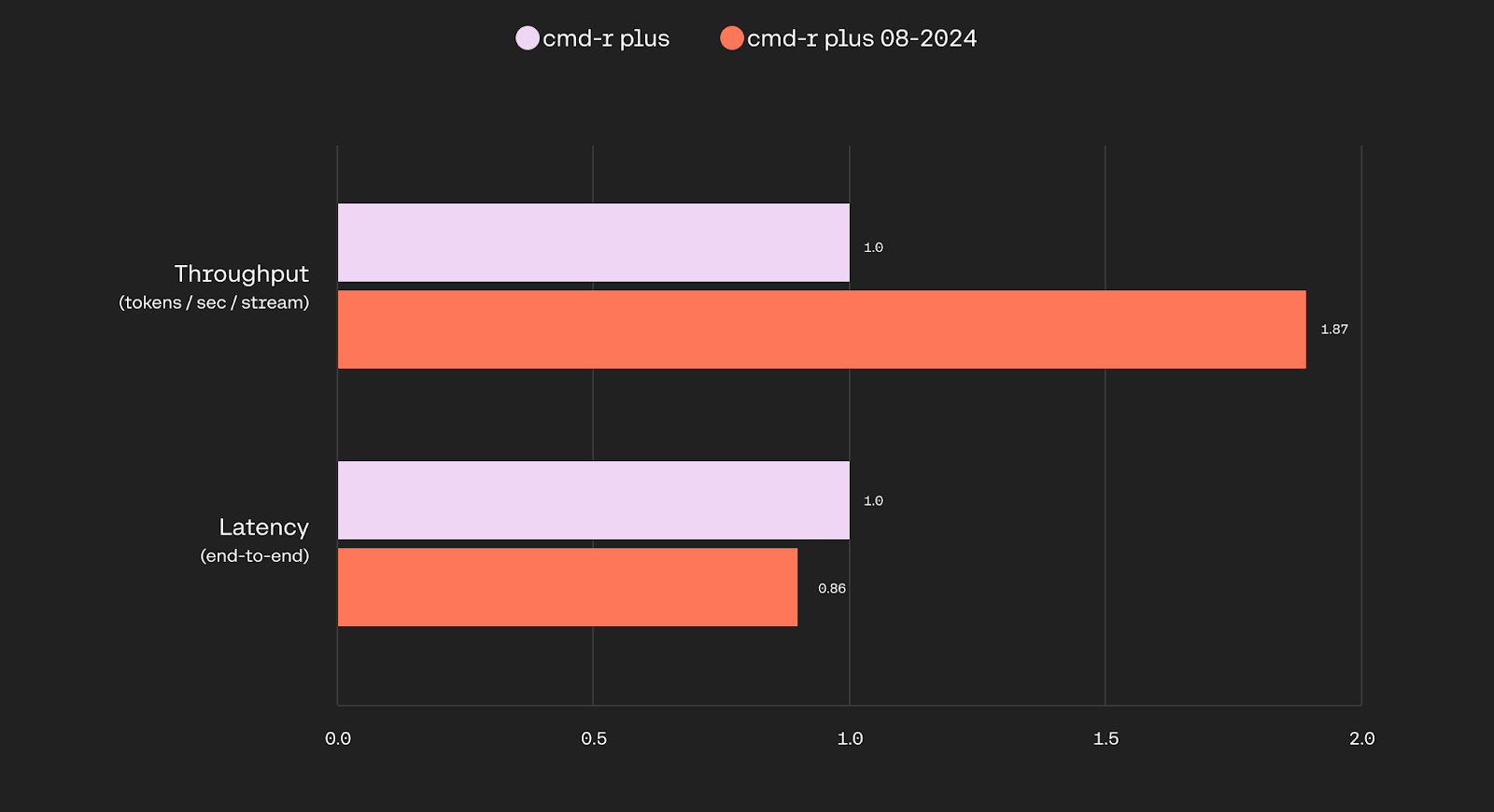
Figure 4. Performance metrics for Command R+ models: Command R Plus 08-2024 shows improved throughput and lower latency over the prior version.
Such results underscore improved decision-making for tool use, tighter control over response formatting and length, enhanced handling of structured data, and expanded robustness to variations in prompt structure.
Safety Modes and Responsible Use
Introduced in the 08-2024 update, Command R and Command R+ now support Safety Modes, which allow for context-appropriate moderation of sensitive topics. The “STRICT” mode restricts responses to avoid sensitive subject matter, making it suitable for enterprise and general usage. The default “CONTEXTUAL” mode offers broader conversational flexibility, while core protections—particularly regarding child safety—are always enforced and non-adjustable. Users may opt out of safety modes for specific research purposes, but all uses must comply with the CC-BY-NC license and the Acceptable Use Policy.
Applications and Model Family
Command R 08-2024 is designed for integration into enterprise-grade AI systems, supporting use cases such as retrieval-augmented summarization, knowledge-augmented question answering, code generation, and structured data analysis. Its advanced tool use and multilingual capabilities enable automation of diverse workflows in sectors ranging from finance to consulting. The model’s coding proficiency is best utilized with prompt templates specific to grounded generation, tool use, and agent-based tasks, as described in the official documentation.
In the broader Command R series, Command R+ 08-2024 retains a larger parameter count and delivers slightly higher performance metrics, especially in high-throughput environments and for large-scale inference tasks.
Limitations and Licensing
Despite its capabilities, Command R 08-2024 may not yield optimal performance for traditional code completion absent fine-tuned prompts. Deviations from prescribed templates in grounded generation or tool use generally result in lower accuracy and utility. Access to model files and weights requires agreement to sharing contact information, acceptance of licensing terms, and compliance with privacy policies.
The model is distributed under a Creative Commons BY-NC license, restricting use to non-commercial contexts unless otherwise authorized.
Helpful Links
More in the Command R Family
Compatible Apps
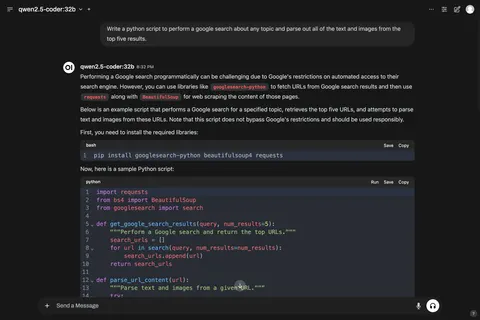
Open WebUI
A polished, self-hosted chat interface for LLMs with Ollama integration, multimodal prompts, and extensive workspace customization.
Web UI
Chat UIs · Beginner Friendly
llama.cpp
GGUF model inference with a polished web UI and OpenAI-format API. CPU-only build — high hardware compatibility, works on any machine without a GPU.
Web UI · API · CLI
LLM Inference · Chat UIs
llama.cpp (CUDA)
GGUF model inference with a polished web UI and OpenAI-format API. CUDA build — GPU-accelerated for NVIDIA GPUs.
Web UI · API · CLI
LLM Inference · Chat UIs
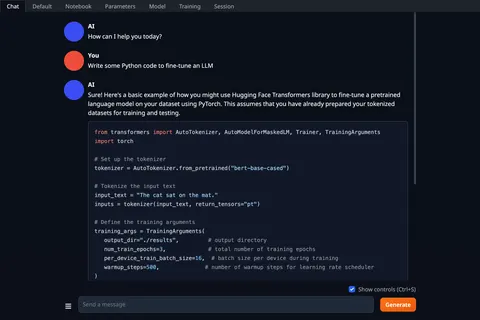
Text Generation Web UI
A feature-rich interface for running and experimenting with open-weight LLMs, including multiple inference backends, plugins, and tuning controls.
Web UI · API
Chat UIs · LLM Inference