fal
AuraFlow v0.3
Downloads
Model Report
Overview
AuraFlow v0.3 is a fully open-source, flow-based text-to-image generative model developed by fal.ai. It is the latest iteration in the AuraFlow series, building upon prior versions including AuraFlow v0.2 and v0.1. It incorporates architectural and prompt fidelity refinements compared to previous versions, for generating images from textual descriptions. This model is characterized by its support for a range of image aspect ratios, sophisticated prompt following, and scalability optimizations, all released under an open license to foster transparency and research collaboration.
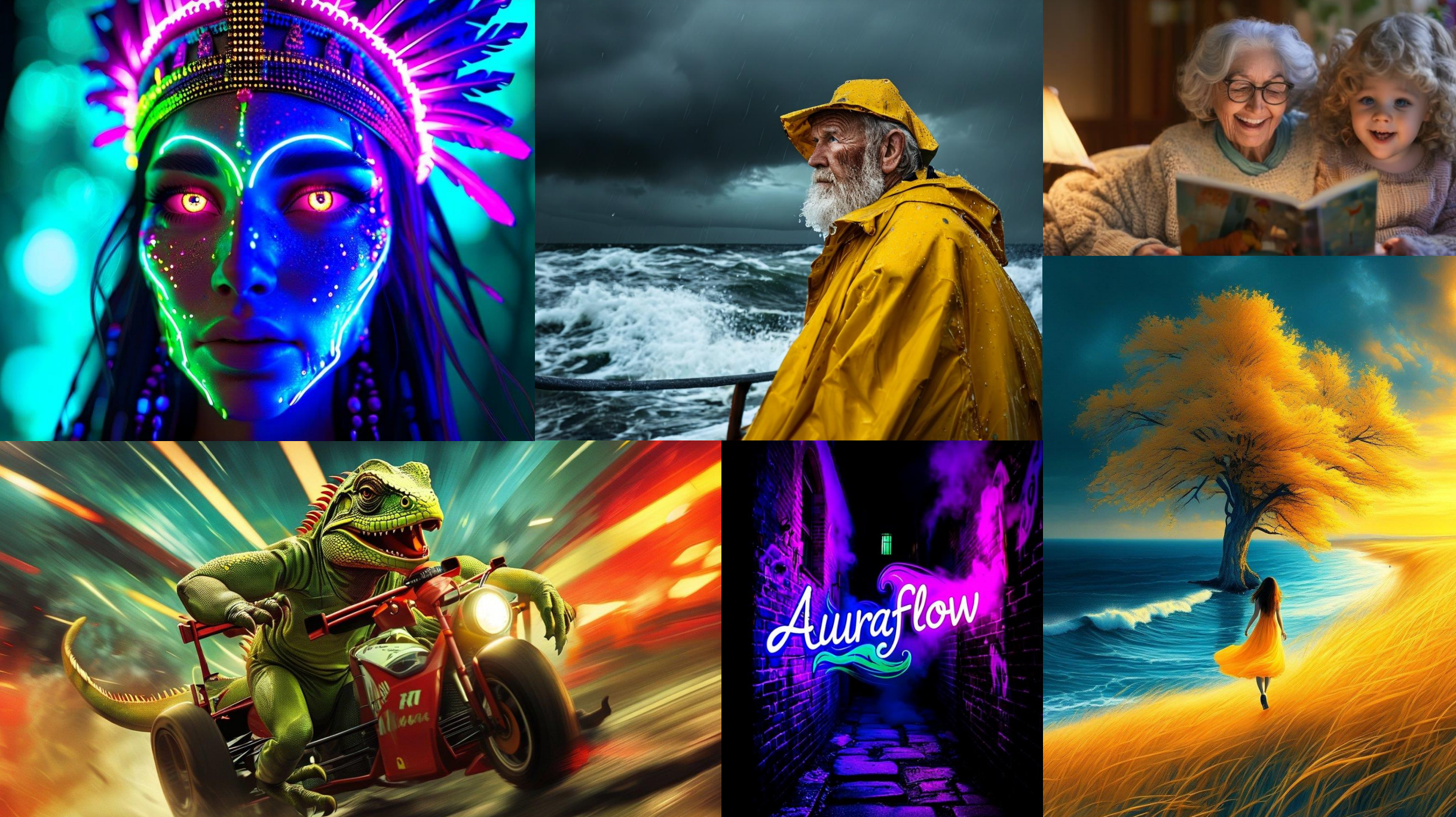
Figure 1. Collage of six distinct images generated by AuraFlow v0.3, demonstrating its capabilities in diverse subjects and visual styles from detailed character portraits to dynamic scenes and artistic compositions.
Technical Architecture
AuraFlow v0.3 is built on a flow-based generative modeling approach, distinguishing itself from diffusion-based models commonly seen in the field. The developmental trajectory began with efforts to reimplement the MMDiT architecture, but empirical experiments led to an optimized design utilizing larger DiT encoder blocks. This improved both computational scalability and efficiency, yielding a 15% increase in model flops utilization at the 6.8 billion parameter scale.
A major design focus was maximizing Model Flops Utilization (MFU). The use of torch.compile during training further optimized layer computation, contributing an additional 10–15% improvement in MFU depending on the training stage. The model employs Maximal Update Parametrization (muP) for predictable, scalable learning rate transfer across model sizes, demonstrating more consistency compared to standard parameterization approaches.
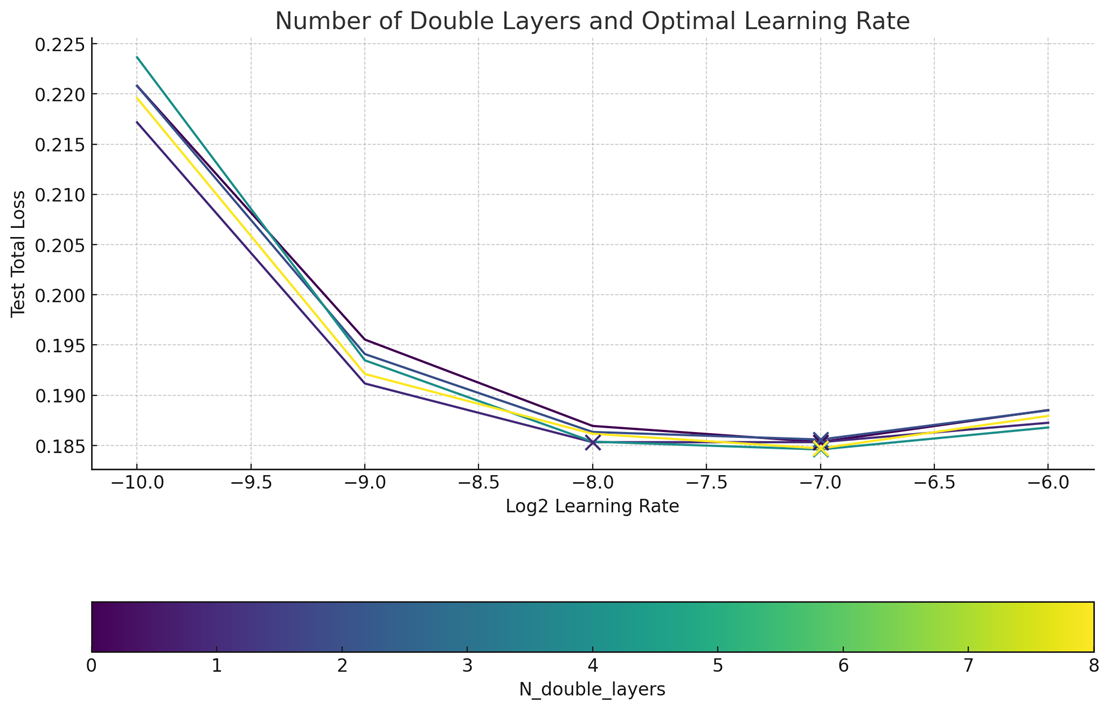
Figure 2. Line chart illustrating the relationship between model double layers, learning rate, and test loss, supporting architectural optimization during AuraFlow development.
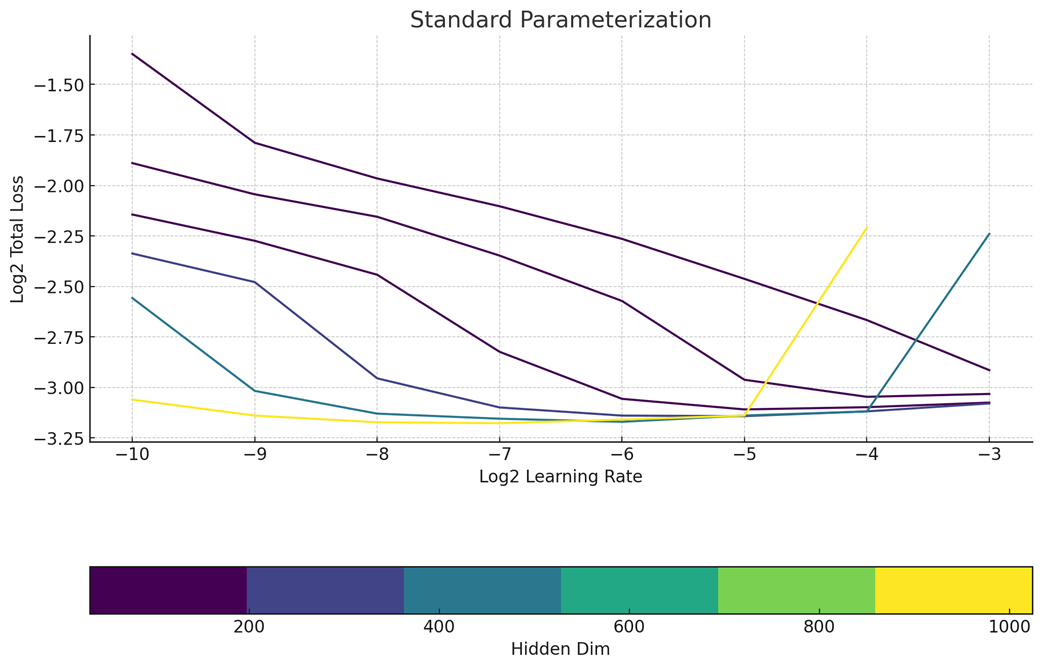
Figure 3. Visualization of zero-shot learning rate transfer using standard parameterization, showing how loss varies by hidden dimension and learning rate.
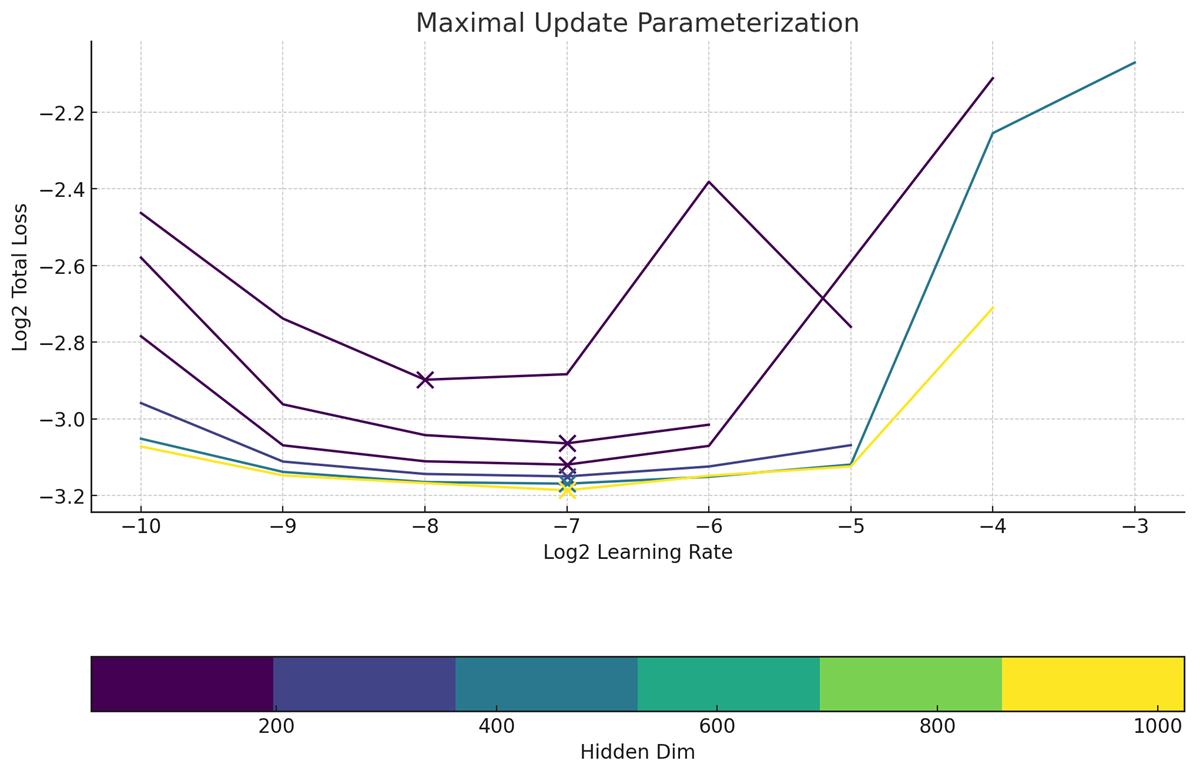
Figure 4. Graph comparing maximal update parametrization (muP) across hidden dimensions, demonstrating more reliable learning rate scaling for AuraFlow.
With a parameter count of 6.8 billion, AuraFlow v0.3 leverages a “fatter” design utilizing matrix multiplications divisible by 256. The team investigated optimal aspect ratios, ultimately adopting a 3072:36 hidden dimension to block ratio for this release, an approach inspired by scaling law research in generative modeling.
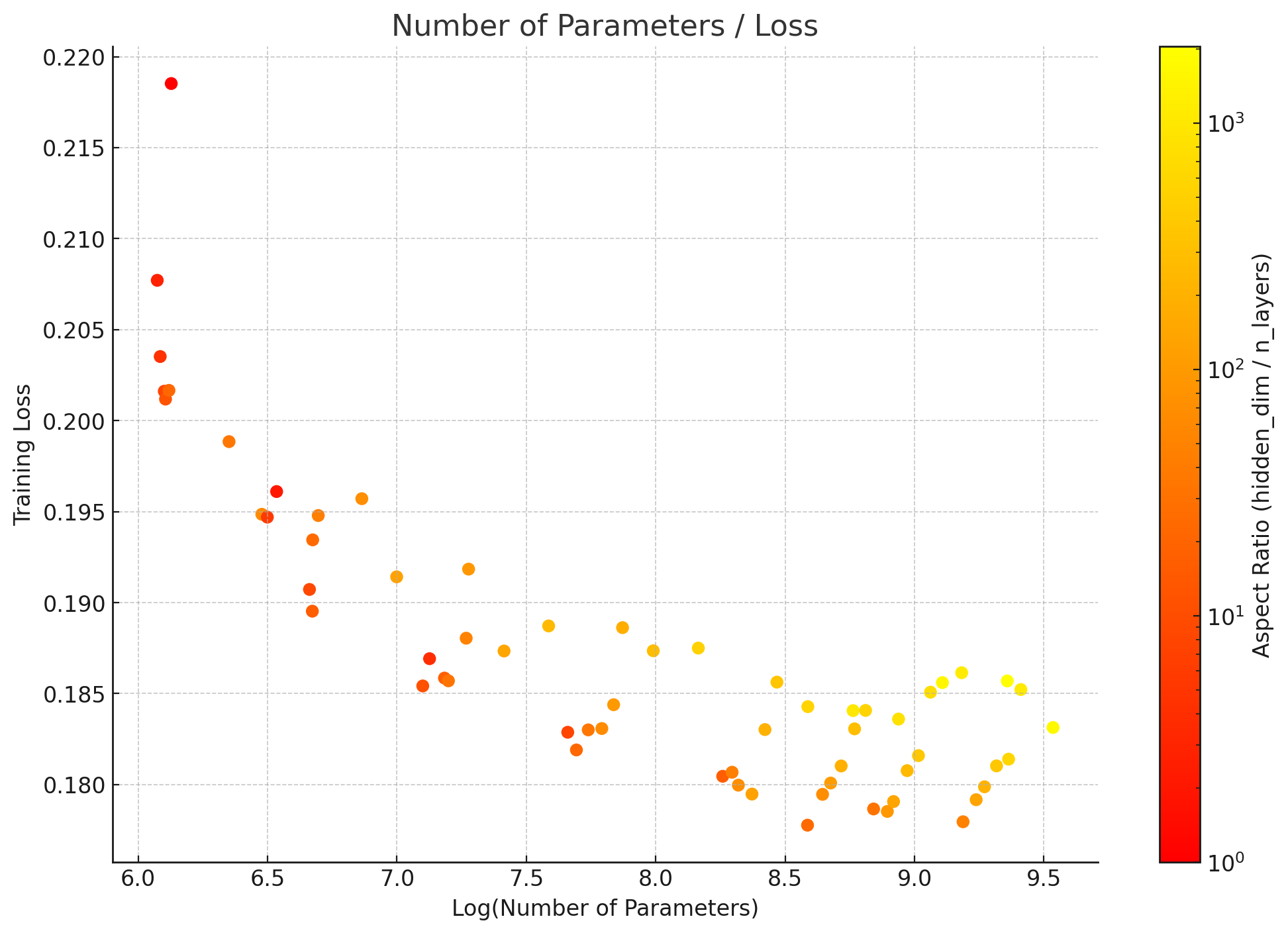
Figure 5. Scatter plot visualizing model configuration experiments; the color gradient represents how aspect ratio influences training loss for different parameter scales.
Training Data and Recaptioning Methods
The AuraFlow v0.3 model was trained on a curated set of aesthetic datasets, further refined from those used in previous iterations. A characteristic of the training process is an extensive recaptioning pipeline: all training image captions were generated using either an in-house captioner or from reliably captioned external data, explicitly avoiding alt-texts. This methodology mirrors the approach seen in the DALL·E 3 workflow, aiming to maximize caption quality for improved prompt alignment.
To enhance the model’s ability to understand and follow intricate instructions, AuraFlow integrates a prompt enhancement pipeline. This system analyzes and expands input prompts into detailed captions, articulating object positions, colors, counts, and spatial relationships while preserving the original intent. The model translates complex textual cues into images with detail and accuracy.
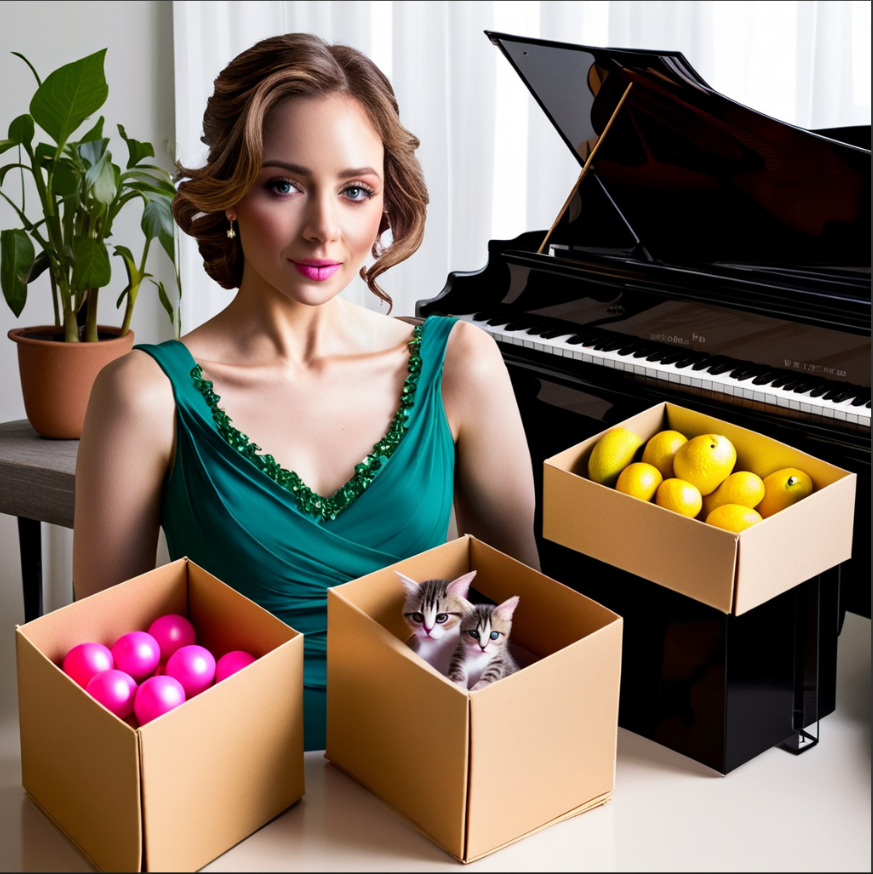
Figure 6. AuraFlow response to a complex prompt: Includes a woman, grand piano, potted plant, and three cardboard boxes containing pink spheres, kittens, and citrus fruits—showcasing sophisticated prompt following.
The training process involved advanced distributed techniques, utilizing large-scale GPU fleets and distributed storage systems such as JuiceFS, allowing efficient streaming and staging of massive data volumes. The model underwent multi-stage pretraining—first on resolutions of 256x256, then 512x512 and 1024x1024, before final fine-tuning on varied aspect ratios. Overall, the model was trained from scratch over four weeks of compute, leveraging increased resources compared to earlier releases.
Performance Evaluation and Output Quality
AuraFlow v0.3's performance has been evaluated on standard benchmarks. In GenEval scores, the model achieved scores ranging from 0.63–0.67 during pretraining phases and reached 0.703 in the final release using the enhanced prompt pipeline, indicating prompt alignment and output quality in text-to-image generation. These metrics are consistent with the model's focus on prompt accuracy.
Example outputs include both fidelity to prompt and a variety of artistic styles, such as stylized illustrations, photorealistic scenes, and nuanced artistic compositions generated in response to detailed prompts.

Figure 7. Stylized illustration as generated by AuraFlow: A split-colored cat holding a martini glass, rendered in an Art Nouveau frame according to a detailed prompt.
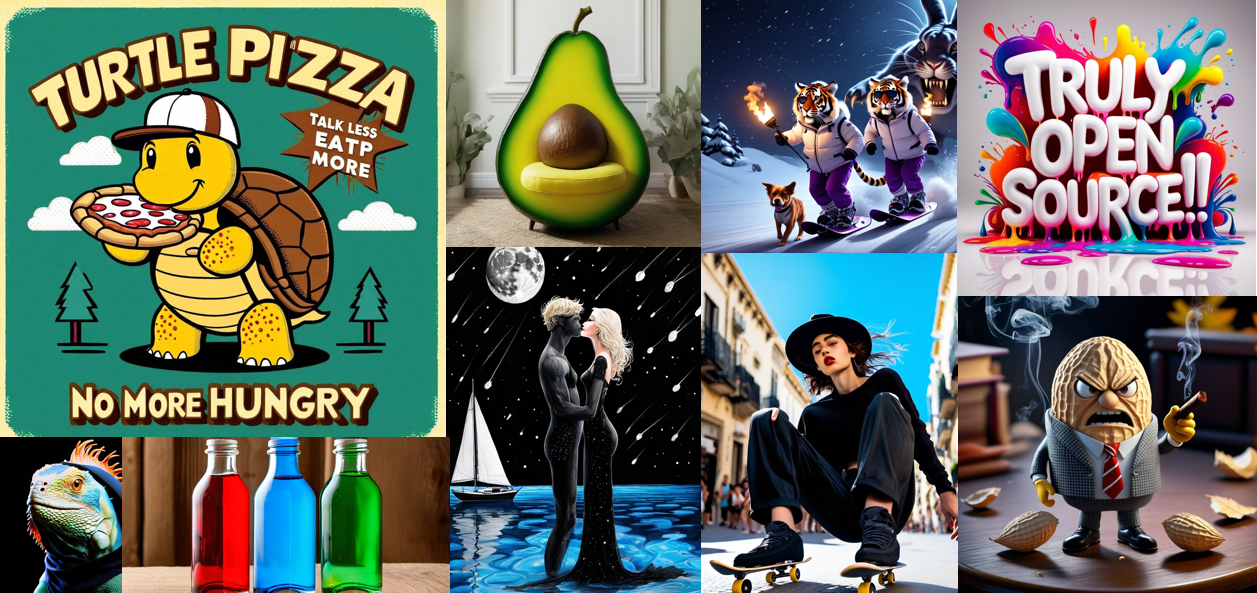
Figure 8. Collage showing early AuraFlow generations across a wide variety of subjects and styles, including cartons, photorealism, and typographic art.
For side-by-side visual benchmarking, users can compare AuraFlow generations with those from other models in an online comparison gallery.
Applications, Limitations, and Development
AuraFlow v0.3 is suitable primarily for text-to-image synthesis, serving research, artistic, and content generation applications. The open-source release encourages community experimentation, including finetuning, adaptation for workflows such as ComfyUI, and further model quantization or extension. The development team maintains an active stance on community feedback and iterative improvement.
Currently designated as a beta release, the model’s continued development aims to address limitations associated with compute-intensive training requirements and to improve usability for those with less powerful hardware through potential smaller model variants or mixture-of-expert architectures. The maintainers plan to supplement the release with more detailed technical documentation as the project evolves.
Model Family and Release History
AuraFlow v0.3 succeeds earlier models in the series, with each iteration incorporating architectural and data methodology refinements. The release timeline is as follows:
- AuraFlow v0.1: The initial open-source release, establishing the foundation for subsequent work.
- AuraFlow v0.2: An intermediary version with incremental improvements.
- AuraFlow v0.3: Current release, offering greater fidelity, optimized architecture, and prompt-following enhancements.
Development has been driven by key contributors including @cloneofsimo and @isidentical, with support from the ComfyUI and HuggingFace communities. Related projects, such as Lavenderflow-v0, document earlier architectural experimentation in the context of generative transformer research.
Helpful Resources
- fal/AuraFlow-v0.3 (Hugging Face) – Official model release and download
- fal/AuraFlow-v0.2 (Hugging Face) – Previous model version
- fal.ai Blog Post on AuraFlow – In-depth technical report and insights
- AuraFlow Model Comparison Gallery – Visual comparison with other models
- fal's Model Gallery & Playground – Interactive prompt testing
- ComfyUI GitHub Repository – Integration resources for ComfyUI workflows
- JuiceFS GitHub Repository – Distributed file system used for training infrastructure
- Scaling Laws for Autoregressive Generative Modeling (arXiv) – Cited foundational research
- Lavenderflow-v0 (Hugging Face) – Early architectural explorations
- fal.ai Discord – Community discussion and support
For the latest updates, technical discussions, and development insights, the team also recommends following @cloneofsimo and @isidentical on Twitter.
Compatible Apps
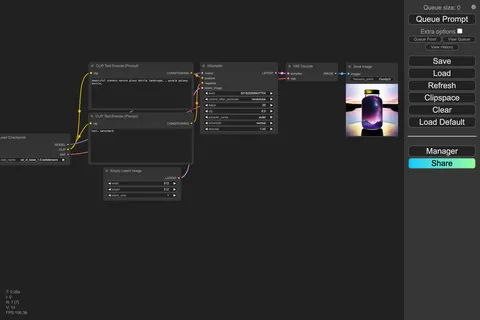
ComfyUI
A node-based workflow builder for advanced image and video generation, ideal for custom pipelines, fine control, and power users.
Web UI · API
Image Generation · Video Generation
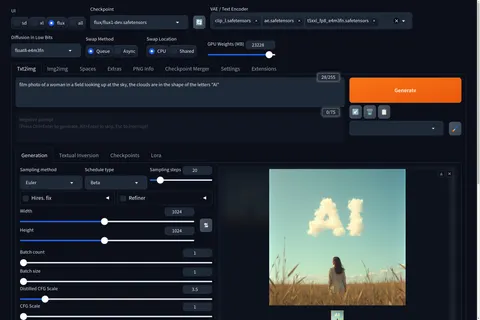
Stable Diffusion WebUI Forge
A faster, more experimental Stable Diffusion WebUI variant focused on improved resource use, quicker inference, and modern model support.
Web UI · API
Image Generation